
Ukraine War Sees Russian Advances Slowed by More Than Half in First Half of 2026
Ukraine's active defense operations reduced the pace of Russian territorial advances by more than half in the first six months of 2026, according to Commander-in-Chief Oleksandr Syrskyi, as the Ukraine war continues with Ukrainian forces maintaining initiative in some sectors while pursuing a strategy of exhausting the aggressor. [1]
Syrskyi Reports Slowed Russian Advances and Ukrainian Defensive Gains
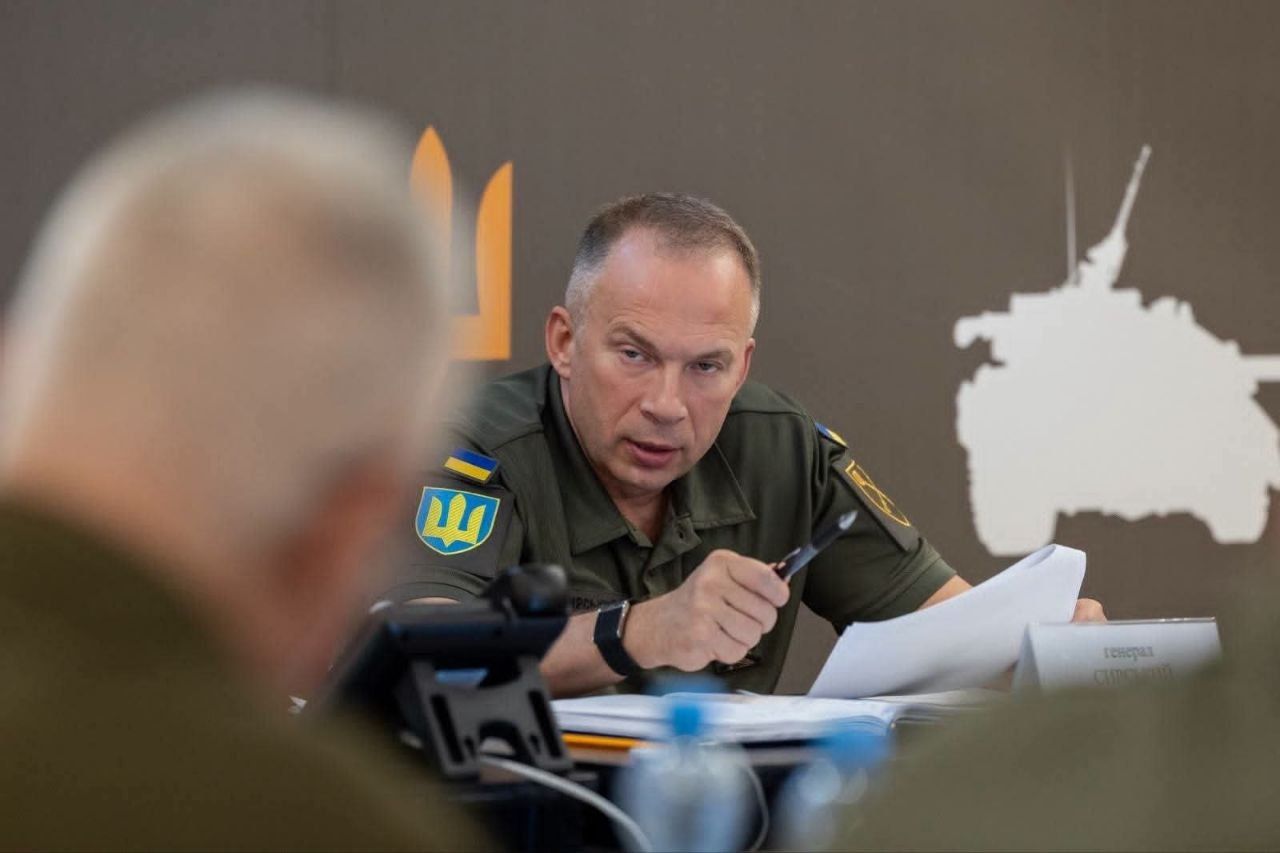
Ukraine's active defense operations reduced the pace of Russian territorial advances by more than half during the first six months of 2026, Commander-in-Chief Oleksandr Syrskyi said on July 10. [1] "The enemy attempted to launch a large-scale offensive but, in fact, failed to achieve any of its objectives despite having an almost twofold advantage in personnel and equipment," Syrskyi said following a meeting reviewing the military's performance during the first half of the year. [1] "If previously the Russian army was conducting active offensive operations in 13 operational directions, now there are at most six or seven," he added. [1] According to Syrskyi, Ukrainian forces continue defensive operations while maintaining the initiative in some sectors of the front. [1] "Our ratio of assault operations to those of the enemy is currently approximately 40 to 60," Syrskyi said. [1] "It is precisely thanks to the active actions of the Defense Forces that in the first half of 2026 the pace of Russian troop advances decreased by more than half." [1] He added that "the sides have effectively approached parity in the rate of advance" and that there is "a steady trend toward increasing the ratio of territory liberated by the Defense Forces compared with areas where the enemy manages to advance." [1] Syrskyi also said Russian forces are suffering average monthly losses of around 32,000 killed and wounded as Ukraine continues "a strategy of exhausting the Russian aggressor." [1] At the same time, the commander-in-chief cautioned against underestimating Russia. [1] "We must not underestimate the enemy. A turning point in the war is still far away," he said. [1] Syrskyi added that Russia has not abandoned its goal of fully occupying Luhansk and Donetsk oblasts and is seeking to expand offensive operations in Dnipropetrovsk and Zaporizhzhia oblasts, while also attempting to create and enlarge a buffer zone in Ukraine's northern regions. [1] Syrskyi warned that Russia is increasing the intensity of its missile and drone attacks, its use of guided aerial bombs, and the number of crimes committed against civilians. [1] Syrskyi also highlighted the results of Ukraine's long-range strike campaigns during the first half of the year. [1] He noted the military's Deep Strike campaign hit 697 targets inside Russia, causing at least $6.1 billion in direct and indirect economic damage. [1] Ukraine's Middle Strike campaign struck another 7,028 Russian targets over the same period. [1] According to Syrskyi, Ukrainian artillery carried out more than 456,000 fire missions in the first six months of 2026. [1] Missile forces launched more than 1,140 strikes, the Air Force conducted more than 1,100 strikes, and support units carried out around 1,400 missions. [1] The commander-in-chief also said he had instructed commanders to ensure troops are rotated from front-line positions at least once every 60 days, describing the measure as essential for soldiers' lives, health, combat effectiveness, and fair treatment. [1] Syrskyi added that criminal offenses within Ukraine's military decreased by 12% during the first half of the year and said he had set "ambitious tasks" for the coming months. [1]
Russia Reaffirms Maximalist Demands Amid Diplomatic Efforts
Russia will continue its war against Ukraine until its territorial demands are met, Russian Foreign Minister Sergey Lavrov said on July 9, adding that Moscow no longer trusts Western peace efforts. [1] The comments run counter to a recent statement by U.S. President Donald Trump, who said that Russian President Vladimir Putin is ready to end the war. [1] "The president clearly confirmed that we will continue to achieve the goals that were laid out in June 2024 during Vladimir Putin's speech at the Foreign Ministry," Lavrov said during a joint press conference with Mozambique's Foreign Minister Maria Manuela Lucas. [1] Putin said at the time that Ukraine must fully withdraw from partially occupied Donetsk, Kherson, and Zaporizhzhia oblasts, as well as almost fully occupied Luhansk Oblast, and abandon its NATO ambitions. [1] Kyiv has rejected the demands — which would effectively amount to a surrender — and instead called for a ceasefire along the current front lines. [1] Lavrov also accused the West of "feigning willingness to negotiate," adding that Russia's "reserve of goodwill and hope has been completely exhausted." [1] The statement contrasts with the Russian foreign minister's remarks just a few weeks ago that Russia is ready "any time" to pick up the peace talks "where they left off." [1] The comment also comes amid broader warnings from the Kremlin about a possible expansion of the conflict. [1] Kremlin spokesperson Dmitry Peskov said that Russia would broaden the zone of military operations as a response to Ukrainian drone attacks against Russian infrastructure. [1] Washington recently signaled interest in resuming its diplomatic efforts after they had effectively stalled as Trump's focus had shifted to the war in Iran. [1] The U.S. president said he held phone calls with Putin and President Volodymyr Zelensky earlier this week, and he met with the Ukrainian leader at the NATO summit in Ankara on July 8. [1] At that meeting, Zelensky said the two discussed "ideas to bring peace closer." [1] President Vladimir Putin is rejecting calls to negotiate peace with Kyiv, three sources close to the Kremlin told Reuters, with Ukraine's recent drone strikes on Russia's oil refineries and ports strengthening his resolve to keep fighting for now. [4] Two of the sources, speaking on condition of anonymity, said that Putin was instead likely to escalate the conflict, now well into its fifth year. [4] One of them, who meets regularly with the president, described a “high probability" of escalation in the coming months. [4] The comments come after US President Donald Trump on Monday said that Putin wanted the war to end and that a resolution was “closer than people realize.” [4] Trump held separate phone calls with Putin and his Ukrainian counterpart Volodymyr Zelensky last week. [4] He met Zelensky at the NATO summit on Wednesday, where the Ukrainian president said they discussed “ideas to bring peace closer.” [4] One of the people familiar with Putin’s thinking said he had “dug in his heels” to achieve the key objective of capturing the remainder of Ukraine’s eastern Donbas region, where Russian advances have slowed this year. [4] The same source said Putin recently rebuked a group of advisers suggesting a compromise based on a ceasefire along the current front lines. [4] The second source said Putin believes Russia will soon capture the Donbas. [4] The Russian president publicly rebuffed a call by Zelensky in June for a meeting and a ceasefire. [4] “Russia is ready for a peaceful resolution but has enough capability to act independently and continue the special military operation,” Kremlin spokesman Dmitry Peskov said in response to a request for comment for this story. [4] In response to a request for comment to Zelensky's office, a senior Ukrainian official said Kyiv's intelligence reports in recent months reflected that Putin was preparing for further steps in the war rather than for peace, including new operations in Ukraine or a possible attack on another European country. [4]
Ukrainian forces slow Russian advances by more than half in first half of 2026. — Source: kyivindependent
Impact of Ukrainian Long-Range Strikes on Russian Energy Infrastructure
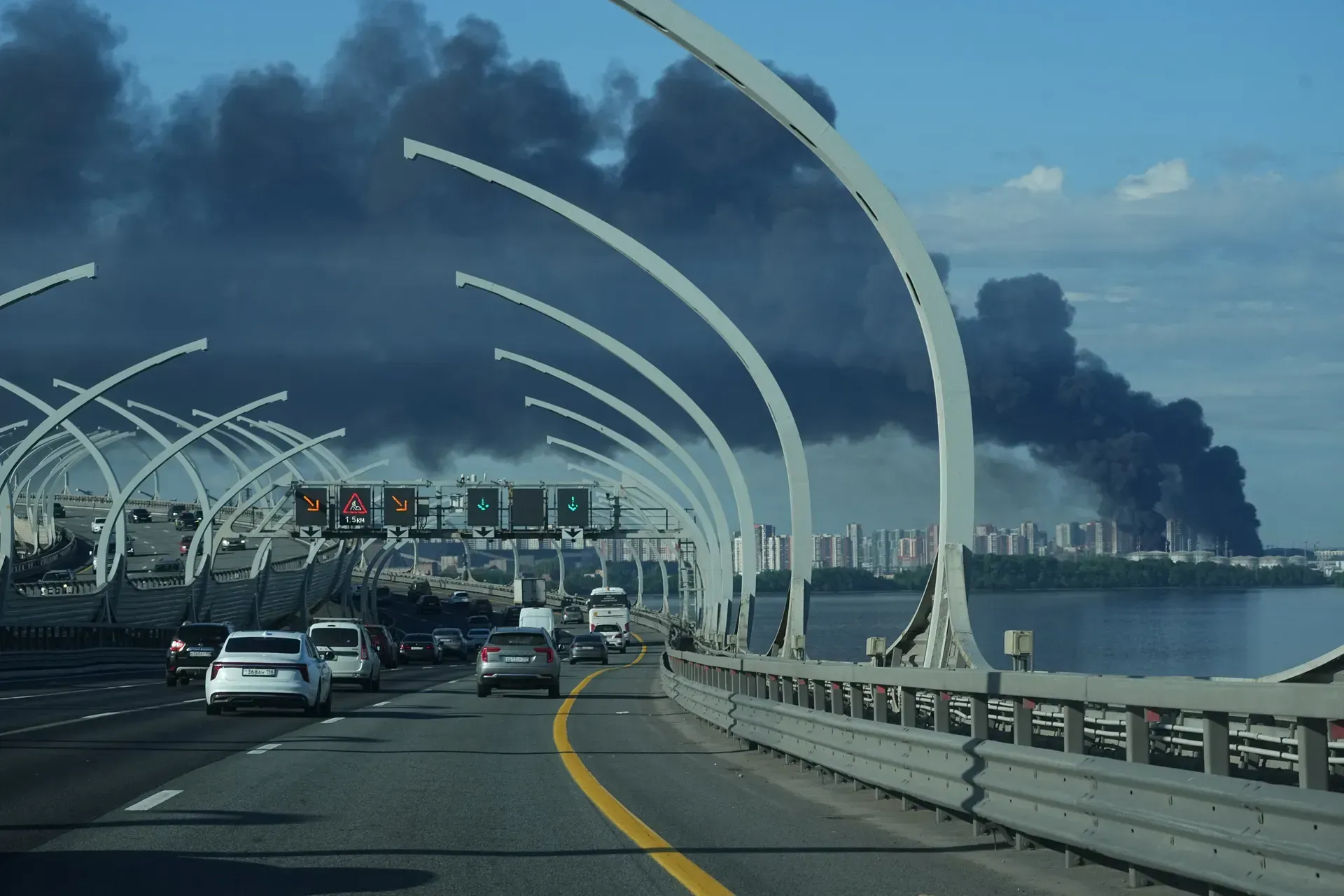
Ukraine's long-range strikes hit 697 targets in Russia causing at least $6.1 billion in damage during the first half of 2026. [1] In June 2026, Russia's gasoline production fell by 25% compared to the same period in 2025, as well as to March 2026, when Ukraine's drone strikes had begun to intensify. [2] By the end of June 2026, at least 17 regions had imposed mandatory restrictions on gasoline and diesel sales, and today most Russian Oblasts have imposed such restrictions. [2] Fuel rationing is no longer only a major problem for Russia's temporarily occupied Ukrainian territories but is now also spreading across the Russian Federation itself. [2] Even the country's traditionally well-supplied capitals, Moscow and St. Petersburg, cannot satisfy their inhabitants' demand for gasoline and diesel. [2] Faraway regions in Russia's huge Asian part, too, are increasingly drawn into a now full-scale and country-wide fuel crisis. [2] Kyiv's speedy introduction of new systems such as the Flamingo or FP-5 cruise missile, and a new generation of long-range UAVs, has made heavily defended strategic targets in and around Moscow, St. Petersburg, and other locations in the European part of Russia and partly beyond vulnerable. [2] Until recently, Russia's enormous territory had been regarded as an enormous strategic advantage. [2] It now turns out, however, that defending an interconnected energy infrastructure spread across a huge country spanning eleven time zones is a challenge rather than an advantage vis-a-vis an enemy with increasing long-range and relatively low-cost strike capabilities. [2] At least for now, Moscow is unable to shield the numerous pieces of its large energy system – oil refineries, gas and fuel pumping stations, railway hubs, and storage depots – simultaneously. [2] Perhaps, worst of all for the Kremlin, this general issue has in recent weeks acquired an outrightly dramatic dimension for illegally annexed Crimea. [2] The peninsula is not only the crown jewel of Putin's expansionism but, since 2022, also Russia's major logistics hub for military operations in the Ukrainian south. [2] The geographically determined, strategically important role of Crimea as Russia's quasi-aircraft carrier in the northern Black Sea is also the peninsula's problem. [2] Crimea is at a relatively high distance from Russia itself, close to the Ukrainian mainland, and thus particularly vulnerable to Ukraine's newly introduced weaponry and modern approach to warfare. [2] Fuel supplies to the peninsula have been disrupted not only and not so much due to refinery damage, but mainly because transportation routes from Russia to Crimea are now under constant Ukrainian attack. [2] This goes for both the rail- and motorway connection from Russia via occupied southern Ukrainian dryland to Crimea, and for the seaway transport on the newly built Kerch bridge and by large Black Sea ferries. [2] The growing tension between Russia and Crimea makes it, moreover, increasingly difficult for Moscow to sustain troop rotation, ammunition and supply stocks, as well as equipment maintenance on the occupied peninsula. [2] Russia cannot fully and swiftly compensate for, repair, or replace the facilities and stocks that Ukrainian UAVs and cruise missiles have cut off, damaged, or destroyed throughout the western parts of the Russian Federation and the area it has illegally captured from Ukraine. [2] According to eminent Germany-based historian of Russia, Nikolay Mitrokhin, now "Ukrainian strike drones control the Russian airspace at least as far as the Urals, the Russian air defense system has shrunk to a few points desperately defended by the last remaining 'Pantsir' missiles, and the Ukrainian Armed Forces now have the ability […] to take out virtually any targets." [2] Moreover, the accumulating disruptions in Russia's fuel sector coincide with declining Russian energy export revenues. [2] Falling global oil prices have reduced budget income much more than previously anticipated, forcing Moscow to revise budget projections. [2] Should this trend continue or even worsen for Russia, the overall context of the Russian-Ukrainian conflict changes. [2] The war may currently be turning from a short-term and minor into a mid-term and major hindrance to the functioning of Russia's daily economic and social life. [2] In Mitrokhin's words, "perhaps this abyss has a bottom. But it isn’t visible yet. And Russia is hurtling toward it at an ever-increasing speed." [2] Repeated strikes on oil refineries, ports and storage depots in Russia and Russian-occupied Ukraine have caused severe fuel shortages, bringing the impact of the war home to millions of Russians. [4] Putin’s approval rating remains high but recently hit its lowest point since the war started in 2022, a poll showed. [4] Ukraine's allies have seized on what they call a momentum shift in the war. [4] Some call for additional economic sanctions to force Putin to end the conflict. [4] Ukraine's recent successes, however, have made Putin angrier and more determined to give a tough response, according to the person who meets Putin regularly. [4] Speaking to generals last week in televised comments, Putin said Ukraine’s strikes on energy infrastructure meant Russia would seek to capture more Ukrainian land along the border, beyond Donbas, as a “security zone.” [4]
Challenges in Air Defense and Trump's Patriot Production Pledge
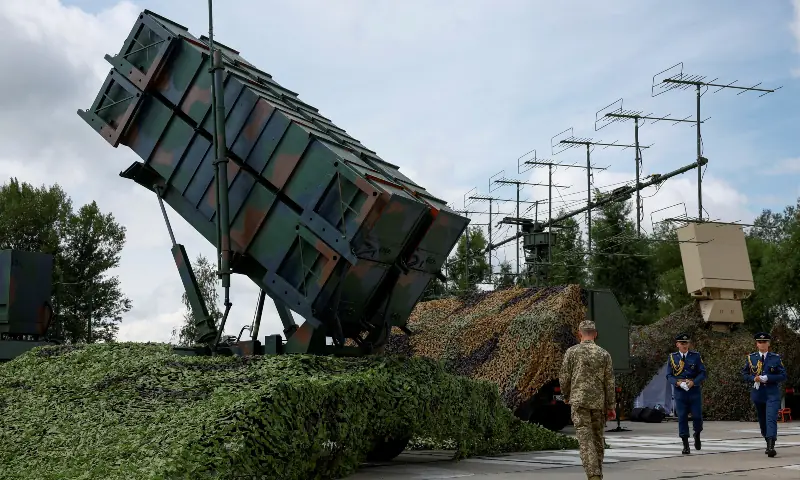
A pledge by President Donald Trump to allow Kyiv to produce US Patriot air defence missiles is a victory for Ukrainian President Volodymyr Zelensky but it could take at least a year to start producing them, defence experts say. [3] With its chronic shortage of interceptor missiles likely to continue until then, Kyiv faces tough choices over which targets are a priority to defend as Russia keeps pounding its cities and energy infrastructure. [3] Trump’s promise on Wednesday, when he met Zelensky during a Nato summit in Ankara, was a significant gesture of support that marked a huge improvement in their relationship since they clashed at the White House in February 2025. [3] Patriot interceptor missiles are vital for Ukraine’s defence at a time when Zelensky says Russia, whose battlefield advances have stalled, is trying to leverage its advantage in ballistic missiles by hitting Ukraine hard. [3] The Patriot is the only weapon in Kyiv’s arsenal capable of stopping Russian ballistic missiles. [3] Ukraine has brought down only four of the 54 much-faster ballistic missiles launched by Russia this month. [3] But Trump’s pledge was vague. [3] He acknowledged he had not spoken first to the companies that manufacture Patriot interceptors — Lockheed Martin and Raytheon. [3] Experts say the time needed to build an assembly plant and organise contractors means production of Patriot PAC-2 interceptors made by Raytheon, or the more sophisticated PAC-3 from Lockheed, will not start soon enough to ease Ukraine’s situation in the near future. [3] “Short term, the impact will be very limited,” said Fabian Hoffmann, a missile expert at the Norwegian Institute for Defence Studies in Oslo. [3] “I would be very surprised if this is faster than 12 months. I would assume significantly longer.” [3] By way of comparison, Raytheon reached an agreement with European weapons manufacturer MBDA in 2024 to produce GEM-T interceptors for the PAC-2 system in Germany and the first deliveries are not expected before early 2027. [3] Conversations for PAC-3 production in Germany have so far not borne fruit. [3] A Lockheed Martin spokesperson said the company was focused on supporting the US government and its allies, and said further comments on the proposal should be addressed to the White House. [3] Raytheon did not respond immediately to a request for comment. [3] Ukraine has managed to fast-track military development in the war since Russia’s 2022 invasion, but defence experts say building a system to down missiles travelling at several times the speed of sound is the toughest challenge in missile technology. [3] Serhii Beskrestnov, an advisor to Ukraine’s defence ministry, said on Telegram there was uncertainty over how long it would take subcontractors to scale production of scarce components. [3] One country that might be able to help Kyiv accelerate the process is Germany, which has developed a domestic production chain for PAC-2 interceptors. [3] Two sources familiar with the discussions said the new interceptors were likely to be manufactured in Germany or another European country, where it is safer, and production could be shifted to Ukraine when the war ends. [3] Zelensky said on Thursday technical teams would hammer out the details as quickly as possible but that he wanted production to start “in Ukraine as soon as possible”. [3] He said a shipment of PAC-3 interceptors from the US was expected in “coming days”. [3] He has also asked other allies to provide missiles from their own stockpiles and under a Nato-coordinated financial arrangement providing for European allies and Canada to transfer funds to the US to procure US-made weapons for Ukraine. [3] Patriot missiles are not being produced in sufficient quantities to cope with Russia’s ballistic threat, as Russia is producing at least 700-800 Iskander ground-launched and Kinzhal hypersonic air-launched ballistic missiles a year, experts say. [3] Working on the principle that three Patriots are needed per ballistic missile to ensure an interception, they estimate some 2,400 interceptors would be needed per year if Russia’s output remains stable. [3] “Even with a licensed production facility in Ukraine, reaching that number will be very, very difficult, if not impossible,” Hoffmann said. [3] Lockheed delivered just over 600 PAC-3s last year and is aiming to scale its production to around 2,000 by 2030. [3] A Ukrainian plant might produce 200 to 300 interceptors a year, Hoffmann said. [3] Zelensky has said Ukraine needs a Plan B. [3] “The only right option is an alternative to the PAC-3,” Zelensky said on Wednesday. [3] He hopes European allies involved in a nascent missile defence project called Freya, being led by Ukrainian company Fire Point, will soon meet in France. [3] Fire Point is asking European companies to provide radar, data uplink and seeker solutions to bolt on to its existing missile technology, and hopes to have a cheaper alternative to the Patriot ready before year-end. [3] “Fire Point’s Freya project is a long shot but if it works, the reward is enormous,” said Jack Watling of the Royal United Services Institute think tank in London. [3] Watling said there were other European options that should be feasible, such as the SAMP/T NG system developed by Eurosam — a joint venture of MBDA and France’s Thales — which he said would just need some technical adjustment and calibration of its radar. [3] Zelensky said on Thursday he hoped Ukraine would receive these systems from France soon. [3] Kyiv has previously floated the possibility of a truce on long-range attacks but Moscow rejected this. [3] Zelensky has also sought to bring Russia to the negotiating table by attacking its energy infrastructure, sometimes deep in Russia. [3] Kyiv’s choices look stark as Russia bombards Ukraine. [3] “You can only defend a very small number of the targets that you would like to defend, so you need to figure out which ones those are,” Hoffmann said. [3] Ukraine aims to increase the protection of energy, manufacturing and military infrastructure by placing them in protective concrete structures or underground, but Hoffmann said its best option may be to go more heavily on the attack. [3] Donald Trump’s promise to let Ukraine manufacture Patriot air defence systems could strengthen Kyiv’s capabilities in the long term, but experts warn it will not solve the country’s immediate battlefield needs. [5] Building production lines, training workers and securing supplies could take years, while Ukraine continues to face daily Russian attacks. [5]
Ukrainian forces slow Russian advances by more than half in first half of 2026. — Source: dawn
Progress on EU Accession and Broader Strategic Context
Ukraine and Moldova will take the next step in their EU accession process on July 14 after ambassadors from the bloc's 27 countries agreed on July 10 to formally open negotiations over another of the six to-do lists. [1] Kyiv and Chisinau unlocked the first of the six so-called enlargement clusters on June 15, called "fundamentals," which covers topics such as the rule of law and democratic functioning. [1] The next cluster to open concerns the alignment of the two countries' foreign policy with EU norms. [1] Taras Kachka, Ukraine's deputy prime minister for European and Euro-Atlantic integration, thanked European partners "for moving forward the agenda of the enlargement process." [1] "Cluster 6 is particularly (important) in today's global security environment. Joint security and defense policy, trade, humanitarian assistance, and development (cooperation.) Bringing Ukraine closer to the EU's Common Foreign and Security Policy." [1] The European Commission has said that Ukraine and Moldova have both been ready to open all six clusters for months, but individual EU countries, principally Hungary, have held back progress, as the process always requires unanimity to proceed. [1] Peter Magyar, head of Hungary's new government, has consistently opposed fast-tracking Kyiv's EU accession process, pushing back against any apparent preferential treatment toward Ukraine. [1] However, other countries could revive their own concerns over the remaining four clusters, particularly as they handle economic alignment, and several capitals fear Ukrainian competition. [1] Chief among those is Poland, whose agricultural and trucking sectors are especially sensitive to competition from Ukrainian companies and have a powerful voice in national politics. [1] Warsaw is also among those who pushed for stricter quotas on Ukrainian steel imports, and Polish President Karol Nawrocki has been locked in a feud with President Volodymyr Zelensky for several weeks over historical grievances. [1] Still, the progress on the external relations cluster moves forward. [1] Syrskyi also said he had instructed commanders to ensure troops are rotated from front-line positions at least once every 60 days, describing the measure as essential for soldiers' lives, health, combat effectiveness, and fair treatment. [1]
Kremlin Signals of Escalation and Battlefield Realities
President Vladimir Putin is rejecting calls to negotiate peace with Kyiv, three sources close to the Kremlin told Reuters, with Ukraine's recent drone strikes on Russia's oil refineries and ports strengthening his resolve to keep fighting for now. [4] Two of the sources, speaking on condition of anonymity, said that Putin was instead likely to escalate the conflict, now well into its fifth year. [4] One of them, who meets regularly with the president, described a “high probability" of escalation in the coming months. [4] One of the people familiar with Putin’s thinking said he had “dug in his heels” to achieve the key objective of capturing the remainder of Ukraine’s eastern Donbas region, where Russian advances have slowed this year. [4] The same source said Putin recently rebuked a group of advisers suggesting a compromise based on a ceasefire along the current front lines. [4] The second source said Putin believes Russia will soon capture the Donbas. [4] The Russian president publicly rebuffed a call by Zelensky in June for a meeting and a ceasefire. [4] Some Western military analysts believe Russia would need a mandatory draft of fighting-age men to achieve the goal of taking the Donbas. [4] The draft is a politically unpopular move Putin has been reluctant to make since early in the war. [4] Russian military experts have increasingly discussed escalation in public, including the possibility of hitting European targets such as NATO bases in Baltic countries. [4] Such a step would risk drawing Russia into direct confrontation with the US-led alliance, testing the NATO commitment that an attack on one member nation constitutes an attack on all. [4] Russia could seek to sow tensions within NATO with isolated attacks, comparable to a recent Russian drone strike on Romania, according to Jack Watling of the Royal United Services Institute (RUSI), a defense and security think tank in London. [4] “The Russians would not be aiming for a war with NATO. But it could be used to divide NATO over how to respond,” Watling said. [4] He added that heightened tensions with NATO could help give Putin a political justification within Russia for military conscription. [4] To date, about two million soldiers have been killed, wounded, or missing since the full-scale invasion in early 2022, 1.4 million of them Russian, according to a recent estimate by the Center for Strategic & International Studies. [4] Neither side releases military casualty data. [4] Russia’s troops have struggled to advance this year along the 1,200-km (745-mile) front line as Ukraine’s drones counter Russia’s numerical advantage in troops. [4] In recent weeks, Russia has been grinding into the eastern city of Kostiantynivka, one of several towns in Ukraine’s ‘fortress belt,’ a critical defensive front in the Donetsk region. [4] On July 3, Putin said Russian forces had seized Kostiantynivka. [4] Ukraine denied it. [4] A day later, during a call with Trump, Putin sought to convince him that Russia would take the remaining fifth of the Donetsk region of Donbas that Ukraine still controls. [4] Putin, the source who meets him regularly said, considers winning control of the region a matter of principle, saying the Russian president “needs some kind of victory.” [4]
What to watch next: Ukraine and Moldova will take the next step in their EU accession process on July 14 after ambassadors from the bloc's 27 countries agreed on July 10 to formally open negotiations over another of the six to-do lists, while technical teams will hammer out details on Patriot production as quickly as possible.