
Ukraine Strikes Disable Over 40% of Russian Oil Refining Capacity
Ukraine strikes have disabled more than 40% of Russia's oil refining capacity as of early July, according to Ukrainian claims, while Russia conducted multiple strikes across Ukraine on the night of 3-4 July that hit energy infrastructure, a poultry farm and civilian sites. [1] [2] [4] [5]
Ukrainian Strikes on Russian Oil Infrastructure
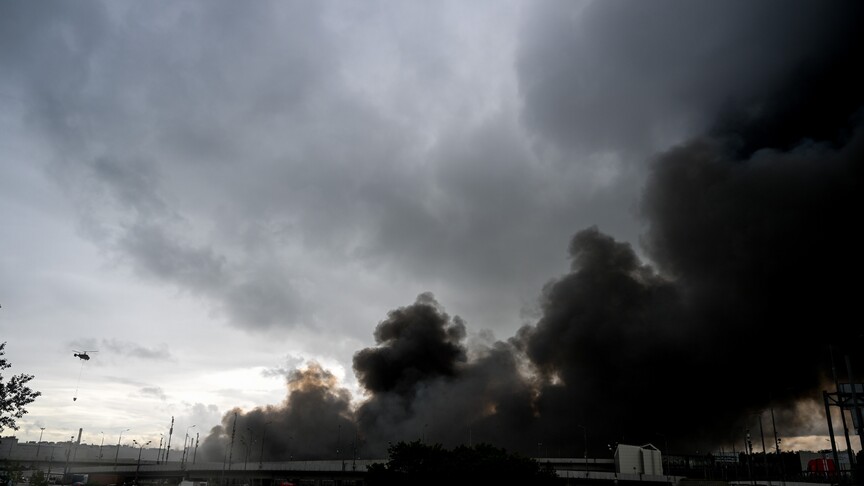
Ukraine strikes on Russian oil refineries form a key element of Kyiv's reported campaign against Moscow's energy sector. Ukrainian General Staff claims Kyiv struck 8 Russian oil refineries over the past month, disabling more than 40% of Russia's oil refining capacity as of early July. [1] This reported impact stems directly from the sequence of strikes detailed in official Ukrainian statements, which emphasize the cumulative effect on refining operations without providing further breakdowns of individual facility statuses. The claims position these Ukraine strikes as a sustained effort over a one-month period leading into early July, highlighting the scale of refinery targets engaged during that timeframe. [1]
Russian Attack on Poltava Gas Facility
Russian drones attacked one of the gas production assets belonging to the Naftogaz Group in Poltava Oblast on the morning of 4 July. [2] A fire broke out at the site and the facility's operations have been suspended following the strike. Serhii Koretskyi, Chairman of the Board of Naftogaz, stated that the scale of the damage cannot yet be assessed, while noting that employees were in shelters and took the necessary safety measures during the attack. [2] Koretskyi added that this gas production facility, along with several others in the oblast, has been repeatedly targeted by Russia, with the aim of such strikes described as an effort to disrupt gas production in Ukraine and preparations for winter. [2]
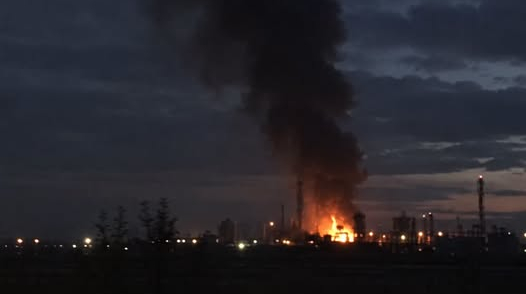
Russian drones struck a gas production facility in Poltava Oblast. — Source: ukrainskapravda
Strikes on Kherson and Odesa Sites
Russian aircraft struck a poultry farm in Kherson Oblast on the night of 3-4 July, triggering a large-scale fire that engulfed the company's production buildings after guided aerial bombs hit the site. [4] Firefighters confirmed that there were no casualties at the poultry farm. [4] In a separate incident on the same night, Russian forces launched a missile strike on civilian infrastructure in Odesa Oblast, sparking a fire in a warehouse storing food products and injuring two people who received necessary medical treatment. [5] Nearby warehouse buildings were also damaged in the Odesa strike, with firefighters quickly extinguishing the fires and all appropriate services working at the site. [5]
Major Assault on Kyiv and Casualties
Russia launched one of its largest air attacks of the war on Kyiv overnight Wednesday into Thursday, using an Iskander-M ballistic missile, a Kh-59/69 guided air-launched missile and 86 drones. [3] [2] The sustained, multi-wave assault killed at least 30 people and injured 91, while damaging more than 30 sites including homes, a kindergarten and a Red Cross warehouse. [3] Ukraine intercepted the bulk of the missiles, including cruise missiles, and long-range drones sent against the country, though some still reached Kyiv. [3] Russian officials said the attack targeted military infrastructure. [3]
Expert Analysis on Battlefield Context
Experts link Russia's increased long-range strikes to slowed battlefield progress, noting that front lines have remained largely unchanged in recent months. [3] Russia managed to seize around 30 square kilometers of Ukrainian territory in June 2026, amounting to roughly one square kilometer of progress per day, compared to about 500 square kilometers captured during the same period a year earlier when advances averaged around 16 square kilometers per day. [3] Losses for Russian forces are up several-fold compared with the situation a year ago, according to Gert Kaju, head of the defense readiness department at the Ministry of Defense. [3] Security expert Raivo Vare stated that the actions serve Russian domestic consumption while forces remain bogged down, showing a lack of meaningful initiative or major strategic momentum in the broader offensive that reportedly began in the spring. [3] Another security expert, Rainer Saks, described the attacks as desperate, noting that Russia is simply wasting these missiles to kill people without inflicting meaningful damage on Ukraine. [3]

Russian strikes hit Ukrainian energy infrastructure and civilian sites on 3-4 July. — Source: errnews
International Response and Sanctions Push
In response to the week's deadly strikes on Kyiv, EU foreign policy chief Kaja Kallas said she would be proposing sanctions against many more institutions and companies which shore up Russia's military-industrial sector. [3] Raivo Vare described this proposal as representing a more significant breakthrough than previous measures, with the timing indicating that committing atrocities would lead to payment in practical terms under EU policy. [3] The EU has started disbursing €6 billion under the €90 billion support loan to strengthen Kyiv's defences. [3] Rainer Saks noted that what really needs to be sanctioned is Russia's mineral production and exports, as that is the only measure that can significantly limit Russia's ability to sustain the war over the long term. [3]
What to watch next: EU foreign policy chief Kaja Kallas plans to propose additional sanctions targeting institutions and companies supporting Russia's military-industrial sector, while experts continue to assess the limited impact of recent strikes on overall war dynamics. [3]