
Ukraine Conflict Sees 60 Russian Equipment Losses on Sloviansk Front in Four Days
In the Ukraine conflict, Ukrainian forces have reported successes against Russian equipment on the Sloviansk front while facing intensified Russian drone and bomb attacks on Zaporizhzhia and conducting strikes on fuel supplies to occupied Crimea and deep inside Russia.
Ukrainian Successes on the Sloviansk Front
Troops from Ukraine's 81st Separate Slobozhanska Airmobile Brigade destroyed 60 pieces of Russian light military equipment over four days on the Sloviansk front. [1] The brigade published footage of the destroyed equipment to document the results achieved during that period. [1] The General Staff of the Armed Forces of Ukraine reported that the Sloviansk front ranks as the second most intense area of fighting after Pokrovsk. [1] Over the course of 10 July, Russian forces launched 29 assaults on Ukrainian positions toward the settlements of Kryva Luka, Rai-Oleksandrivka and Mykolaivka, as well as in the areas of Riznykivka and Zakitne. [1]
Intensified Russian Attacks on Zaporizhzhia
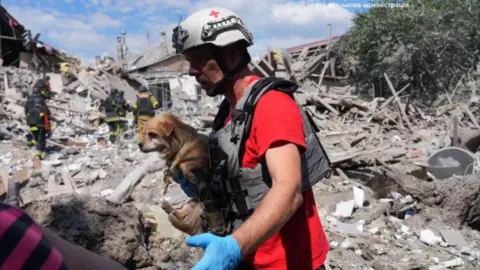
Russian forces intensify glide bomb and Shahed drone attacks on Zaporizhzhia in June. — Source: bbc Russian attacks on Zaporizhzhia intensified dramatically in June, with glide bombs, Shahed drones and FPV drones striking buses, schools, offices, petrol stations and residential areas. [2] Anna Holovchenko, an IT specialist in the city, described being woken at five in the morning by glide bombs hitting the suburbs, followed an hour later by drones flying over her house while air defences attempted to intercept them. [2] Numerous buses, petrol stations, schools, government offices and residential houses have been hit in recent weeks. [2] Acting mayor Regina Kharchenko stated that during one intensive attack she took cover in the toilet after the noise grew too loud. [2] A Shahed drone crashed near her office, and another struck a cable and took down the internet. [2] Kharchenko told a city council meeting held in an underground shelter that the enemy had stepped up terror against civilians, municipal transport, privately owned buses, cars, residential buildings and even children. [2] Plans include building more shelters across the city, installing additional anti-drone nets at busy locations and applying anti-shatter film to windows in schools, hospitals and public buildings. [2] Kharchenko said she sometimes sleeps on the floor in a corridor at home on the seventh floor of an ordinary high-rise building. [2] Local authorities intercepted 884 Russian drones in the last week of June alone. [2] Three people died when a bus carrying civilians was struck. [2]
Ukrainian Strikes on Fuel Supplies to Crimea
Ukraine struck 19 Russian shadow tankers, a cargo ship and a ferry supplying fuel to Crimea between 6 and 8 July. [3] Ukrainian Unmanned Systems Forces commander Robert Brovdi said his forces had struck nine tankers on the night of 7 July alone. [3] Ukrainian Navy spokesman Dmytro Pletenchuk explained that Russia had rerouted fuel supplies to Crimea after Ukraine deprived it of overland routes, leaving options of a land corridor or sea connection. [3] Ukraine had previously disabled the oil offloading terminal at Novorossiysk. [3] Ukrainian President Volodymyr Zelenskyy stated that the operations slowed the militarisation of the occupied peninsula by cutting off logistics and taking control of the fuel and energy complex. [3] The Ukrainian Presidential Office in Crimea said the strikes caused a management crisis on the peninsula. [3] In Sevastopol fuel has stopped being sold to civilians, and more than a dozen Crimean regions are suffering from electricity blackouts. [3] Ukraine also destroyed seven Sukhoi aircraft and two sheds containing Shahed aerial drones at the Saky airfield on 3 July, the Kerch oil transhipment terminal on 6 July and three hangars at the Guardsman airfield on the same day. [3]
Deep Strikes on Russian Oil and Military Infrastructure
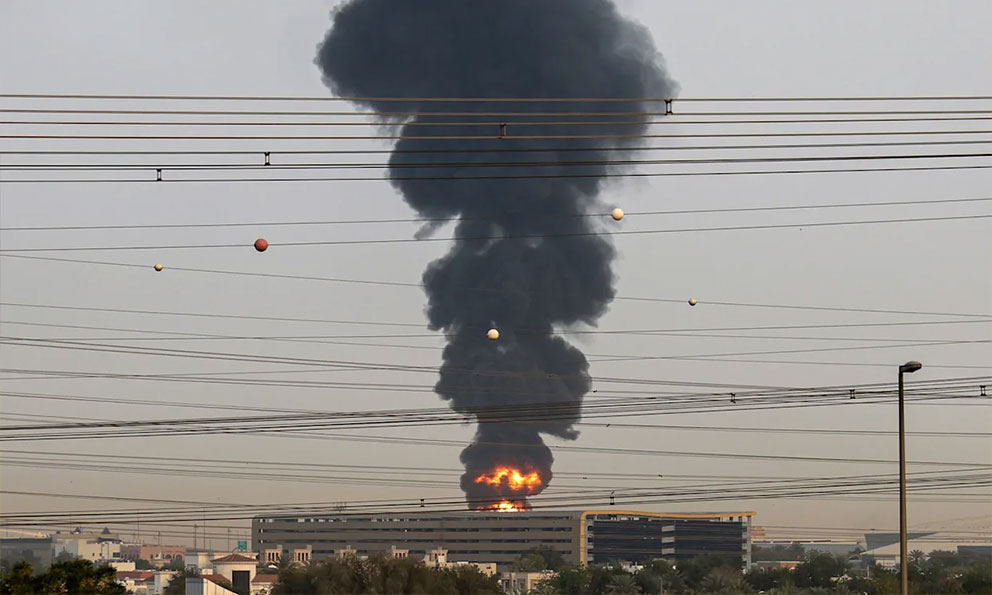
{IMAGE_3} Ukraine struck multiple Russian oil refineries and terminals, including the Omsk refinery in Siberia, the St Petersburg terminal, the Slavneft Yanos refinery in Yaroslavl and the Ust-Luga refinery. [3] The SBU said it struck and set alight the St Petersburg oil terminal on 4 July, described as one of the largest oil product transshipment terminals in the Baltic region. [3] Zelenskyy posted video showing the terminal in flames. [3] Ukraine’s General Staff said its forces had struck the Slavneft Yanos refinery in Yaroslavl, 700km from Ukraine, the Ust-Luga refinery on the Baltic Sea and the Omsk Refinery. [3] Russia’s defence ministry said it had shot down 613 of 625 Ukrainian drones detected in the airspace overnight. [3] Ukraine’s Air Force said that Russia had lost 42.7 percent of its refining capacity over the past year and suffered $13.5bn of damage to oil infrastructure. [3] These strikes have caused petrol and diesel shortages in the Russian market, with consumers in urban hubs lining up to fill their cars. [3] Ukraine also struck the Kremny EL Group in Bryansk, which it said manufactured microchips, semiconductors and other electronics for the armed forces. [3]
Countering Iskander Missiles and Drone Campaigns
Ukraine has conducted systematic drone strikes on Iskander missile production facilities in six Russian cities including Bryansk, Zelenograd, Cheboksary, Voronezh, Volgograd and Penza. [4] The plants produced components from launch systems to microelectronics, and the facilities in Voronezh and Volgograd suffered very serious damage. [4] Ukraine has deployed electronic jamming systems like Lima to counter ballistic missiles, with the system producing several forms of electronic jamming that neutralised 61 Kinzhal missiles. [4] Mayor Sergei Sobyanin said Ukraine launched its largest strike on Moscow in two years, with more than 400 Ukrainian drones downed while heading for the city on 7 July. [3] Drones have already hit almost one third of the Russian fleet in the Sea of Azov, with Ukrainian medium-range drones striking 35 Russian naval vessels of various types within 96 hours from the start of the operation. [4] Further reports indicated that one third of the vessels had been hit. [4]
Frontline Dynamics and Assessments
Zelenskyy said the air war would prove decisive because in 2026 Ukraine’s ground troops had effectively stopped Russia’s slow advance of the last two years. [3] Independent assessments have suggested that Russia gained a total of 97 square kilometres in the first six months of the year. [3] Zelenskyy’s commander-in-chief Oleksandr Syrskii wrote that it is still too early to talk about a qualitative turning point in the war, noting that the aggressor is showing signs of exhaustion but retains significant offensive potential and plans to extend the front line, which already exceeds 1,250 kilometres. [3] Putin was told that Russia has seized 3,000sq km of Ukraine so far this year and liberated 133 settlements. [3] His commander in chief Valery Gerasimov claimed to control the cities of Kupiansk in Kharkiv and Kostiantynivka in Donetsk. [3] The Institute for the Study of War estimated that Russian forces have a presence in 2.4 percent of Kupiansk and 37 percent of Kostiantynivka, mostly in the form of infiltrations. [3] The Ukrainian military estimated the number of Russian servicemen in Kostiantynivka at between 100 and 250. [3] Putin was told that Russian forces seized 636sq km of Ukraine in June alone, while the ISW estimates the real number at 30sq km. [3]
What to watch next: Zelenskyy’s comments on developing the FREYA anti-ballistic system and licensing for interceptor missiles, alongside Syrskii’s assessment of Russian offensive potential and continued Ukrainian strikes on energy and naval targets.