
Two Moderate Earthquakes Rattle Peru on January 10, 2026: Events Near Arequipa and in Lima
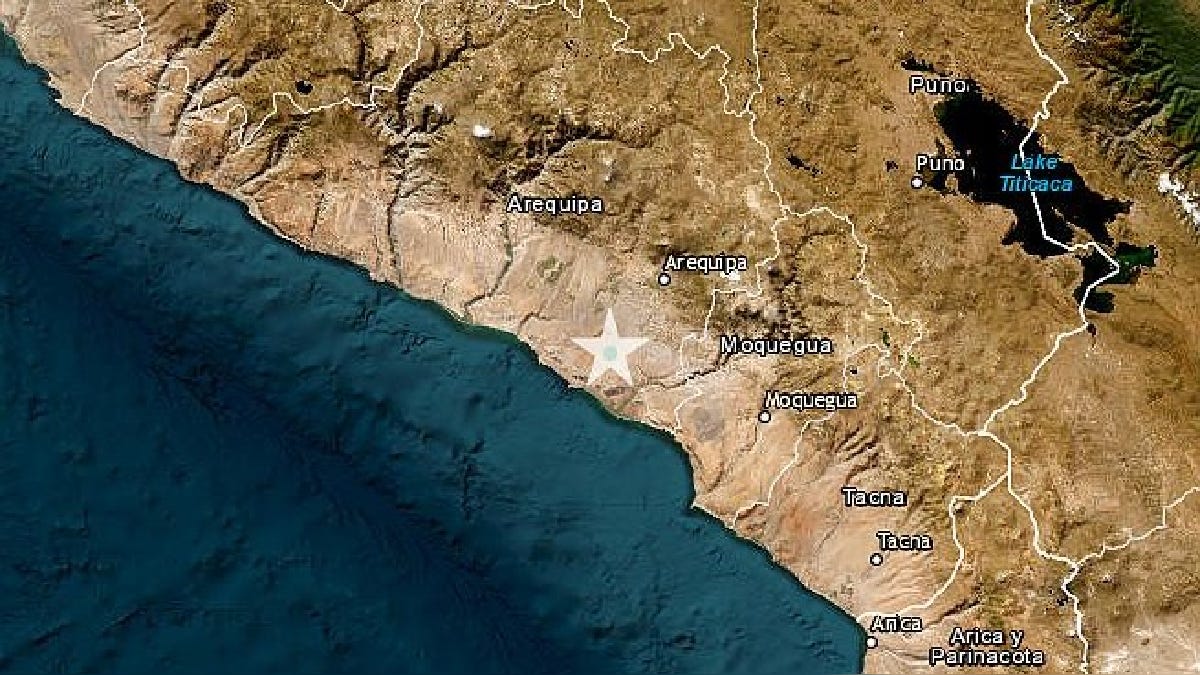
LIMA, Peru — Peru experienced two moderate earthquakes on Saturday, January 10, 2026, with tremors felt in the southern Arequipa region and the capital city of Lima within a span of about 25 minutes. The first, a magnitude 4.3 quake centered 11 kilometers southeast of Mollendo in the Arequipa department, struck at 7:44 p.m. UTC, followed by a tremor in Lima at 8:09 p.m. UTC. No immediate reports of damage or injuries have emerged from either event, both classified as medium severity.
The U.S. Geological Survey (USGS) recorded the initial earthquake near Mollendo at a depth of 66.2 kilometers. Mollendo, a coastal city in southern Peru's Arequipa region, lies along the Pacific coastline, an area prone to seismic activity. Local media in Arequipa reported the event as a magnitude 4.0 tremor that shook the region that afternoon, noting it as the second such quake felt in the area recently. The RPP.pe article highlighted the shaking as perceptible but did not detail casualties or structural impacts.
Just 25 minutes later, a tremor rocked Lima, Peru's densely populated capital home to over 10 million residents. Elpopular.pe reported the epicenter's location, marking it as the latest sismo—or earthquake—in the country that day. Specific details on the magnitude and depth for the Lima event were not immediately available from the sources, but it aligned with the pattern of moderate seismic disturbances common in the region.
Both events occurred amid Peru's ongoing seismic vigilance. The country, situated on the Pacific Ring of Fire, routinely monitors tectonic shifts along the Nazca Plate's subduction beneath the South American Plate. This boundary generates thousands of earthquakes annually, most of them minor but occasionally devastating. Historical data from the USGS indicates Peru averages over 100 earthquakes of magnitude 4.0 or higher each year, with southern regions like Arequipa and central areas including Lima frequently affected.
Background on Peru's Seismic Activity
Peru's location at a major plate boundary makes it one of the most seismically active nations in South America. The Nazca Plate moves eastward at about 77 millimeters per year, diving under the South American Plate at angles that produce intermediate-depth quakes like the 66.2-kilometer event near Mollendo. Arequipa, often called the "White City" for its volcanic stone architecture, has endured significant past events, including a magnitude 8.8 earthquake in 1868 and more recent magnitude 6.8 shaking in 2001 that caused widespread damage.
Lima, built on unstable alluvial soils, amplifies ground motion during tremors, posing risks to its aging infrastructure. The city last experienced a major quake in 1974 (magnitude 7.6), which killed hundreds and highlighted vulnerabilities in urban planning. Both the 2026 events' moderate magnitudes—around 4.0 to 4.3—typically do not cause serious damage but can unsettle residents and trigger landslides in hilly terrains.
Peruvian authorities, through the National Seismological Center (CENSIS) affiliated with the Geophysical Institute of Peru, maintain real-time monitoring. Following the quakes, standard protocols likely included aftershock assessments and public advisories, though specific governmental statements were not detailed in the initial reports.
Regional Response and Context
The Arequipa tremor was contextualized locally as the second felt in the region that day, suggesting heightened sensitivity among residents. Published shortly after the Mollendo event, the RPP.pe coverage emphasized the afternoon shaking without reporting disruptions to daily life. In Lima, the elpopular.pe update focused on the epicenter, aiding public awareness in a metropolis where even minor quakes prompt evacuations from high-rises.
As of January 10 evening UTC, no updates indicated significant aftershocks, injuries, or infrastructure issues from either quake. Medium severity classifications from monitoring sources reflect low risk of widespread harm, consistent with global standards where magnitude 4.0-4.9 events rarely exceed light shaking.
Outlook
Seismologists continue to track potential aftershocks, a common occurrence following moderate quakes in subduction zones. Peru's robust early-warning systems, expanded since the 2007 Pisco earthquake (magnitude 8.0, over 500 deaths), provide seconds of advance notice in urban areas. Residents in Arequipa and Lima remain on alert, underscoring the nation's preparedness amid its geological realities.
Global trackers like the USGS and local outlets will provide ongoing updates as data refines. These events serve as reminders of Peru's tectonic dynamism, with no signs of escalation into major seismic crises.
(Word count: 612)