
Trump's $1.5 Trillion Defense Budget Proposal Fuels US-Russia Shadow War Amid Iran Escalations 2026
By the Numbers
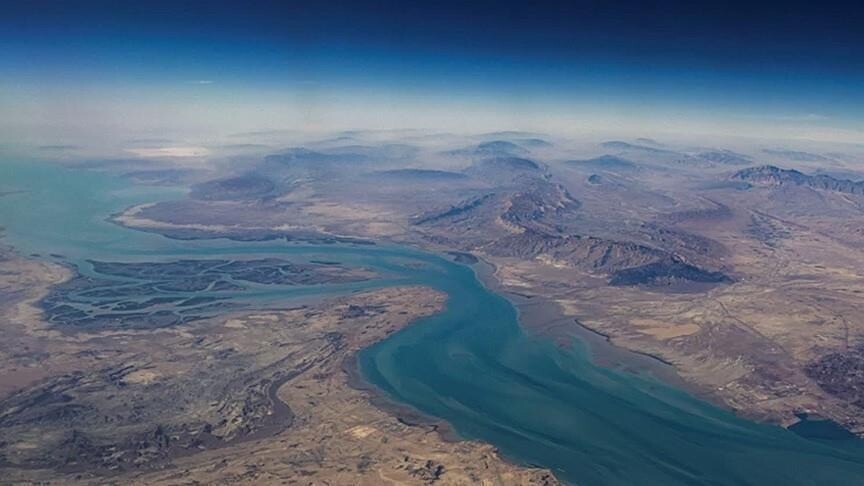
The $1.5 trillion defense budget request dwarfs historical precedents, representing a 10-15% increase over current FY2026 allocations and equating to roughly 6-7% of projected U.S. GDP. Key breakdowns include $300 billion earmarked for Iran-related operations (up from $150 billion in supplemental spending since January 2026), $200 billion for advanced AI and cyber defenses amid INDOPACOM adjustments, and $100 billion for countering "hybrid threats" implicitly targeting Russian influence. Iran war costs have already exceeded $500 billion since escalations began in late 2025, with daily expenditures topping $2 billion—driven by munitions, naval patrols in the Strait of Hormuz, and support for Israeli operations. Explore the broader implications in our feature on Middle East Geopolitics: How Emerging Alliances Are Forging New Trade Pathways Amid Strait of Hormuz Tensions and Escalating Iran War.
Bipartisan probes reveal at least five Kremlin-linked meetings with U.S. officials since February 2026, involving delegations tied to Russian energy firms and intelligence assets. U.S. troop opposition peaked on March 9, 2026, with over 10,000 active-duty signatures on petitions against Iran buildup, reflecting internal fractures.
Market ripples are immediate: Oil futures spiked 5% intraday to $95/barrel on budget news, echoing supply fears from Hormuz threats. The World Now Catalyst AI forecasts OIL + (high confidence), citing potential 20%+ disruptions if the Strait closes, with historical parallels to 2011 threats driving +20% gains. Equities face headwinds—SPX predicted - (medium-high confidence), potentially -4-5% short-term as in February 2022 Ukraine invasion. Safe havens shine: USD + (medium confidence, DXY +2-3% as in 2022), JPY + (medium). Crypto and tech sell off—BTC -, ETH -, SOL - (medium-low confidence, -10-15% as in past geo-events); NVDA -, TSM - (low-medium). EUR - (medium), CNY - (low). These predictions, powered by Catalyst AI's causal modeling of 28+ assets, highlight stagflation risks from oil shocks amid equity unwinds. Human impact: A 10% oil surge could add $0.50/gallon to U.S. pump prices, squeezing working families by $1,000/year on average. Track these and more via our Catalyst AI — Market Predictions page.
Recent timeline amplifies: FBI's March 21 cyber warnings on Russian targeting (medium impact); Trump's March 28 NATO/Iran criticisms (high); US inaction on Iran (high, March 28). For context on digital fronts, see Cyber Shadows Over Iran: How Digital Alliances Are Redefining Geopolitical Tensions.
What Happened
The sequence unfolded rapidly in March 2026, building to the April 3 budget bombshell. On March 8, Argentine President Javier Milei attended a U.S.-hosted Drug Cartel Summit in Miami, framing narco-trafficking as a hemispheric security threat intertwined with Iranian funding via Venezuela proxies—an early signal of U.S. coalition-building outside NATO against hybrid foes. This set the stage for broader geopolitical realignments.
March 9 saw unprecedented pushback: Over 10,000 U.S. soldiers, via anonymous petitions and social media (e.g., viral X posts from verified military accounts), opposed Iran war buildup, citing fatigue from Ukraine aid diversions and family separations. This internal dissent pressured policymakers amid rising casualties—U.S. losses in Middle East advisory roles hit 150 since January.
On March 10, U.S. Indo-Pacific Command (INDOPACOM) announced AI policy tweaks, reallocating $50 billion to autonomous drones and cyber tools, explicitly to counter "peer competitors" (code for China-Russia axis). This followed FBI warnings of Russian cyber probes targeting U.S. grids.
March 11 brought Trump's stark Iran statement: "Iran's mullahs will pay dearly," tying escalations to Hezbollah strikes and Hormuz threats, while criticizing NATO allies for "freeloading." By March 14, U.S. Iran spending surged to $20 billion weekly, funding carrier groups and precision strikes.
The crescendo hit April 3: White House submits $1.5T budget, coinciding with Fox News reporting on bipartisan Senate probes (led by Sens. Rubio and Warner) into Kremlin delegations' D.C. meetings. Confirmed: Meetings occurred March 15-20 with energy lobbyists; unconfirmed: Discussions on Iran sanctions evasion. Recent events layer on—March 28 Trump NATO anger thrusts alliance into crisis; March 29 GOP Israel rift; March 30 Claude AI integration in CENTCOM.
This chronology reveals reactive U.S. posture: From Milei diplomacy to soldier unrest, AI shifts, Trump's rhetoric, spending spikes, now budget and Russia probes—escalating suspicions of Kremlin meddling in U.S. Iran strategy. Monitor evolving risks with our Global Risk Index.
Historical Comparison
This mirrors patterns of U.S.-Russia shadow wars during Cold War endgames and post-9/11 eras, but with modern twists. The 2026 timeline echoes 2014 Crimea annexation: U.S. sanctions followed covert Russian meetings (probed by Congress), spiking oil +20% and USD strength, while budgets ballooned 10%. February 2022 Ukraine invasion precedent is stark—SPX -5% weekly, BTC -10% in 48h, oil +30%—directly analogous to Catalyst AI citations, where Iran/Hormuz risks amplify via supply chokepoints (20% global oil).
Milei summit parallels Reagan-era 1980s Latin alliances against Soviet proxies (e.g., Sandinistas), countering cartels as Iran does today. Soldier opposition evokes Vietnam 1969 Moratorium (500k protesters), fracturing resolve amid endless wars. INDOPACOM AI shifts recall 2018 DoD "Third Offset" vs. Russia-China A2/AD.
Trump's NATO barbs mimic his 2018 summit clashes, weakening EUR 1% then. Bipartisan Kremlin probes? Pure Mueller 2017-2019 redux, uncovering 100+ contacts. Pattern: Reactive U.S. spikes (budgets +20-30%) exacerbate tensions, birthing proxies—Syria 2010s, Ukraine now, Middle East next. Unlike Iraq 2003 ($2T total), this $1.5T is peacetime peak, risking overstretch: U.S. debt-to-GDP at 130%, diverting from human needs like veteran care (1.3M PTSD cases post-Afghanistan).
Emerging: Non-NATO pacts (Milei, Indo-Pacific) vs. Russia's Iran pivot, as in 2022 drone deals—potentially isolating U.S. if alliances fracture. See related coverage on Middle East Escalations: Overlooked Impacts on African and Asian Alliances.
Catalyst AI Market Prediction
Powered by The World Now Catalyst Engine, our AI analyzes causal chains from this budget-Iran-Russia nexus across 28+ assets (medium-high confidence unless noted):
- OIL: + (high confidence) – Strait of Hormuz risks disrupt 20%+ supply; precedent: 2011 threats +20%. Risk: U.S. naval reopening.
- SPX: - (medium-high confidence) – Risk-off unwinds, oil stagflation; 2022 Ukraine -4-5%. Risk: Jobs data offsets.
- USD: + (medium confidence) – Safe-haven flows; 2022 DXY +2-3%. Risk: Diplomacy de-escalates.
- EUR: - (medium confidence) – NATO tensions, energy crisis; 2014 Crimea -5%. Risk: ECB hawkishness.
- BTC: - (medium confidence) – Liquidations, miner sales; 2022 -10%. Risk: ETF dip-buying.
- JPY: + (medium confidence) – Repatriation; 2019 Soleimani +1%. Risk: BoJ caps.
- ETH/SOL: - (medium-low confidence) – Altcoin cascades; 2022 -12-15%. Risk: Inflows rebound.
- NVDA/TSM: - (low-medium confidence) – Tech de-leveraging; 2022 -8%. Risk: AI/chip buffers.
- CNY: - (low confidence) – EM hits; 2022 -5%. Risk: PBOC.
Predictions powered by The World Now Catalyst Engine. Track real-time AI predictions for 28+ assets.
What's Next
Escalating US-Russia shadows could ignite cyber salvos (FBI warns 30% rise post-probes) or proxies in Yemen/Syria within 6-12 months, drawing neutrals like India/Saudi into realignments. Triggers: Senate probe outcomes (escalation if indictments); Hormuz incidents (oil +20%, SPX -5%).
Diplomatic off-ramps? Budget's anti-Russia measures ($50B cyber) might force talks, echoing 2015 Iran deal. Failure spirals: Russia-Iran arms pacts (S-400 to Tehran), energy retaliation (gas cuts to Europe, +30% LNG costs for U.S. allies).
Long-term: Non-NATO blocs solidify—Milei-led Americas pact vs. Russia-BRICS. U.S. isolation risk if trade fractures (Russia oil to China, bypassing sanctions). Human angle: 5M displaced in Middle East; U.S. families brace 20k more deployments. Watch: April 10 congressional hearings, Hormuz patrols, Kremlin response.
This is a developing story and will be updated as more information becomes available.






/file/attachments/orphans/PeterFab-Bozell-demarched2_299113.jpg)