
Trump Voices Doubts on NATO Allies' Reliability While Reaffirming U.S. Commitment
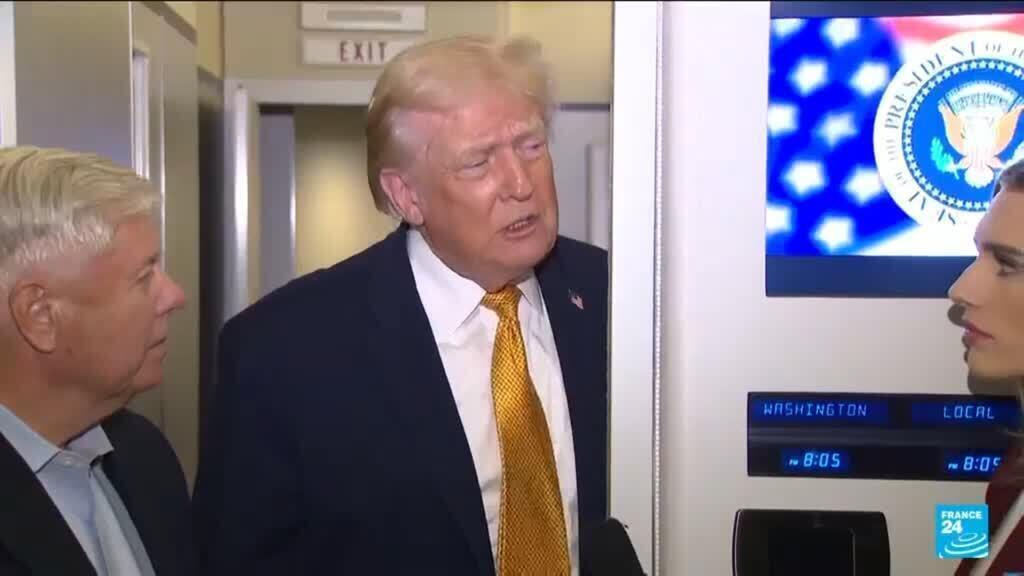
Washington, D.C. – U.S. President Donald Trump expressed skepticism about the reliability of NATO allies on Wednesday, stating he doubted they "would be there for us if we really needed them," amid renewed tensions over his threats to seize Greenland from Denmark, a NATO member. In the same remarks, Trump emphasized that the United States would "always be there" for the alliance, highlighting a complex stance on transatlantic security.
The comments, delivered in a post on social media and reported by multiple outlets, come as Trump continues to press European allies on defense spending and territorial ambitions. According to France 24, Trump's statements were linked to his recent threats against Denmark regarding Greenland, an autonomous Danish territory strategically located in the Arctic. "US President Donald Trump, whose renewed threats to seize Greenland from NATO member Denmark have rattled the transatlantic alliance," the report noted, quoting Trump directly on his doubts about allied support.
Newsmax provided additional context from the same event, quoting Trump as saying, "We will always be there for NATO, even if they won't be there for us." He further argued that Russia and China only respect the alliance because of U.S. involvement, underscoring America's pivotal role. "President Donald Trump said Wednesday the U.S. would always support NATO and that Russia and China only feared the alliance as long as the United States was a member," the article stated.
These remarks reflect ongoing friction within the NATO framework, which Trump has criticized since his first term. During his 2017-2021 presidency, Trump repeatedly accused European nations of failing to meet the alliance's 2% GDP defense spending target, using it as leverage in summits and public statements. At the 2018 NATO summit in Brussels, he famously walked out of a meeting and demanded immediate spending increases, prompting emergency sessions among allies.
The Greenland issue adds a new layer of geopolitical strain. In 2019, during his first term, Trump publicly floated the idea of purchasing Greenland from Denmark for national security reasons, citing its mineral resources and strategic position amid great-power competition in the Arctic. Denmark's then-Prime Minister Mette Frederiksen called the proposal "absurd," leading to the cancellation of a planned state visit. Recent "renewed threats," as described by France 24, suggest the topic has resurfaced, potentially testing NATO cohesion early in Trump's second term.
NATO Secretary General Jens Stoltenberg has historically responded to such U.S. pressures by noting progress on spending: by 2024, 23 of 32 members were projected to meet the 2% goal, up from just three in 2014, largely due to Russia's invasion of Ukraine. However, Trump's latest comments signal that he views these gains as insufficient, particularly in light of perceived imbalances where the U.S. shoulders about 70% of the alliance's defense spending.
Background on U.S.-NATO Dynamics
The North Atlantic Treaty Organization, founded in 1949, binds 32 member states to collective defense under Article 5, invoked once after the 9/11 attacks when allies supported the U.S. in Afghanistan. Trump's rhetoric has often framed NATO as a one-sided bargain, echoing longstanding debates in U.S. foreign policy circles about burden-sharing. Critics, including some Republicans, argue for a more transactional approach, while Democrats and European leaders warn that public doubts undermine deterrence against Russia and China.
Russia's 2022 invasion of Ukraine galvanized NATO, leading to Finland and Sweden's accession in 2023 and 2024, respectively, expanding the alliance's Nordic frontier. China, meanwhile, has increased Arctic activities, investing in icebreakers and ports, which heightens the strategic value of Greenland's position.
Trump's dual messaging—doubting allies while pledging U.S. loyalty—may aim to rally domestic support for continued American leadership without concessions. FRANCE 24's Gabrielle Nadler reported on the alliance-wide ripple effects, noting that Trump's Greenland saber-rattling has "rattled" partners.
Outlook for Transatlantic Relations
As NATO prepares for its next summit, Trump's statements could foreshadow demands for higher spending or concessions on Arctic security. European leaders, including Denmark's government, have not yet formally responded to the Greenland comments, but past reactions suggest firm pushback. The U.S. remains NATO's indispensable power, contributing the majority of capabilities from nuclear deterrence to expeditionary forces.
Analysts will watch whether these remarks translate into policy shifts, such as revised Arctic strategies or tariff threats tied to alliance compliance—though no such links were mentioned in Wednesday's statements. With global threats from Russia in Ukraine and China's Pacific ambitions, NATO's unity remains a cornerstone of U.S. geopolitics.
(Word count: 612)