Trump Told Zelenskyy Strong 2014 Leadership Would Have Prevented Ukraine War
Ukrainian President Volodymyr Zelenskyy stated that US President Donald Trump told him strong leadership in 2014 would have prevented Russia's full-scale war on Ukraine after its seizure of Crimea, as the two leaders plan to meet at the G7 summit while Russia faces mounting military recruitment problems and high casualties in its invasion.
Zelenskyy and Trump's June Phone Call
Ukrainian President Volodymyr Zelenskyy recounted details from his phone call with US President Donald Trump on 14 June. [2] During that conversation Trump stated that there would have been no war in Ukraine if there had been strong leadership when Russia seized Crimea in 2014. [2] Zelenskyy described Trump's words about Crimea as entirely correct and noted that the conflict began with Russia's seizure of the peninsula. [2] Zelenskyy thanked Trump for the assistance the United States has provided to Ukraine. [2] The two leaders agreed during the call to meet at forthcoming G7 events. [2] Zelenskyy spoke about the call in his evening address and emphasized that the conversation covered the situation stemming from the 2014 events. [2] The phone discussion took place on the same day that marked Trump's 80th birthday. [1]
Planned G7 Summit Discussions on Ending the War
Zelenskyy said he will discuss the Russian invasion and efforts to end it during a meeting with Trump at the G7 summit in France. [1] He stated that Ukrainians share one wish to convey to President Trump, which is that peace can finally be achieved together with the United States and all partners. [2] Zelenskyy added that it is important for American society to fully support Ukraine's aspiration for a dignified peace and its defence against Russia's war. [2] The upcoming in-person meeting at the G7 will allow the leaders to address these topics directly after their 14 June phone conversation. [2] Trump has also spoken with Russian ruler Vladimir Putin by phone in related diplomatic contacts. [2] Zelenskyy highlighted that the G7 gathering provides an opportunity to advance coordinated efforts involving the United States and other partners to reach a resolution. [1]
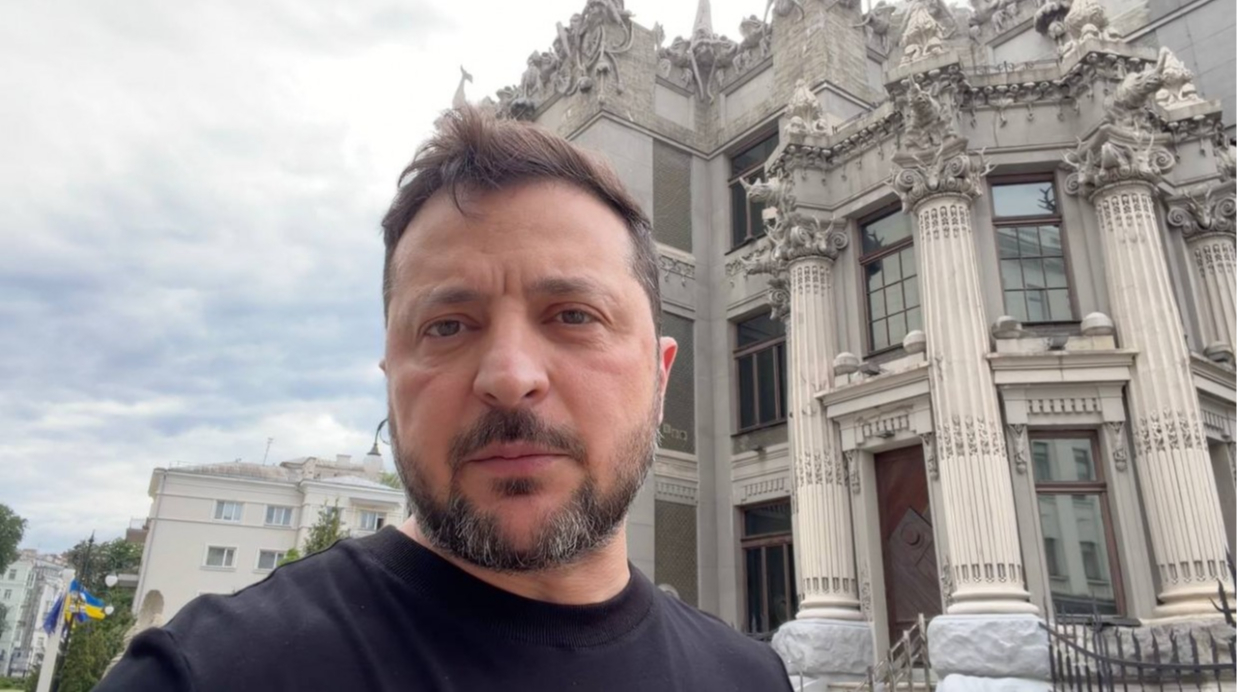
Zelenskyy speaks during an evening address about his phone call with Trump. — Source: ukrainskapravda
Russia's Growing Military Recruitment Crisis
Russia is increasingly struggling to replenish its armed forces for the war against Ukraine. [3] Expert Janis Kluge estimates that recruitment into Russian forces fell by 20% in the first quarter of this year compared with 2025. [3] The decline continues to show signs of faltering according to the assessment. [3] Moscow has resorted to increasingly desperate measures to replenish its forces. [3] Russia has already sent tens of thousands of former prisoners to the front line. [3] It has received reinforcements in three separate waves of North Korean troops. [3] The government has encouraged migrants to join its armed forces. [3] More recently authorities announced a new recruitment drive offering to clear debts of up to US$140,000 for men who agree to serve and who might otherwise face penalties for default. [3] Nigel Gould-Davies stated that Russia is also facing labour shortages across multiple sectors of the economy as a result of diverting manpower to the war. [3] Maria Snegovaya noted that the Kremlin may address its recruitment problems by increasing pressure on regions outside major cities, encouraging students to sign military contracts, and recruiting more foreign nationals. [3] CNN reports that Russian ruler Vladimir Putin is likely to be forced into further unpopular decisions this year if he wishes to continue the invasion of Ukraine. [3] A second forced mobilisation could be carried out as a last resort, combined with measures such as restricting citizens' freedom to leave the country, particularly for men of conscription age. [3] Putin aimed to avoid this step because the first partial mobilisation proved highly unpopular and prompted many Russians to emigrate. [3]
Economic Strain and Labor Shortages from the War
Russia's defence industry is already operating at full capacity. [3] It is becoming harder to expand military production as demand for workers places additional strain on the rest of the economy. [3] The whole Russian economy is suffering from the most severe labour shortage in history according to Gould-Davies. [3] The shortage may force the Kremlin to draw on more labour from India, North Korea, and various African countries to ease the burden on both the civilian and military sectors. [3] Gould-Davies predicts that the Kremlin will soon face a fundamental choice over whether to radically escalate its demands on Russia's economy and society or to scale back its war aims. [3] Snegovaya believes the fact that the defence sector is approaching the limits of its capacity creates difficulties for Putin although this is not catastrophic. [3] From an economic standpoint the strain is becoming increasingly visible. [3] This year in particular economic costs are finally forcing the Kremlin into difficult tradeoffs. [3] Ukraine's advances in drone technology and other systems are inflicting far greater losses on Russia than at the start of the war. [3] Ukraine's military equipment continues to improve while the Russian military is weakening as increasing numbers of former prisoners and untrained soldiers are being sent to the front. [3]
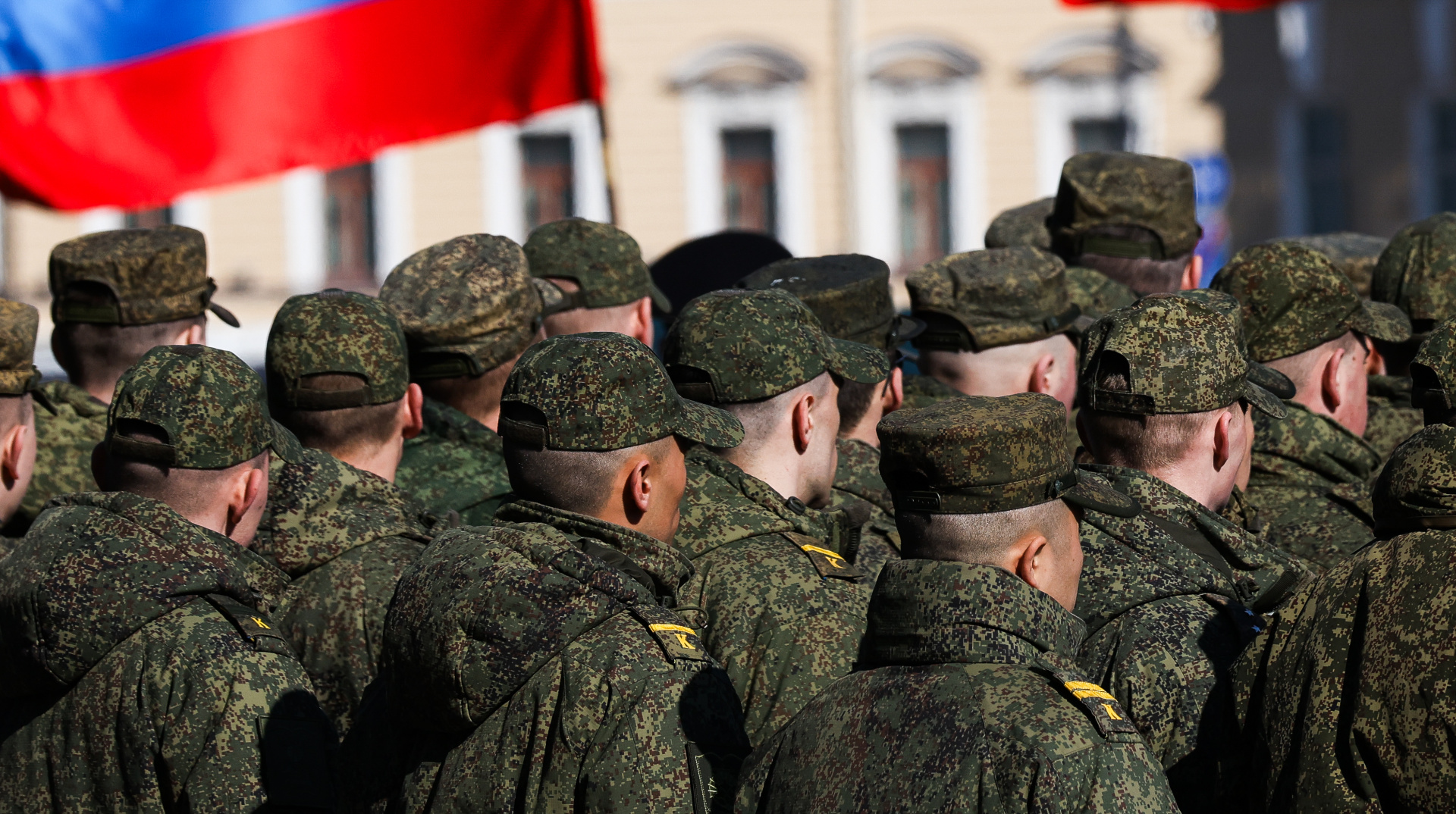
Russian military recruitment rates have fallen 20 percent amid high casualties in Ukraine. — Source: ukrainskapravda
High Russian Casualties for Minimal Territorial Gains
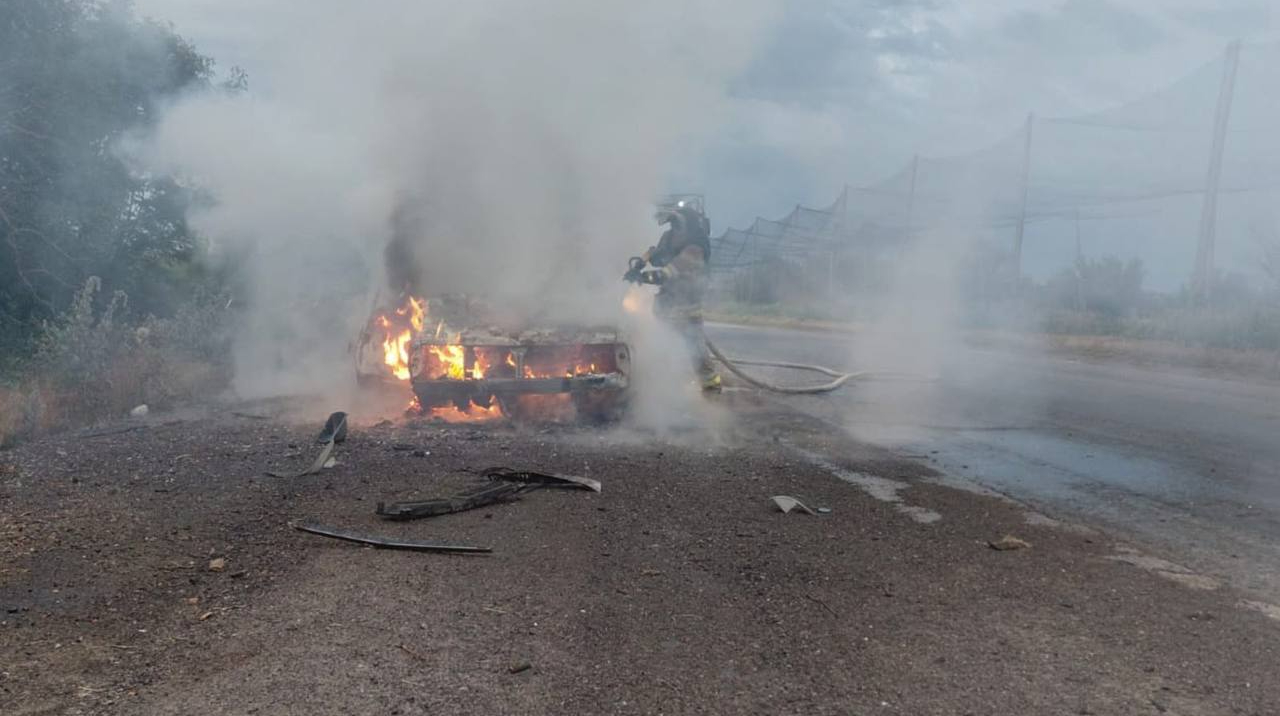
Russian forces lose an average of about 200 troops killed or wounded per square kilometer of Ukrainian territory captured. [4] Military expert and former SBU employee Ivan Stupak provided this estimate while commenting on the pace of Russian offensive actions as of June 2026. [4] Current advances by Russian troops are accompanied by extremely high personnel losses while the captured areas remain relatively small. [4] The ratio between losses and territorial gains stands at approximately 200 killed and wounded servicemen for each square kilometer of occupied territory. [4] This dynamic indicates the complexity of offensive operations in modern warfare where defence continues to hold substantial advantages over attack even with numerical superiority. [4] Russian command continues to use tactics of constant pressure along a significant portion of the front line. [4] Main combat actions in recent months have concentrated in eastern Ukraine where Russian troops attempt to advance on separate sections of Donetsk Oblast. [4] Advances occur gradually often over distances of several hundred meters or separate kilometers over a prolonged period. [4] According to data from the General Staff of the Armed Forces of Ukraine losses of the Russian army since the beginning of the full-scale invasion have already exceeded one million people killed and wounded. [4] The Russian side does not officially publish current statistics on its losses. [4] Independent analytical centers and intelligence structures of Western countries also regularly report significant personnel losses of Russia during offensive operations on Ukrainian territory. [4] One factor behind the high losses is the active use of drones. [4] Over the last two years drones have become one of the key elements of combat operations. [4] They are used for reconnaissance artillery adjustment strikes on equipment and manpower. [4] Constant aerial observation has made hidden accumulation of troops and equipment significantly more difficult increasing risks for advancing units. [4] Another factor remains the density of minefields. [4] According to estimates by international organizations Ukraine ranks among the most mined countries in the world. [4] Mine-explosive barriers significantly slow the pace of advances and force the sides to spend additional resources on demining and assault actions. [4] Current rates of Russian advances differ substantially from the initial stage of the full-scale war in 2022. [4] At the beginning of the invasion Russian troops conducted large-scale maneuvers and advanced quickly on separate directions whereas now most operations take the form of exhausting local battles for individual settlements or strategic heights. [4] Preservation of this ratio between losses and territorial gains may influence further planning of Russian operations. [4] Significant personnel losses require constant replenishment of reserves new mobilization measures and increased spending on conducting the war. [4] At the same time the high level of losses does not guarantee rapid achievement of strategic goals making combat operations increasingly resource-intensive for all parties to the conflict. [4]
Broader Impacts Including North Korea Partnership
Russia's war has transformed North Korea through the growing partnership between the two countries. [5] The partnership has risen some concern with their mutual ally China. [5] Russia has received reinforcements in three separate waves of North Korean troops as part of efforts to sustain its forces. [3] The deployment of these troops forms one element of the broader military cooperation that has developed during the conflict. [5] Analysts note that the overall strain on Russia's resources has contributed to deeper reliance on such external support arrangements. [3] The resulting dynamics have drawn attention from China as a shared partner in the relationship. [5] Continued recruitment shortfalls and economic pressures may lead Moscow to seek further adjustments in these international ties. [3]
What to watch next: Zelenskyy and Trump are set to meet at the G7 summit in France to discuss the war and efforts to end it while Russia considers additional measures such as forced mobilisation amid a 20% recruitment drop and labour shortages across its economy.