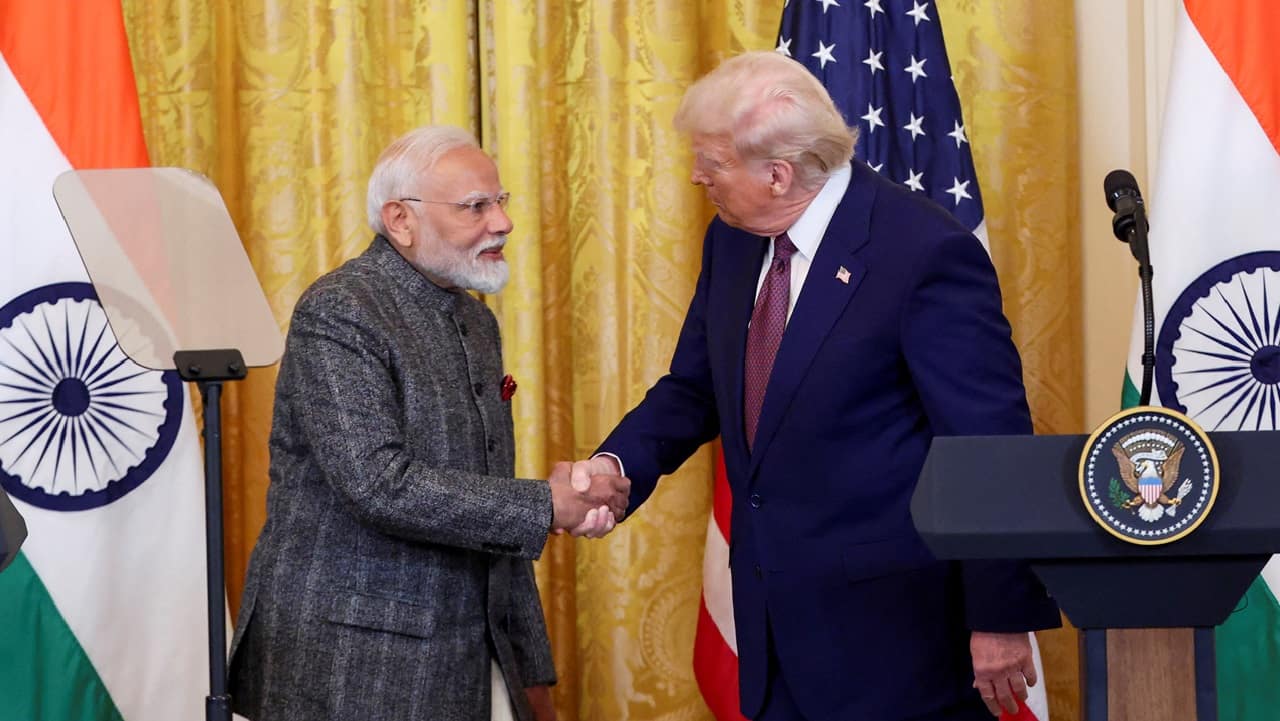

Trump Claims Personal Intervention Averted Full-Scale India-Pakistan War After Eight Planes Shot Down
Washington/New Delhi — Former U.S. President Donald Trump has asserted that he personally intervened to prevent an all-out war between India and Pakistan following the downing of eight aircraft, describing the nuclear-armed neighbors as "ready to go at it big." The bold claim, made amid heightened regional tensions, has drawn attention but awaits independent verification from either side.
Trump's statement emerged on January 10, 2026, highlighting what he portrayed as a dramatic behind-the-scenes diplomatic effort. According to reports, the Republican leader, who is set to assume office as U.S. President on January 20 following his 2024 election victory, credited his direct involvement with de-escalating a crisis that could have spiraled into catastrophic conflict. The assertion references an incident involving the shoot-down of eight planes, though specifics on the date, location, or attribution of the losses remain unclear in public accounts.
While Trump's remarks underscore his self-described role as a master dealmaker in global hotspots, they come at a time of fragile stability along the India-Pakistan border. Neither Indian nor Pakistani officials have publicly corroborated the scale of the aerial losses or U.S. mediation in recent communications. The claim surfaced as part of broader discussions on Trump's foreign policy achievements, potentially amplifying his narrative ahead of his inauguration.
Details of the Claim
Trump's comments, as reported by Moneycontrol, paint a vivid picture of brinkmanship. He stated that India and Pakistan were on the verge of large-scale hostilities after the aircraft incident, prompting his urgent intervention. "India, Pakistan were ready to go at it big," Trump reportedly said, emphasizing that his actions halted what could have been a major war. The exact mechanism of his involvement—whether through calls to leaders Narendra Modi and Shehbaz Sharif, backchannel diplomacy, or other means—was not detailed in the reports.
The timing aligns with the event's reported onset on January 10, 2026, at approximately 03:10 GMT, classified as a high-severity incident in global event tracking. However, aviation authorities, military spokespersons from both nations, and international monitors like the UN or IAEA have not issued statements confirming eight planes downed in a single engagement. Satellite imagery and flight tracking data from services like Flightradar24 also show no unusual disruptions in the region on that date.
Historical Context of India-Pakistan Tensions
India and Pakistan have a long history of military confrontations rooted in the 1947 partition of British India, which created enduring disputes over Kashmir. The two nations have fought four wars— in 1947-48, 1965, 1971, and 1999 (Kargil conflict)—and maintain a heavily militarized Line of Control (LoC) in Kashmir. Both are nuclear powers, with India conducting tests in 1974 and 1998, and Pakistan following in 1998, raising the stakes of any escalation.
Aerial incidents have frequently underscored flashpoints. The 2019 Pulwama attack, where a Pakistan-based militant group killed 40 Indian paramilitary personnel, led to Indian airstrikes on a Jaish-e-Mohammed camp in Balakot, Pakistan. Pakistan retaliated, downing an Indian MiG-21, while India claimed to have shot down a Pakistani F-16. Conflicting narratives emerged, with each side accusing the other of losses, but no confirmed tally reached eight aircraft.
Trump has previously positioned himself as a potential mediator in South Asia. During his first term (2017-2021), he offered to facilitate India-Pakistan talks on Kashmir, a proposal India rejected in favor of bilateral dialogue. Post-presidency, Trump reiterated such offers, including in 2024 campaign rhetoric. His latest claim fits this pattern, though past assertions—like brokering an India-Pakistan truce—lacked official endorsement from New Delhi or Islamabad.
Recent years have seen sporadic LoC ceasefire violations, cross-border strikes, and proxy militant activities. India's 2019 revocation of Jammu and Kashmir's autonomy intensified strains, while Pakistan faces internal economic woes and political instability under Sharif's coalition government. U.S.-India ties have strengthened via the Quad alliance against China, contrasting with cooler U.S.-Pakistan relations strained by Afghanistan withdrawal fallout.
Regional and Global Reactions
As of January 10, 2026, responses have been muted. Indian Foreign Ministry spokesperson Randhir Jaiswal, in routine briefings, emphasized ongoing vigilance along the LoC but made no reference to aerial combat or U.S. intervention. Pakistan's military, via ISPR, reported routine border activities without mentioning losses. U.S. State Department officials declined comment, citing transition protocols.
Analysts note the claim's resonance in Trump's "America First" worldview, where personal diplomacy averts global crises. Yet, South Asia experts caution against unverified narratives, pointing to India's aversion to third-party mediation and Pakistan's alignment with China via the China-Pakistan Economic Corridor.
Outlook
Trump's impending return to the White House could reshape U.S. engagement in the region, potentially prioritizing deal-making over multilateral frameworks. If substantiated, the alleged intervention would mark a significant early win; absent confirmation, it risks straining alliances. India and Pakistan continue ceasefire commitments from February 2021, but underlying Kashmir grievances persist.
Global markets showed minor ripples, with Indian and Pakistani equities dipping slightly on January 10 amid speculation, before stabilizing. Watchers await official clarifications, as any verified aerial clash would signal a dangerous escalation in one of the world's most volatile borders.
(Word count: 712)






