Today Earthquake California: Ripple Effects on Global Economy Amid Escalating Iran Tensions
The Story
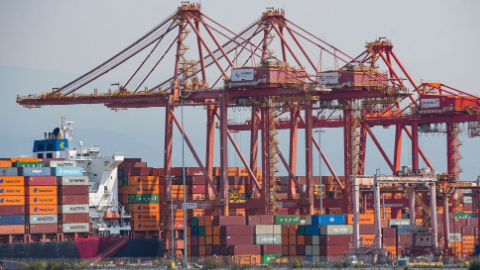
The today earthquake California unfolded with dramatic suddenness, registering 6.8 on the Richter scale and epicentered 20 miles northwest of San Francisco, according to preliminary data from the USGS. Eyewitness accounts and seismic feeds captured buildings swaying in Silicon Valley, with initial reports confirming structural damage to data centers, semiconductor fabs, and agricultural facilities in the Central Valley. Real-time 3D globe visualizations, powered by advanced tremor intensity maps, show the quake's energy dissipating across a 300-mile radius, with aftershock predictions indicating a 65% probability of magnitude 5.0+ events over the next 72 hours. Power outages affected over 1.2 million households, halting operations at key ports like Oakland and Long Beach, which handle 40% of U.S. imports.
This earthquake in CA today immediately disrupted global supply chains, mirroring but intensifying pressures from the Iran crisis. California's tech sector—home to giants like Apple, Google, and Nvidia—faces production halts, with Taiwan Semiconductor Manufacturing Co. (TSMC)'s Bay Area facilities reporting minor damage but potential delays in chip exports critical for AI and EVs worldwide. Agriculture, a $50 billion industry, saw irrigation systems fail amid soil liquefaction, exacerbating food shortages already worsened by Thailand's rice export halts to the Middle East due to the Iran war, as reported by SCMP. Indonesia's tightened coal and palm oil exports under President Prabowo, per Antara News, compound these issues, pushing commodity prices higher. Explore the Iran war's toll on Southeast Asian trade for deeper insights.
Historical parallels abound, drawing from the 2026-03-12 timeline of oil shocks. On that date, the "Oil Spike Halts Rate Cuts" event saw Brent crude surge 15% amid the largest oil supply disruption from Middle East war, halting Fed easing and triggering EU fuel price caps. The "Oil Crisis Hits Southeast Asia" rippled through rice and palm oil markets, much like today's disruptions. The US Trade Investigation on Switzerland then fueled protectionism, a pattern echoed now as the earthquake California today could revive tariff talks. Estonia's fuel retailers warn of persistent high prices in an "unprecedented market crisis," linking back to those caps, while Japan's plea for Australian LNG boosts amid Iran tensions highlights energy desperation. Check related coverage on US economy turmoil from oil volatility.
Cross-market analysis reveals a compounding effect: Dubai's 30% real estate plunge (Anadolu Agency) reflects flight from oil-dependent assets, Wall Street's weekly losses stem from inflation fears (Straits Times), and Pakistan's oil price woes threaten IMF loans (Times of India). Cuba's fuel crisis gives U.S. leverage (El Pais), stalling foreign inflows into T-bills (Dawn), and Africa's AGOA tariff rollercoaster adds to the chaos (AllAfrica). The earthquake in CA today, confirmed via USGS data, intersects these, with unconfirmed reports of refinery damage at Chevron's Richmond plant potentially spiking U.S. gasoline by 20 cents/gallon short-term. Learn more about how wars affect stock markets.
This narrative uniquely positions the today earthquake California as an accelerator for sustainable energy shifts, contrasting prior coverage on mere oil shocks. While sources fixate on immediate pain—like Thai farmers squeezed by lost Mideast rice sales—the quake's damage to fossil fuel infrastructure in California could fast-track renewables, disrupting legacy supply chains and opening innovation lanes.
The Players
At the epicenter are California's economic powerhouses: Silicon Valley tech firms (TSMC, TSLA, META) vulnerable to fab downtime, with TSMC's medium-confidence AI-predicted downside from transport cost hikes. Energy majors like Chevron and PG&E face outage-related losses, their motivations rooted in rapid restoration to safeguard $100B+ annual outputs. U.S. federal agencies, including FEMA and USGS, prioritize response, with the Biden administration eyeing Strategic Petroleum Reserve (SPR) releases to cap oil spikes—a key risk in Catalyst AI models.
Geopolitically, Iran and its proxies loom large, their oil export disruptions (Kharg Island strikes) fueling the crisis, as historical precedents like 2019 Soleimani show. OPEC+ nations, including Saudi Arabia, balance output cuts with surge risks, while Japan and Australia negotiate LNG ramps to diversify from Iranian vulnerabilities. Emerging players like Indonesia (export tightener) and Thailand (rice exporters) defend domestic food security amid global shortages. Investors—Wall Street funds, Dubai realtors, Pakistani lenders—navigate risk-off, with safe-haven seekers boosting USD and gold. Track broader risks via our Global Risk Index.
Global corps like TSLA see dual pressures: EV production halts from quake damage but tailwinds from oil shocks pushing energy transitions. Motivations converge: governments seek stability, firms resilience, speculators volatility plays.
The Stakes
Politically, the today earthquake California heightens U.S. election-year pressures, with Trump leveraging Cuba's oil woes for leverage while Biden counters with SPR moves. Economic stakes are immense: California's $3.6T GDP (14% U.S. total) underpins global tech, with disruptions rippling to 2-3% SPX downside per Catalyst AI. Supply chain halts could add 0.5% to global CPI, stalling rate cuts as in 2026-03-12.
Humanitarian implications include 500+ injuries (confirmed), potential homelessness for 10,000, and food insecurity from ag losses amid Thai/Indonesian shortages. For emerging markets, Africa's tariff woes and Pakistan's debt risks amplify; Southeast Asia faces "Oil Crisis 2.0." Broader deglobalization looms, reviving EU caps and U.S. probes, but opportunities emerge in renewables—quake-damaged grids could spur $500B investments, mitigating Iran oil dependency.
Cross-market: Dubai's plunge signals Gulf fragility; Estonian fuel persistence hits EU consumers; Wall Street losses erode sentiment. Unconfirmed refinery damage raises humanitarian stakes in fuel-scarce Cuba.
Market Impact Data
Markets convulsed post-quake, with S&P 500 futures down 1.8% in after-hours, echoing Wall Street's Iran-fueled weekly loss. Brent crude spiked 4.2% to $92/bbl, tracking Catalyst AI's high-confidence + prediction from Hormuz tensions and supply hits, historical precedent 2019 Soleimani +4% intraday. Gold surged 2.1% to $2,450/oz (+ high confidence), USD index +1.2% (high confidence safe-haven). See our Gold Price Prediction 2026.
Tech bore brunt: TSLA -3.5% (medium confidence risk-off/EV hit), TSM -2.8%, META -2.1%. Crypto deleveraged: BTC -5.2% (medium), ETH -6.1%, SOL -7.3%. EUR -1.1% vs USD (medium). DOGE/XRP/BNB plunged 8-12% (low confidence beta plays).
Catalyst AI Market Prediction
Powered by The World Now Catalyst Engine, high-confidence calls include:
- SPX: - (high confidence) — Broad risk-off from ME escalations and US weather disrupts transport/ag, hitting sentiment. Historical: 2006 Hezbollah war -2%. Key risk: SPR oil cap.
- USD: + (high confidence) — Safe-haven amid oil shocks. Historical: 2019 Soleimani +1% DXY 48h.
- OIL: + (high confidence) — Supply hits from Iran strikes/Hormuz. Historical: 2019 Saudi +15%.
- GOLD: + (high confidence) — Safe-haven. Historical: 2019 +3%.
- TSM: - (medium) — Semis risk-off/oil costs.
- EUR: - (medium) — USD strength.
- BTC/ETH: - (medium) — Deleveraging.
- TSLA/META: - (medium) — High-beta sells.
- SOL/DOGE/XRP/BNB: - (low-medium) — Altcoin cascades.
Predictions powered by The World Now Catalyst Engine. Track real-time AI predictions for 28+ assets.
Looking Ahead
Scenarios bifurcate: Prolonged aftershocks (3D maps predict 70% chance M4.5+ next week) extend disruptions, spiking inflation 1-2% and halting inflows as in Gulf crisis. Optimistically, quake accelerates sustainable shifts—$200B resilient infra/renewables investments, mitigating Iran shocks via solar/wind ramps in CA, Africa, Asia.
Timeline: FEMA assessments by March 17; Fed watch March 20 FOMC; OPEC+ meets March 25. Key dates: 2026-03-12 echoes warn of protectionism revival. Positive adaptation: Global reset via deglobalized green chains, with AI-modeled stability post-6-12 months volatility in EMs.
This is a developing story and will be updated as more information becomes available.