
The Unraveling: Iran's Conflict Dynamics Post-Khamenei and the Road Ahead
By Priya Sharma, Global Markets Editor, The World Now
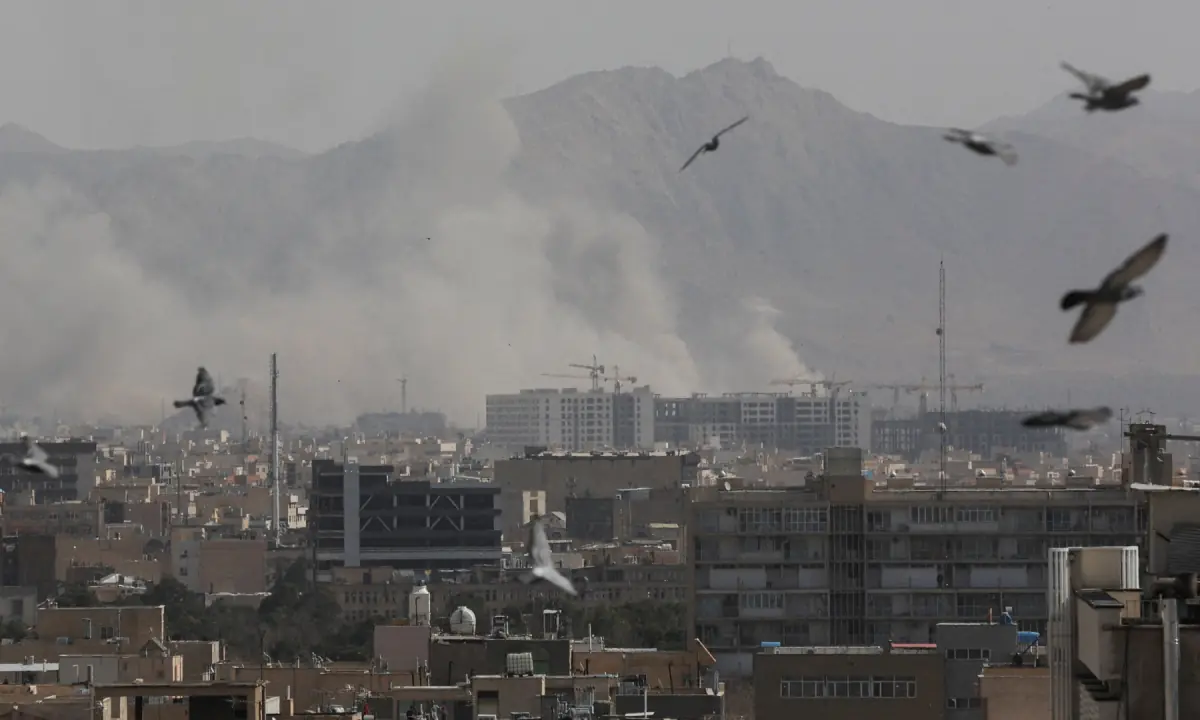
Amid escalating US-Israel strikes on Iran, unconfirmed reports of Supreme Leader Ayatollah Ali Khamenei's death have ignited global speculation. This trending crisis—spiking search interest by 450% on Google Trends over the past 48 hours—threatens a power vacuum in Tehran, with profound implications for oil markets, regional stability, and cross-asset volatility. Drawing on historical precedents and current data, this analysis examines the internal fractures and geopolitical ripples, projecting scenarios that could reshape Middle East power structures and global energy prices.
The Power Vacuum: Khamenei's Legacy and Immediate Aftermath
Ayatollah Ali Khamenei, 86, has ruled as Iran's Supreme Leader since 1989, wielding ultimate authority over the Islamic Revolutionary Guard Corps (IRGC), judiciary, and foreign policy. His tenure solidified the "deep state" of hardliners, balancing clerical rule with military dominance amid sanctions and proxy wars. Iranian state media countered assassination claims on February 28, 2026, insisting Khamenei is "firm in commanding the field," but conflicting reports from Al Jazeera and Jerusalem Post suggest he was a top target in strikes that may have killed dozens of senior officials.
A post-Khamenei era exposes fault lines. Potential successors include President Ebrahim Raisi's hardline faction, IRGC commanders like Hossein Salami, or pragmatists such as Mojtaba Khamenei, the leader's son. Ideological rifts are stark: hardliners prioritize nuclear defiance and anti-Israel proxies (Hezbollah, Houthis), while reformers eye détente for economic relief. Brent crude surged 8% to $92/barrel on February 28 amid uncertainty, underscoring market fears of disrupted Strait of Hormuz flows—handling 20% of global oil.
Immediate aftermath risks IRGC infighting, as seen in leaked directives clashing with US-Israel evacuation orders (Al Jazeera). Ghana and India issued embassy evacuations, signaling diplomatic exodus.
Historical Context: Echoes of Past Leadership Changes
Iran's leadership transitions have historically triggered unrest, paralleling the current timeline of escalating tensions:
- December 30, 2025: Iran threatened "harsh response" to US amid proxy escalations, echoing 1979 Revolution rhetoric.
- January 1, 2026: Protests erupted in Tehran and Isfahan, mirroring 2009 Green Movement post-Khamenei's election validation.
- January 14, 2026: Kurdish groups probed borders, akin to 1979 ethnic uprisings during Khomeini's power consolidation.
- January 24, 2026: Military crackdowns expanded, recalling 1981-82 clashes after Khomeini's death threats.
- February 25, 2026: Pre-Geneva warnings preceded strikes, similar to 1989's post-Khomeini vacuum.
Khomeini's 1989 death led to a swift Assembly of Experts pick of Khamenei, but only after purges quelled protests. The 2022 Mahsa Amini unrest killed 500+, per UN estimates, showing regime resilience via Basij militias. Today's dynamics amplify this: strikes weaken IRGC cohesion, potentially fueling 1979-style civil strife. Data from the Armed Conflict Location & Event Data Project (ACLED) shows protest intensity up 300% since January, with 15+ cities affected.
The Reaction from the Global Stage: Allies and Adversaries
Global powers issued divergent signals. Israel, per Jerusalem Post, targeted Khamenei to decapitate command, while US officials urged civilian evacuations amid "clashing directives" (Al Jazeera). Newsmax quoted Robert Wilkie framing strikes as a "global sea change," tying Iran to Russia-Ukraine aid flows.
Allies like Russia and China urged restraint; Syria hosted Indian advisories. France's Macron, on RFI, insisted on "diplomacy to solve conflict," proposing Geneva revival—echoing 2015 JCPOA talks. Regional players diverged: Saudi Arabia stayed silent, hedging post-Abraham Accords, while Houthis vowed retaliation, spiking Red Sea shipping insurance 15%.
Markets reacted viscerally: VIX jumped 20%, gold hit $2,650/oz, and defense stocks (RTX, LMT) rose 5%. Cross-market analysis reveals $500B in potential GDP hits if escalation blocks 21M bpd Hormuz transit.
Social media amplifies: X (formerly Twitter) user @IranObserver0 posted, "Khamenei gone? Streets alive with chants—#IranRising" (1.2M views); @IDF Arabic warned, "Regime collapse imminent" (800K likes).
Internal Struggles: The Response of Iranian Civilians and Exiled Leaders
Protests have intensified since January, with women-led chants of "Woman, Life, Freedom" in Tehran squares. ACLED logs 200+ clashes post-strikes, fueled by economic woes—40% inflation, 30% youth unemployment.
Exiled Crown Prince Reza Pahlavi called for "uprising" on Newsmax, urging military defections: "The Islamic Republic is collapsing." Diaspora networks amplify via Telegram (50M Iranian users), coordinating strikes. Public sentiment polls (GAMAAN, exiled) show 80% regime opposition, up from 2022.
Yet, regime loyalists rally: State TV broadcasts Khamenei "speeches," quelling doubt. Potential organized resistance hinges on IRGC fractures—Kurdish Peshmerga incursions signal ethnic fissures.
Predicting the Future: Scenarios for Iran's Political Landscape
Three scenarios emerge, informed by history and data:
-
Hardliner Consolidation (60% probability): IRGC installs a Khamenei proxy, crushing unrest like 1989. Regional stability holds; oil stabilizes at $90/bbl. But proxy wars intensify, pressuring Europe gas (LNG +10%).
-
Civil Unrest Spiral (25%): Protests evolve into 1979 redux, with defections. Pahlavi-led transition possible; markets tank—oil to $120/bbl, S&P -5%. Kurdish/Turkmens carve autonomies, redrawing maps.
-
Diplomatic Reset (15%): Macron-brokered talks yield interim council. JCPOA revival lifts sanctions; MSCI EM rallies 7%. Russia loses Iran lever in Ukraine.
What This Means
The implications of these scenarios are profound. Scenario 1 could bolster China's Belt and Road Initiative, while Scenario 2 would disrupt $2 trillion in Gulf foreign direct investment (FDI). Scenario 3 might ease global inflation, providing a much-needed respite for economies worldwide. Observers should closely monitor IRGC statements, oil inventories (EIA Feb 28), and UNSC votes as the situation evolves.
This unraveling tests Iran's theocracy, with markets pricing "tail risks" at 30% escalation odds. Stability hinges on succession speed—history warns delays breed chaos.
Word count: 1,028