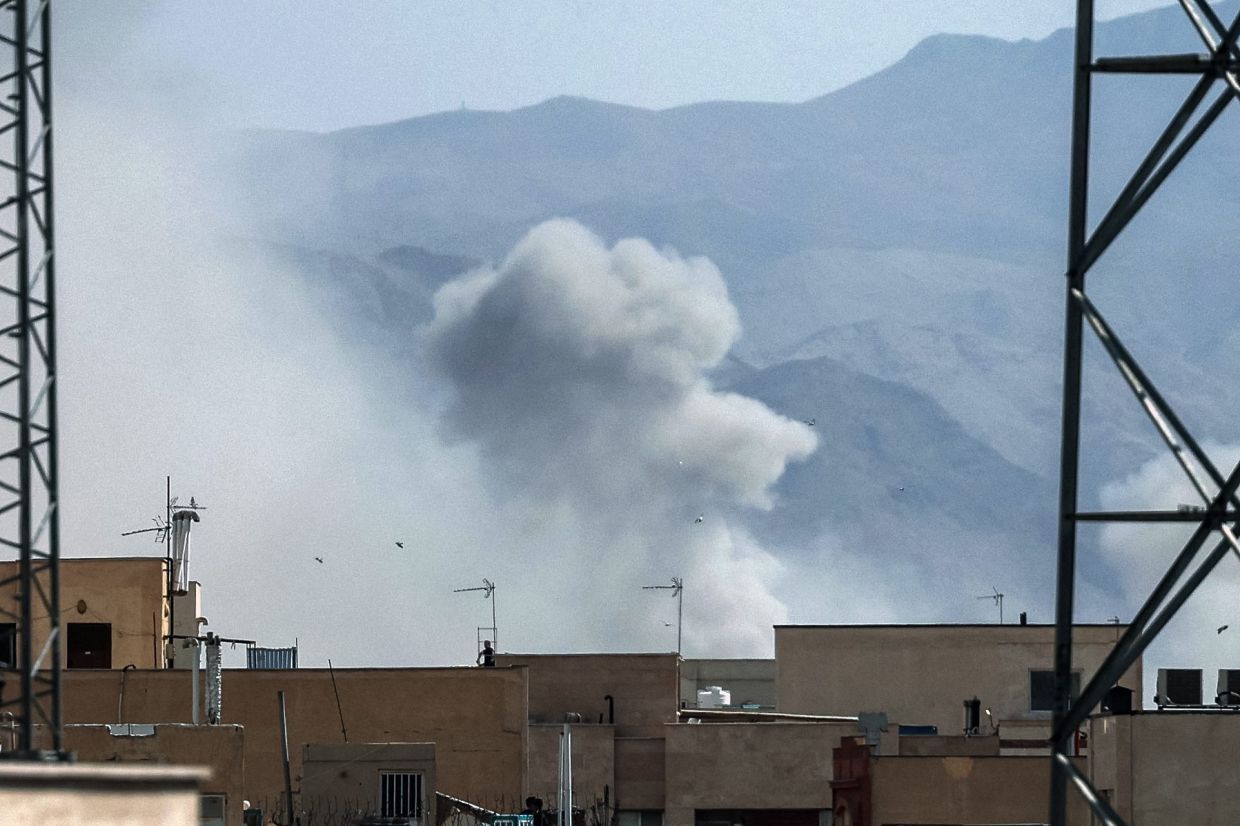

The UAE Under Fire: Assessing the Broader Implications of Recent Missile Strikes
By Viktor Petrov, Conflict & Security Correspondent, The World Now
February 28, 2026
In a dramatic escalation of regional tensions, Iran has launched missile strikes targeting U.S. military bases across the Gulf, including in the United Arab Emirates (UAE), Qatar, Bahrain, and Kuwait. This article explores the potential geopolitical shifts and economic repercussions of the current missile strike situation, particularly how it may reshape alliances and influence regional stability in the Middle East. With one fatality reported in Abu Dhabi and widespread disruptions to air travel and civilian life, the attacks signal a precarious new phase in Iran-UAE-U.S. relations, potentially forcing a reevaluation of military postures and economic strategies in the Gulf.
Current Situation Overview
As of 1800 GMT on February 28, 2026, the UAE remains on high alert following Iranian ballistic missile launches targeting U.S. military installations in the region. UAE and Qatari air defenses successfully intercepted the majority of incoming projectiles, but at least one impact was recorded in Abu Dhabi, resulting in one civilian fatality and minor damage to infrastructure near the Al Dhafra Air Base, a key U.S. facility hosting American F-35 squadrons and UAE fighter jets.
Abu Dhabi authorities issued immediate shelter-in-place advisories, urging over 1.5 million residents to seek cover in designated bunkers or interior rooms. Explosions were reported across Dubai and Abu Dhabi, with a "loud bang" echoing through the capital shortly after 1300 GST, as corroborated by local residents and social media footage. No further casualties have been confirmed, but emergency services are on standby.
Civilian life has ground to a halt: Dubai International Airport (DXB) and Abu Dhabi International (AUH) suspended operations indefinitely, stranding thousands. Etihad Airways and Emirates canceled all flights to Iran, Israel, and select Middle Eastern hubs, citing "security risks." Regional carriers like Qatar Airways followed suit, leading to a cascade of cancellations affecting over 200 daily flights. Schools, non-essential businesses, and public events in the UAE emirates have shuttered, with traffic halted on major highways during interception operations.
Iran's Islamic Revolutionary Guard Corps (IRGC) claimed the strikes as retaliation for "U.S. aggression" in the Strait of Hormuz, where recent naval skirmishes involved U.S. carrier groups supporting UAE patrols. Tehran issued warnings that "all U.S. bases are within reach," escalating rhetoric amid ongoing proxy conflicts in Yemen and Syria.
Historical Context of Regional Tensions
The February 2026 missile strikes represent a continuation of simmering UAE-Iran hostilities, rooted in a decade of proxy wars, maritime disputes, and ideological clashes. The UAE's military posture has evolved significantly since its 2015 intervention in Yemen against Iran-backed Houthi rebels, where Abu Dhabi deployed Mirage 2000 jets and special forces, sustaining over 150 fatalities.
Key milestones include:
- 2019 Gulf of Oman tanker attacks: Iran-linked sabotage targeted UAE-flagged vessels, prompting U.S.-UAE joint naval exercises.
- 2020 Soleimani assassination: UAE tacitly supported U.S. drone strike on IRGC Quds Force commander Qasem Soleimani, straining ties with Tehran.
- 2021 Houthi drone strikes on Abu Dhabi: Three fatalities from Yemen-launched attacks, leading UAE to accelerate THAAD missile defense acquisitions from the U.S.
- 2024 Strait of Hormuz blockade threats: Iran seized UAE tankers amid nuclear talks collapse.
These events have hardened UAE military doctrine, emphasizing layered air defenses (Patriot PAC-3, David's Sling) and U.S. base expansions at Al Dhafra. Diplomatically, UAE's Abraham Accords normalization with Israel in 2020 positioned it as a counterweight to Iran, fostering trilateral defense pacts. The February 28 strikes—potential attacks on U.S. bases in Abu Dhabi and Bahrain, followed by confirmed launches—mirror 2020 Iranian barrages on U.S. bases in Iraq post-Soleimani, illustrating Tehran's pattern of calibrated escalation to deter Gulf alignment with Washington.
Past conflicts have influenced current postures: UAE's $23 billion arms deal with the U.S. in 2021 (F-35s, MH-60R helicopters) directly responds to Iranian missile proliferation, while Iran's hypersonic Fattah-1 deployments challenge regional intercepts.
Geopolitical Repercussions of the Attacks
The strikes could precipitate profound alliance shifts. UAE's interception success underscores deepening U.S.-Gulf integration—Al Dhafra hosts 3,500 U.S. personnel—but exposes vulnerabilities, potentially straining Abu Dhabi's non-aggression stance. Iran frames the attacks as anti-U.S., avoiding direct UAE hits to preserve backchannel diplomacy (e.g., 2023 prisoner swaps).
U.S.-UAE ties may tighten: Expect accelerated arms deliveries and CENTCOM reinforcements. However, Qatar's mediation role—intercepting missiles while hosting Al Udeid Air Base—highlights intra-Gulf fissures. Bahrain and Kuwait, also targeted, bolster the U.S.-led GCC security architecture.
Iran risks isolation: Russia and China's lukewarm support (focused on BRICS ties) limits Tehran's options. UAE foreign policy may pivot toward Israel for intelligence sharing (e.g., Arrow-3 systems), reshaping the anti-Iran axis. Broader implications include stalled Saudi-Iran détente (2023 China-brokered) and heightened Houthi threats, destabilizing Red Sea shipping.
Social media reflects unease: X posts from UAE expats (@GulfAnalyst2026: "Iran's reach is real—time for UAE to go full deterrence mode") signal public pressure for assertive policies.
Economic Impact on the UAE and the Region
The UAE economy, valued at $500 billion GDP (2025 est.), faces immediate shocks. Tourism—15% of GDP, drawing 18 million visitors annually—grinds to halt; Burj Khalifa observation decks and Yas Island resorts are closed, with hotel cancellations spiking 40% per Booking.com data.
Air travel disruptions amplify losses: Emirates and Etihad operate 1,000 weekly flights, contributing $30 billion yearly. Prolonged closures could cost $1-2 billion daily across Gulf hubs, per aviation analysts.
Foreign investment, buoyed by UAE's 9% growth in 2025, falters: Sovereign funds like ADIA ($993 billion AUM) may repatriate assets amid risk premiums. Oil prices surged 8% to $92/barrel post-strikes, benefiting UAE exports (3.5 million bpd) short-term but threatening global recession.
Regionally, prolonged conflict reshapes Gulf economics: Qatar's LNG (77 million tons/year) faces insurance hikes; Bahrain's banking sector ($200 billion assets) sees outflows. A multi-week crisis could shave 2-3% off GCC GDP, accelerating diversification (UAE's Vision 2031 non-oil targets).
Public Sentiment and Social Dynamics in the UAE
UAE's 9.5 million population (10% Emirati) grapples with fear and resolve. Social media surges with patriotic posts: #UAEStrong trended with 500,000 mentions, featuring government alerts and resident videos of intercepts. Emirati citizens rally behind leadership, praising Crown Prince Mohammed bin Zayed's (MBZ) decisiveness.
Expats (80% of populace), including Indians and Filipinos, express anxiety: Telegram groups report panic buying, with some evacuating via land routes to Oman. Polls (pre-strike YouGov UAE: 72% support anti-Iran stance) suggest bolstered government approval, but economic strain could erode cohesion if blackouts or rationing ensue.
Tensions risk fracturing multicultural fabric: Iranian expats (20,000) face scrutiny, mirroring 2019 deportations. MBZ's social contract—security for loyalty—holds, but prolonged threats test resilience.
Future Predictions and Strategic Considerations
Short-term: UAE likely activates full-spectrum defenses, integrating U.S. Aegis destroyers for Hormuz patrols. Iran may pause for negotiations via Oman, but proxy escalations (Houthis, Hezbollah) loom.
Medium-term predictions: Reassessment of strategies—UAE eyes indigenous missile tech (e.g., Black Shaheen upgrades) and Israel co-production. U.S. may deploy THAAD batteries to UAE, signaling commitment amid election-year politics.
Worst-case: Tit-for-tat strikes cascade into air campaign, disrupting 20% of global oil (Strait of Hormuz). Allies like Saudi Arabia mobilize F-15s; external powers (U.S., UK) enforce no-fly zones.
Mitigation steps: UAE diplomatic blitz (UNSC emergency session), economic buffers (oil windfalls), and cyber countermeasures against IRGC hacks. Regional stability hinges on de-escalation; failure risks "Gulf War 3.0," redrawing alliances.
This crisis underscores the fragile balance: Iran's assertiveness tests UAE's fortress strategy, with economic and geopolitical ripples potentially enduring years.
(Word count: 1,512)






