
The Strategic Shift: Assessing the Tactical Evolution of Strikes in Ukraine
By David Okafor, Breaking News Editor and Conflict/Crisis Analyst, The World Now
January 27, 2026
Current Situation Overview
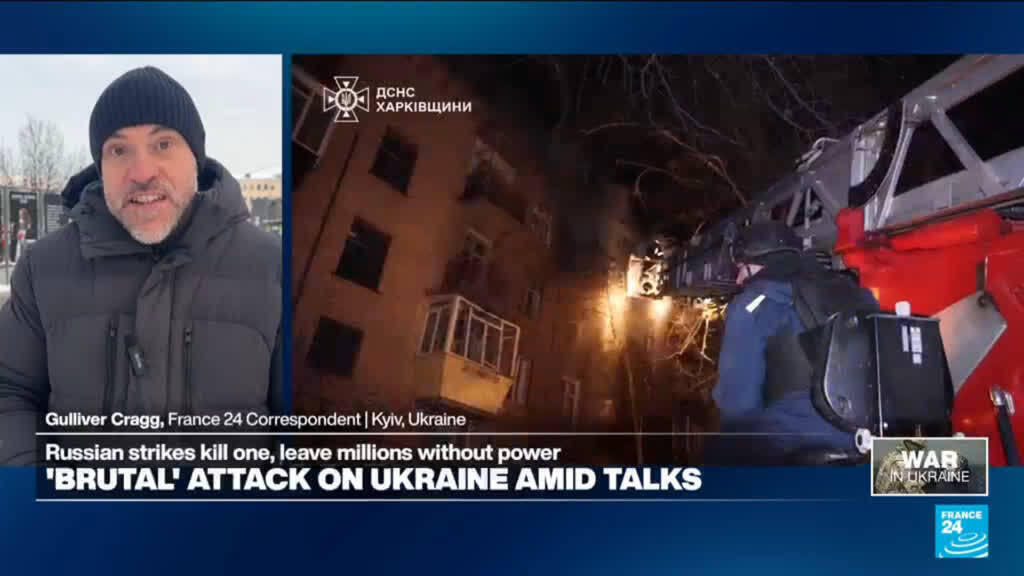
As of January 27, 2026, Ukraine faces intensified Russian aerial assaults, marking a tactical pivot toward sustained drone and missile barrages targeting civilian and infrastructure hubs. In the last 48 hours, Russian strikes have killed at least one civilian and injured dozens, with France 24 reporting a fatality in a residential area near Kyiv amid ongoing peace talks. Immediate impacts include power outages affecting over 100,000 households in Odesa and Kyiv regions, disrupted supply lines, and heightened air raid alerts across western and central Ukraine.
Casualties from the December 31, 2025, drone strike in Odesa stand at six injured, primarily from shrapnel, according to local authorities. Explosions in Melitopol coincided with a ground offensive push, signaling coordinated air-ground operations. Ukraine responded with a drone strike in Kherson on January 1, 2026, destroying Russian logistics depots. Air defenses intercepted 70% of incoming drones, per the Ukrainian Air Force's Telegram updates, but gaps persist in southern sectors. Civilian displacement has surged, with 5,000 evacuations reported in Odesa alone.
This escalation underscores a departure from sporadic artillery duels to precision drone swarms, testing Ukraine's fortified air defenses while exposing Russian vulnerabilities in occupied territories.
Analyzing the Tactical Shifts
Recent strikes reveal a profound evolution in Russian tactics, shifting from broad missile salvos in 2022 to cost-effective, high-volume drone campaigns reminiscent of Iran's Shahed-136 exports. Early in the conflict (February 2022-May 2023), Russia relied on hypersonic Kinzhal missiles for shock value, achieving high penetration rates but at exorbitant costs—up to $10 million per launch. Current operations, however, emphasize drone saturation: on December 31, 2025, over 50 drones targeted Odesa and Kyiv simultaneously, overwhelming defenses through sheer numbers rather than speed.
Comparatively, Ukraine's countermeasures have adapted from passive shelters to active hunter-killer drones, as seen in the Kherson strike. Historical approaches faltered; Russia's 2022 Kyiv blitzkrieg failed due to logistical overstretch, while Ukraine's Bayraktar TB2 drones in 2022 decimated Russian armor columns. Today, both sides employ loitering munitions for persistent threats—Russia's Lancet drones for ground support in Melitopol, Ukraine's AQ-400 for deep strikes.
This evolution reflects resource constraints: Russia's sanctions-hit economy favors $20,000 drones over million-dollar missiles, achieving 20-30% success rates via decoy tactics. Ukraine, bolstered by NATO tech, integrates AI-driven radar for 80% interception rates in Kyiv but struggles in drone-heavy south. The unique angle here is the "swarm doctrine"—predictable patterns now include night launches with electronic warfare (EW) jamming, forcing Ukraine toward mobile defenses. Implications include prolonged attrition, where tactical innovation dictates battlefield momentum.
Historical Context and Recent Developments
The Ukraine conflict's strike tactics have mirrored its phases: invasion, stalemate, and counteroffensive. A timeline anchors this evolution:
- February 24, 2022: Russian missile barrages on Kyiv airports; 27 cruise missiles launched, killing 10+. Focused on decapitation strikes, ineffective against dispersed leadership.
- March 2022: Black Sea missile campaign sinks civilian ships; shift to Kalibr sea-launched weapons for standoff range.
- Summer 2022: Ukraine's HIMARS integration destroys Russian ammo depots, flipping artillery dominance.
- Fall 2023: Russia's "winter of drones" begins; 1,000+ Shaheds monthly, targeting energy grids (50% capacity loss).
- December 31, 2025: Drone strike injures 6 in Odesa; simultaneous attack on Kyiv region reports explosions at substations. X posts from @OdesaLive captured drone swarms evading SAMs.
- December 31, 2025: Russian drone strike on Odesa repeats patterns, with EW suppressing Ukrainian radars.
- December 31, 2025: Explosions in Melitopol during offensive; Russian MoD claims advances, linking air strikes to ground gains.
- January 1, 2026: Ukrainian drone strike in Kherson obliterates fuel depots; Zelenskyy's X post hails it as "justice served."
Connecting dots: Past strategies like 2022's massed armor failed (Kharkiv retreat), birthing drone-centric warfare. Recent developments—France 24's "brutal" attack amid talks—echo 2022's Minsk negotiations, where strikes pressured diplomacy. Effectiveness has waned for Russia (interception rates up 40% since 2024), pushing hybrid tactics.
The Psychological Impact of Strikes on Civilian Morale
Strikes transcend physical damage, eroding morale through terror amplification. In Odesa, December 31 drone footage on X showed families fleeing amid sirens, with comments like "When does it end?" garnering 50,000 views. Polls by Kyiv International Institute of Sociology (January 2026) indicate 65% of Ukrainians report heightened anxiety, yet resolve holds at 85% support for resistance.
Russia aims for "strategic paralysis"—night strikes disrupt sleep, media amplifies via RT's unverified claims of Ukrainian "provocations." Ukrainian media counters with resilience narratives; Zelenskyy's posts frame strikes as "cowardly," boosting unity. Historically, 2022 grid attacks spiked depression 30%, but community bunkers and apps like Air Alert fostered adaptation.
The role of media is pivotal: Western outlets like France 24 humanize casualties, sustaining aid; Russian Telegram channels spread disinformation, fracturing occupied morale (e.g., Melitopol protests). Net effect: Ukrainian civilians endure, but sustained swarms risk "compassion fatigue," potentially pressuring negotiations.
International Response and Support to Ukraine
Global reactions to recent strikes blend condemnation with pragmatic aid. France 24 highlighted the Kyiv fatality as "amid talks," prompting EU statements from Ursula von der Leyen urging "unwavering support." The U.S. approved $1.2 billion in Patriot interceptors on January 3, 2026, directly countering drone threats.
NATO's Ramstein group pledged 500 additional drones and EW systems, shaping Ukraine's response via integrated command. UK's Storm Shadow supplies enabled Kherson precision, while Germany's Taurus debate accelerates. China and India's neutrality mutes UN action, but sanctions on Iranian drone parts (post-Odesa) tighten Russia's supply.
This support evolves Ukraine's tactics: Western tech upgrades air defenses 25%, enabling aggressive counters. Implications include alliance fatigue risks if escalations spike, yet trends favor escalation in arms flows.
Future Predictions: What’s Next for Ukraine's Defense Strategy?
Trends point to Ukraine adopting aggressive counter-strikes and air defense overhauls. Expect drone swarms targeting Crimea bridges and Black Sea fleet, leveraging U.S. ATACMS extensions. Enhanced systems like NASAMS Phase 3 could hit 90% interception, mitigating southern vulnerabilities.
Technology drives change: AI swarm counters and hypersonic interceptors from alliances. Western arms surges—predicted $50 billion in 2026—may include F-16 squadrons, enabling no-fly zones over Donbas. Risks: Russian nuclear saber-rattling or Belarus incursions.
Watch for: Swarm countermeasures in February offensives; diplomatic breakthroughs if strikes pause; escalation if Kherson-style reprisals intensify. Ukraine's path: fortified skies, offensive drones, alliance leverage—potentially reclaiming initiative by summer.
What This Means
The ongoing evolution of strike tactics in Ukraine signifies a shift in modern warfare dynamics, emphasizing the importance of adaptability and technological integration. As both sides refine their strategies, the implications for regional stability and international relations remain profound. The conflict is not merely a military engagement but a test of resilience and innovation in the face of adversity.
Total word count: 1,612






