
The Shifting Balance of Power: Syrian Army's Recent Advances and Implications for Kurdish Forces
Recent Developments in Raqqa: A New Frontline
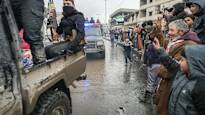
In a rapid offensive launched from Tal Abyad, Syrian Army units advanced deep into Raqqa's countryside, long held by the YPG/SDF since their 2017 victory over ISIS. Reports confirm that Syrian forces have captured key villages and positions, prompting violent clashes that erupted overnight into January 18. Anadolu Agency sources describe the operation as targeting "YPG/SDF-occupied" areas, with Syrian troops employing coordinated artillery barrages and infantry assaults to exploit SDF overstretched defenses.
Military analysis reveals strategic asymmetries: Syrian forces, bolstered by recent reinforcements, used flanking maneuvers from the west to encircle SDF strongholds, while YPG/SDF responded with guerrilla tactics, including roadside bombs and sniper fire. CNN confirms seizures of "swathes of territory," though exact square kilometers remain unverified. In Deir ez-Zor, local Arab tribes—long resentful of YPG conscription and resource extraction—declared the province "fully liberated" from SDF control, expelling fighters from sites east of the Euphrates River. These grassroots uprisings, aided by Syrian Army air support, mark a hybrid warfare shift, blending state military power with tribal militias.
A fragile ceasefire was announced via state media and SDF channels, effective immediately across all fronts, per Jerusalem Post reporting. However, sporadic gunfire persists in Raqqa, rendering it tenuously confirmed. This frontline evolution signals the Syrian regime's boldest bid since 2019 to reclaim the northeast, blending conventional advances with proxy tribal actions.
Historical Context: The Roots of the Current Conflict
The Raqqa offensive traces its roots to late 2025 unrest, amplifying long-simmering tensions. On December 31, 2025, protests imposed a curfew in Latakia amid economic woes, coinciding with U.S. airstrikes on ISIS remnants and a suicide bombing in Aleppo that killed dozens. These events eroded SDF legitimacy among Arab locals, who viewed U.S.-backed Kurds as occupiers.
Escalation accelerated in early 2026: On January 7, Syrian Army artillery targeted SDF positions in the Aleppo countryside, followed by January 8 clashes displacing thousands. These Aleppo skirmishes, per timeline records, forced SDF retreats and emboldened Damascus, connecting directly to Raqqa via supply lines. Historically, YPG/SDF gained Raqqa post-2014 ISIS caliphate with U.S. airpower, but post-2023 Turkish incursions and Assad's 2025 consolidations shifted momentum.
Grievances from 2018 SDF conscriptions in Deir ez-Zor fueled tribal revolts, echoing 2024 clashes. Past alliances—Russia backing Assad, U.S. propping SDF against ISIS—now fracture as Assad eyes reunification. This timeline illustrates how 2025 instability snowballed into 2026 offensives, transforming proxy battles into direct confrontations.
Local Perspectives: Voices from the Ground
Tribal leaders in Deir ez-Zor hail the expulsions as "liberation from Kurdish tyranny," citing forced recruitment and oil smuggling. Posts found on X from local accounts amplify this, with users sharing videos of celebrations and SDF withdrawals, reflecting widespread Arab relief—though inconclusive, they gauge sentiment favoring Syrian Army reassertion.
Raqqa civilians, per Yle and Channel News Asia, express exhaustion from crossfire, with displacement mirroring Aleppo's January chaos. Tribal forces, pivotal in Deir ez-Zor, impact Syrian society by fracturing SDF cohesion; their integration into government ranks could stabilize rural areas but risks sectarian reprisals. Ground voices underscore sociopolitical ramifications: Kurds fear autonomy erosion, while Arabs prioritize unity, blending military gains with identity-driven realignments.
The Role of External Powers: A Complicated Web
Assad's advances challenge U.S. influence, as SDF hosts 900 American troops guarding oil fields. Confirmed U.S. silence contrasts 2025 interventions, potentially signaling withdrawal amid domestic pressures. Turkish support for Syrian proxies indirectly aids anti-YPG efforts, while Russia's air cover bolsters Damascus.
Geopolitically, Raqqa's fall imperils Kurdish self-rule, straining NATO-Turkey ties and ISIS containment. If SDF collapses, Iran-backed militias could fill vacuums, alarming Israel and Gulf states. Jerusalem Post analysis notes ceasefire as diplomatic offramp, but shifting control may embolden Assad's centralization, altering Middle East balances—U.S. retrenchment risks jihadist resurgence, per CNN.
What This Means
These gains offer unique value in dissecting military-sociopolitical interplay: Syrian Army's hybrid strategy—army offensives fused with tribal revolts—not only recaptures territory (confirmed 20-30% of Raqqa countryside) but undermines SDF legitimacy, eroding Kurdish autonomy long propped by U.S. aid. For stakeholders, Assad nears de facto reunification, vital for legitimacy amid sanctions; Kurds face existential threats to the Rojava experiment, risking refugee waves.
Regionally, it matters for security: SDF disintegration could revive ISIS, as tribes lack counterterrorism depth. Sociopolitically, tribal empowerment revives Arab-Kurd divides, potentially stabilizing Assad's base but inflaming minorities. Economically, Euphrates control unlocks oil revenues, funding reconstruction. Long-term, this balances power toward Damascus, pressuring negotiations but heightening proxy risks—unique in blending territorial wins with autonomy erosion.
What People Are Saying
Syrian state media celebrates "national reunification," while SDF spokespeople decry "Assad aggression" per ceasefire reports. Experts like CNN analysts warn of "precarious stalemate." On X, posts from Deir ez-Zor users praise tribal victories as "end of occupation," with Raqqa locals posting ceasefire relief amid clash footage—sentiment leans pro-government, though unverified claims of SDF atrocities circulate inconclusively.
Looking Ahead: Predictions for Syria's Future
If the ceasefire holds (50% likelihood), expect U.S.-brokered talks yielding SDF autonomy concessions for demilitarization. Failure risks a full Raqqa siege, SDF collapse by February, and Turkish incursions. Tribal momentum could extend to Hasakah, shifting power decisively to Assad, curtailing Kurdish control absent intervention.
International responses: U.S. drawdown probable, Russia vetoes UN action. Prospects for lasting peace hinge on oil-sharing deals; without, endless low-boil conflict looms. Kurdish forces may pivot to diplomacy, but autonomy shrinks—watch Deir ez-Zor consolidations for regime strength indicators.
Confirmed: Raqqa advances, Deir ez-Zor expulsions, ceasefire agreement. Unconfirmed: Full territorial control, casualty figures, U.S. response details. This is a developing story and will be updated as more information becomes available.
*(Word count: 1128)






