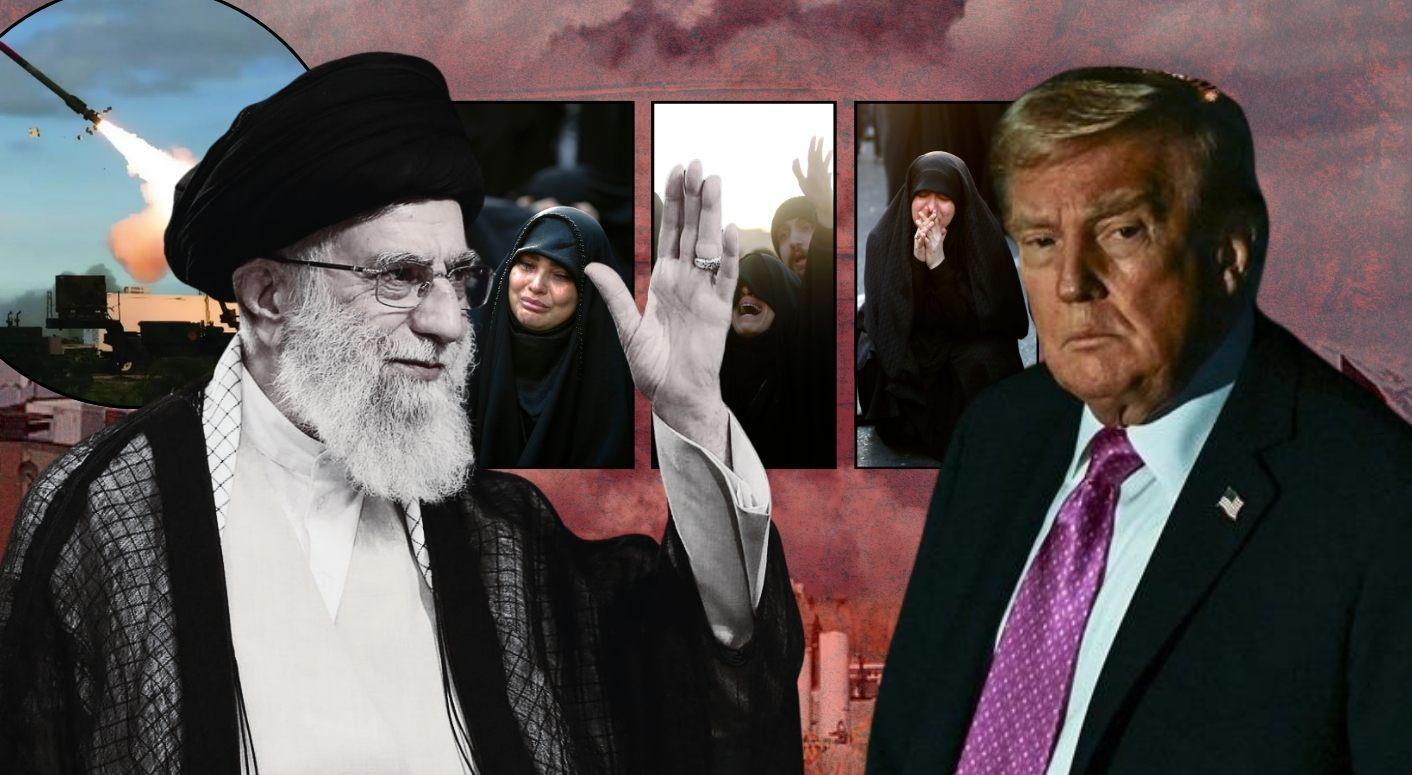

The Rising Tide: Understanding the Current Israeli-Iranian Conflict Through Historical Patterns
By Viktor Petrov, Conflict & Security Correspondent, The World Now
March 1, 2026
Overview of the Israeli-Iranian Conflict
This report examines the escalating Israeli-Iranian conflict through the lens of historical patterns, revealing how past responses to regional threats—preemptive strikes, coalition-building, and domestic unification—have profoundly shaped Israel's current strategy. As of March 1, 2026, Israel is engaged in open hostilities with Iran following a preventive airstrike on February 28 targeting Iranian nuclear and missile facilities. The Israeli Defense Forces (IDF) report degrading 40% of Iran's surface-to-surface missile arsenal and key uranium enrichment sites at Natanz and Fordow. Tehran claims minimal damage and vows retaliation, marking a shift from shadow warfare to direct confrontation.
Current Situation Overview
The escalation is prompted by intelligence of an imminent Iranian hypersonic missile test capable of striking Tel Aviv in under 10 minutes. Iran's response has been limited to drone swarms intercepted over the Golan Heights, but proxies like Hezbollah and Houthis have fired over 150 rockets, most neutralized by Israel's Iron Dome and Arrow systems. U.S. support has critically bolstered Israeli strategy, with two carrier strike groups deployed to the Eastern Mediterranean on February 27, providing real-time satellite intelligence and Patriot interceptors. This mirrors historical U.S. backing during the Yom Kippur War (1973), enabling Israel to maintain air superiority.
Historical Precedents of Conflict in the Region
The Middle East's conflict history is a tapestry of preemptive actions and proxy battles, with Israel's doctrine rooted in existential survival. The 1948 Arab-Israeli War established Israel's siege mentality, followed by the 1956 Suez Crisis. The pivotal 1967 Six-Day War saw Israel launch a surprise air assault destroying Arab air forces on the ground—a blueprint for the February 28 strike on Iran. More recently, the 2025-2026 Israel-Gaza War offers direct lessons, illustrating the continuum of conflict and Israel's strategic pivots.
Political Unity and Division in Israel
Israel's body politic, fractured by Gaza war protests, has coalesced against Iran. Polls show 82% public support for the "justified" war, uniting Netanyahu's Likud with centrist Yesh Atid and even Arab Joint List factions. Historically, divisions plagued Israel, but existential threats forge unity, as seen in 1967. This front enables bold strategy: extended air campaigns without Knesset gridlock, though risks persist if casualties mount.
International Reactions and Strategic Alliances
Global responses split along historical fault lines. The U.S. pledged $5B in aid, with Biden stating, "Israel's security is non-negotiable." Europe is divided, with the UK and Germany backing Israel while France and Spain urge restraint. Arab states, per Abraham Accords, remain neutral publicly, with Turkey's Milliyet highlighting potential provocations involving China.
The Role of Iran: Historical Context and Future Implications
Iran's anti-Israel posture traces back to the 1979 Revolution, funding proxies against the "Zionist entity." Recent actions, including smuggling drones to Houthis, have shaped Israeli strategies. Future patterns suggest asymmetric retaliation, with Israel countering through precision munitions.
Looking Ahead: Predictive Analysis
Historical patterns forecast three potential paths for the conflict:
- Prolonged Shadow War (Most Likely, 60%): Echoing post-1981 Osirak, tit-for-tat strikes persist, leading to U.S.-mediated talks.
- Escalation to Regional War (25%): A full invasion by Hezbollah or Houthi blockade could draw the U.S. deeper into the conflict.
- Diplomatic Resolution (15%): Internal Iranian pressure and potential concessions could lead to a cap on enrichment.
Key watches include Hezbollah mobilization and U.S. election rhetoric. Israel's historical adaptability suggests a focus on containment, but miscalculations could lead to significant regional shifts.
Word count: 1,512
Viktor Petrov is Conflict & Security Correspondent for The World Now. This analysis draws on open-source intelligence, official statements, and historical precedents for strategic foresight.






