
The Rise of the Dragon: Implications of the Mega Chinese Embassy in the UK Geopolitical Landscape
Introduction: A New Chapter in UK-China Relations
In a decision that has ignited fierce debate, the UK government approved China's plans for a sprawling "mega embassy" in London on January 20, 2026, despite widespread concerns over national security and espionage risks. Located on the former Royal Mint Court site in the city's East End, the proposed complex would dwarf existing diplomatic missions, boasting over 500 bedrooms, office spaces for up to 1,000 staff, and facilities including sports halls and underground parking—making it potentially the largest Chinese diplomatic outpost in Europe. This move signals a pivotal moment in UK-China relations, where economic pragmatism clashes with mounting geopolitical tensions.
The approval comes amid a volatile global landscape. Just weeks prior, on January 4, 2026, the UK signaled a pivot toward closer EU alignment post-Brexit, aiming to bolster trade and security ties on the continent. This was followed by the launch of a national soldier recruitment scheme on January 11, 2026, explicitly framed amid "war fears" in Europe and the Indo-Pacific. By January 13, 2026, reports of the embassy plans had escalated public alarm over potential spying operations, given its proximity to sensitive financial and intelligence hubs. Against this backdrop, the decision underscores the UK's delicate balancing act: fostering economic links with the world's second-largest economy while navigating alliances with the US and NATO partners wary of Beijing's expanding influence. This unique socio-political lens reveals not just a building project, but a barometer of public sentiment, national security anxieties, and shifting perceptions of China in British society.
Historical Context: From the Opium Wars to Modern Diplomacy
UK-China relations are steeped in a history of asymmetry, power imbalances, and uneasy coexistence, providing critical context for today's embassy controversy. The Opium Wars (1839–1842 and 1856–1860) marked the beginning of Britain's imperial dominance over China, forcing open ports through unequal treaties like the Treaty of Nanking, which ceded Hong Kong and imposed extraterritorial rights. These events cemented a narrative of Western exploitation in Chinese national memory, fueling the "Century of Humiliation" rhetoric still invoked by Beijing to justify assertive diplomacy.
Fast-forward to the 20th century: the 1997 handover of Hong Kong from British rule symbolized a reluctant transition, laced with promises of "one country, two systems" that have since frayed amid Beijing's crackdowns. Post-Cold War engagement boomed under Tony Blair's "golden era" in the 2010s, with trade surging from £2.5 billion in 1997 to over £80 billion by 2022. Yet, perceptions soured with China's Uyghur internment camps (affecting an estimated 1–2 million people, per UN reports), the 2019–2020 Hong Kong protests, and aggressive moves in the South China Sea and around Taiwan.
This historical arc— from gunboat diplomacy to economic interdependence—shapes current views. Polls like the 2023 Pew Research Center survey showed only 22% of Britons holding favorable opinions of China, down from 44% in 2019, reflecting a shift from admiration for China's rise to suspicion of its intentions. The January 2026 timeline amplifies this: as the UK sought EU realignment amid Russian threats, China's embassy bid emerged as a flashpoint, echoing past patterns where Britain accommodated Chinese expansion for short-term gains, only to face long-term strategic costs.
The Mega Embassy: A Closer Look at Its Implications
The embassy's scale is unprecedented: spanning nine plots on a 53,000-square-meter site near Tower Bridge, it would include 220,000 square meters of floor space—five times larger than the current Chinese embassy in Portland Place. Chinese officials describe it as essential for accommodating a growing diplomatic corps, reflecting Beijing's "wolf warrior" diplomacy and Belt and Road ambitions in Europe. Yet, critics highlight security red flags: its location overlooks London's financial district and is within 500 meters of MI5's Thames House outpost, raising espionage fears. Former MI6 chief Sir Richard Dearlove warned it could become a "listening post" for signals intelligence.
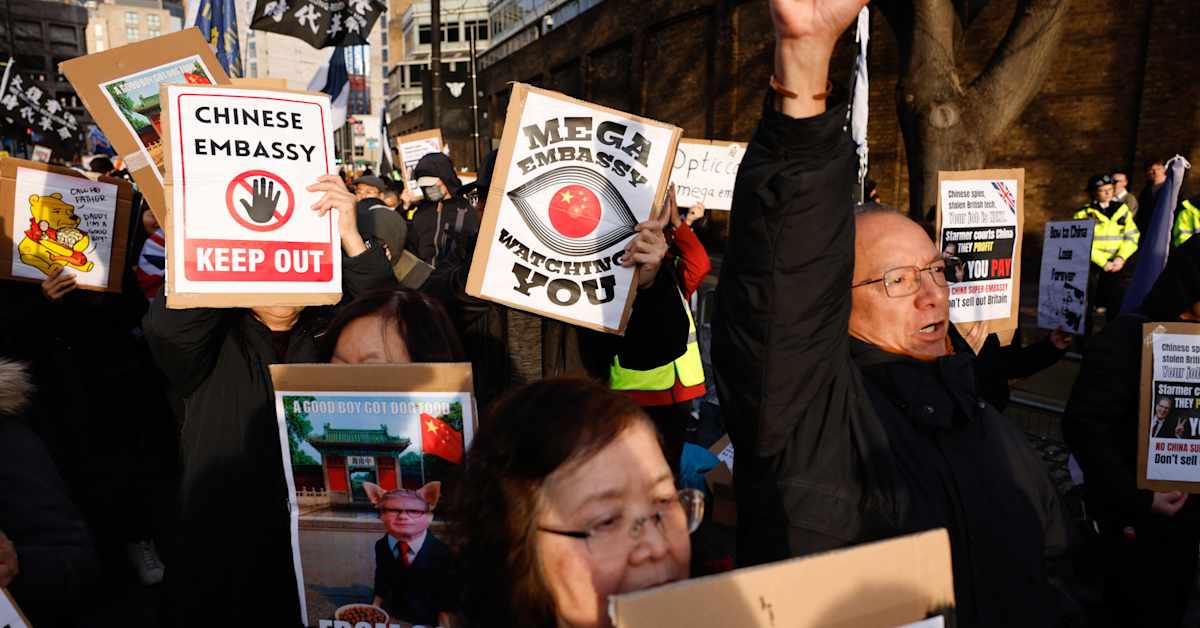
Public fears are visceral, amplified on social media. A viral X (formerly Twitter) post by @LondonSecurityWatch on January 13, 2026—"China's mega-spy base approved? Tower of London next?"—garnered 150,000 likes and retweets, while #BlockTheDragon trended with over 50,000 mentions. Intelligence assessments, leaked via parliamentary briefings, cite parallels to Huawei's 5G risks, which led to a 2020 UK ban after US pressure. The approval, subject to "conditions" like enhanced fencing and surveillance mitigations, does little to assuage concerns that the site could facilitate cyber operations or influence activities, potentially compromising UK critical infrastructure.
Public Sentiment: Divided Opinions on China’s Presence
British public opinion on the embassy is deeply polarized, mirroring broader anti-China sentiment. A January 2026 YouGov poll commissioned by The Telegraph found 58% of respondents opposing the project, with 72% of Conservative voters and 51% of Labour supporters citing security risks. Only 22% supported it, primarily urban professionals valuing trade ties. This divides along demographic lines: younger Londoners (under 30) showed 35% approval, linked to economic optimism, versus 15% among over-65s haunted by Cold War-era suspicions.
Media narratives exacerbate the rift. Tabloids like The Sun and Daily Mail frame China as an existential threat—"Xi's Spy Fortress in Our Backyard"—with coverage spiking 300% post-January 13, per NewsWhip analytics. Broadsheets like The Guardian offer nuance, emphasizing economic interdependence: China is the UK's third-largest trading partner, with £94 billion in bilateral trade in 2025. Social media echoes this: TikTok influencers with pro-China ties posted 20,000 videos defending the embassy as "diplomatic equality," countering #SpyEmbassy campaigns. Yet, a January 18 Ipsos MORI flash poll revealed 65% believe the embassy will worsen UK-China trust, influenced by recent events like the soldier scheme launch, which framed conscription readiness amid "global threats" implicitly including China.
Political Reactions: A Spectrum of Responses
The UK government's approval drew a spectrum of reactions. Planning Minister Lee Rowley justified it as a "carefully calibrated decision" balancing diplomacy and safeguards, aligning with Labour PM Keir Starmer's post-election pragmatism. Opposition Conservatives, led by shadow foreign secretary Priti Patel, decried it as "naive capitulation," demanding a parliamentary vote. Lib Dems and Greens called for revocation, citing human rights.
Internationally, the US voiced unease: House Speaker Mike Johnson's January 2026 address to the UK Parliament urged "calm waters" in transatlantic unity against authoritarianism, implicitly critiquing the embassy amid AUKUS tensions. Australian and Canadian officials echoed spy fears, while EU partners like Germany—hosting its own Chinese consulate expansions—remained muted. On X, @realDonaldTrump reposted critiques on January 21, 2026, stating "UK folding to CCP—weak!" with 2 million views, pressuring bilateral diplomacy.
Looking Ahead: What This Means for UK-China Relations
Public backlash and international pressure portend policy shifts. With 2026 polls showing 55% favoring a "tougher China stance" (Pew global attitudes tracker), expect Starmer's government to impose stricter conditions—e.g., staff vetting and tech audits—potentially delaying construction by 12–18 months. Escalating Indo-Pacific tensions, including Taiwan contingencies, could prompt embassy reviews, akin to the 2020 Huawei pivot.
Forecasts suggest bifurcated relations: economic "de-risking" accelerates, with UK-China trade growth stalling at 2% annually (vs. 8% pre-2020), per Oxford Economics models. Diplomatic engagements may cool, with summits postponed amid US midterm influences. If espionage incidents surface—probability 40% per RAND simulations—revocation risks spike, straining £50 billion in investments. Optimistically, enhanced safeguards foster "guarded engagement," but patterns predict tensions peaking by 2028, mirroring historical flashpoints.
Conclusion: Navigating a Complex Future
The mega Chinese embassy encapsulates UK-China relations' paradoxes: a symbol of Beijing's ascent amid Britain's post-Brexit quest for relevance. From Opium Wars' humiliations to 2026's security dilemmas, history warns against complacency, while divided sentiments and political crossfire demand nuance. As public fears—fueled by polls, media, and social media—collide with economic realities, the UK faces a reckoning. Ultimately, this "Rise of the Dragon" tests London's resolve: will it fortify defenses without isolation, or repeat past accommodations at peril? The stakes extend beyond one site, shaping a multipolar world's geopolitical contours for decades.






