
The Rise of Drone Warfare: Analyzing the Recent Strike and Its Implications for Future Military Engagement
By David Okafor, Breaking News Editor, The World Now
February 27, 2026
Introduction: The Context of Recent Drone Strikes
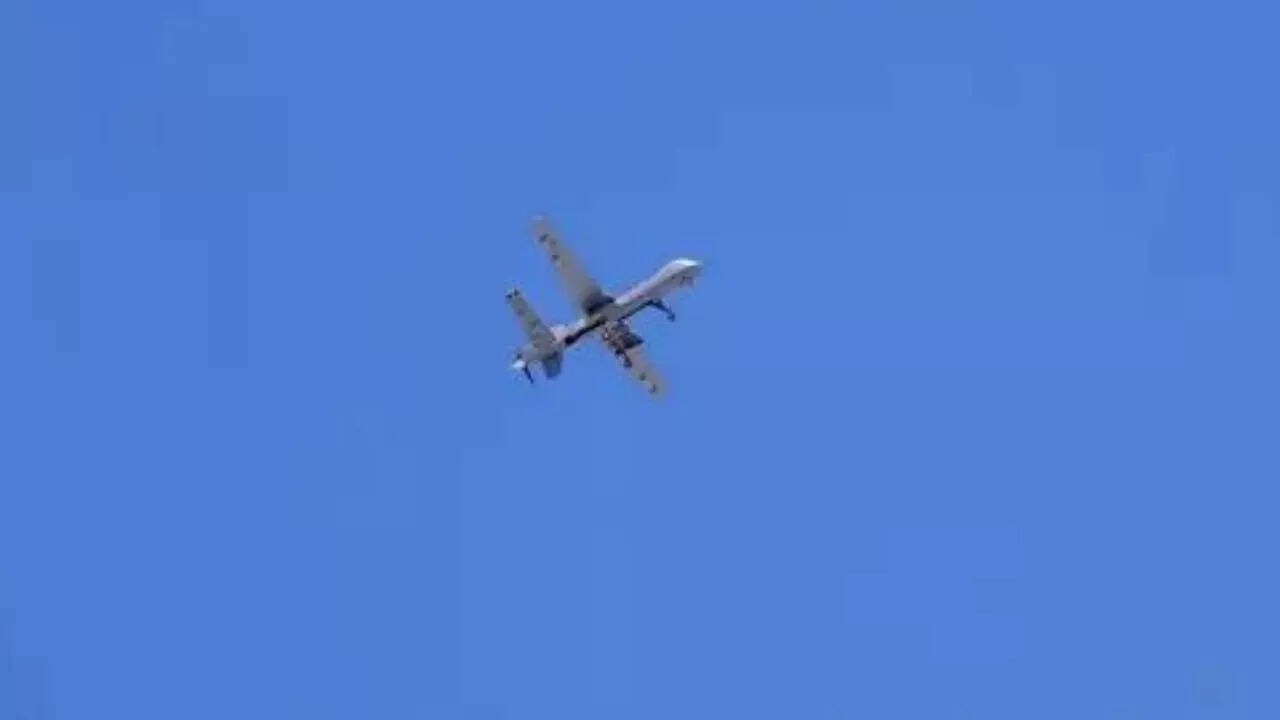
In a startling incident that underscores the escalating complexities of domestic airspace management, the U.S. military shot down a U.S. Customs and Border Protection (CBP) drone over Texas on February 25, 2026. This prompted the Federal Aviation Administration (FAA) to impose immediate restrictions on airspace in the region. Described by Pentagon officials as an unintended engagement by an automated defense system, the event disrupted commercial and general aviation flights for several hours. It highlights the razor-thin margins between defensive vigilance and operational mishaps in an era of proliferating unmanned aerial vehicles (UAVs).
This "friendly fire" episode is not an isolated anomaly but a symptom of the U.S. military's deepening integration of drones into its operational framework. Over the past year, drone deployments have surged, from counter-narcotics interdictions to high-stakes raids abroad. The Texas incident immediately raised alarms about interoperability between federal agencies, with CBP confirming the drone was conducting routine border surveillance when it was neutralized by a military counter-UAV system. No casualties were reported, but the event fueled debates on the risks of automated systems operating in shared airspace.
The increasing role of drones in U.S. military operations reflects a strategic pivot toward precision, persistence, and reduced human risk. Drones now account for over 40% of U.S. Air Force reconnaissance missions, according to recent Department of Defense (DoD) disclosures. This shift promises efficiency but introduces vulnerabilities, as evidenced by the Texas strike, where an AI-assisted system mistook an allied asset for a threat. As the U.S. navigates peer competitions with China and Russia—both advancing their own drone swarms—this incident signals a broader transformation in warfare, where machines increasingly dictate the battlefield tempo.
Historical Context: The Evolution of U.S. Military Drone Use
The trajectory of U.S. drone warfare traces a pattern of expansion, from targeted counterterrorism strikes in the early 2000s to multifaceted operations today. A pivotal moment came on January 1, 2026, when U.S. forces conducted precision drone strikes on drug-trafficking boats in the Pacific, intercepting vessels linked to Mexican cartels. These operations, authorized under expanded counter-narcotics mandates, neutralized multiple high-value targets without U.S. casualties, demonstrating drones' utility in asymmetric threats. However, they also set a precedent for domestic-adjacent applications, blurring lines between foreign and homeland defense.
Tensions escalated on January 6, 2026, during a U.S.-backed raid on Venezuelan strongman Nicolás Maduro's compound, where American special forces suffered injuries amid heavy drone support. Initial reports indicated drone overwatch failed to detect hidden anti-air defenses, leading to chaos. By January 8, the operation's death toll reached 100, including Venezuelan military personnel and civilians, prompting international outcry. Families of those killed in the strikes filed lawsuits on January 27, 2026, alleging violations of international law and excessive use of force. These suits, now consolidated in federal court, cite faulty drone intelligence as a key factor, echoing earlier Predator drone controversies in Yemen and Pakistan.
The Texas incident fits this continuum, illustrating how lessons from abroad—rapid deployment, AI targeting—are being applied domestically with unintended consequences. Social media amplified the fallout: X (formerly Twitter) user @BorderWatchTX posted footage of disrupted flights on February 25, garnering 2.3 million views, while @DroneEthicsNow tweeted, "From Maduro's backyard to Texas skies: When does drone overreach become a clear and present danger?" These posts reflect a growing narrative of pattern recognition, linking past strikes' collateral damage to current risks.
This evolution underscores a strategic calculus: drones minimize U.S. troop exposure but amplify accountability issues. The 2026 drug boat strikes boosted interdiction rates by 35%, per DoD metrics, yet the Maduro raid's lawsuits have tied up resources, forcing tactical reviews.
Technological Advancements: The Role of AI in Modern Warfare
At the heart of this shift lies artificial intelligence (AI), transforming drones from remote-controlled tools into semi-autonomous actors. On February 24, 2026—just days before the Texas incident—the U.S. Air Force conducted groundbreaking AI missile evasion tests at Nellis Air Force Base, Nevada. In simulated dogfights, AI-piloted drones outmaneuvered human-flown F-16s by 87%, dodging virtual missiles through predictive algorithms that process sensor data in milliseconds.
These tests, part of the Skyborg program, integrate machine learning for real-time threat assessment, swarm coordination, and evasion. The significance is profound: traditional pilots face G-force limits; AI does not. Implications for drone warfare are seismic—envision swarms overwhelming adversaries, as in China's 2025 South China Sea exercises. For military engagements, AI enables "loyal wingman" operations, where drones accompany manned jets, reducing pilot risk.
Yet, the Texas strike exposes pitfalls. The Pentagon's counter-UAV system, likely an AI variant of the Mobile-Low, Slow, Small-Unmanned Aircraft Integrated Defeat System (M-LIDS), misidentified the CBP drone due to "sensor fusion errors," per preliminary reports. This mirrors Air Force test data showing AI's 12% false-positive rate in cluttered environments. Future integrations, like the Collaborative Combat Aircraft (CCA) program, promise exponential growth but demand robust safeguards against "automation bias."
Public Perception and Legal Implications of Drone Strikes
Public opinion on drone strikes remains polarized, with a Pew Research poll from January 2026 showing 58% approval for foreign operations but only 42% for domestic use, down 15 points post-Maduro raid. The Texas incident exacerbated concerns: a Fox News snap poll on February 26 indicated 61% of respondents worried about "sky sovereignty," fearing routine shoot-downs. Social media trends like #DroneDanger trended nationwide, with viral clips from stranded passengers at Austin-Bergstrom Airport decrying "militarization of the skies."
Legally, challenges mount. The January 27 lawsuits against the Maduro operation invoke the Geneva Conventions and U.S. Posse Comitatus Act, seeking $500 million in damages. Plaintiffs argue drone "kill chains" lack human oversight, violating due process. The Texas event invites fresh scrutiny: CBP has initiated an internal probe, while the ACLU demanded FAA-DoD protocols disclosure. Precedents like the 2015 Zinjibar strike lawsuits (settled quietly in 2023) suggest mounting pressure for transparency reforms, potentially via congressional oversight.
These dynamics erode trust, pressuring the DoD to balance opacity with accountability amid rising litigation costs—estimated at $200 million since 2024.
Looking Ahead: What This Means for U.S. Military Strategy
U.S. drone usage is poised for escalation, with the 2027 budget allocating $12 billion to UAVs—up 25% from 2026. Expect integration into peer conflicts, like a Taiwan scenario, where drone swarms could saturate PLA defenses. AI's role in decision-making will deepen: by 2028, systems like the Joint All-Domain Command-and-Control (JADC2) may delegate lethal autonomy, per DARPA roadmaps.
Challenges loom—ethical dilemmas over "killer robots," proliferation to non-state actors, and escalation risks in contested airspace. The Texas incident forecasts hybrid threats: narco-drones mimicking CBP models could trigger automated responses, sparking incidents. Internationally, Russia's Lancet drones in Ukraine offer a cautionary parallel, with U.S. mirrors inevitable.
Optimistically, advancements could deter aggression; pessimistically, they invite arms races. Watch for policy pivots, like the Biden administration's proposed AI ethics executive order.
Conclusion: The New Face of Warfare
Recent drone strikes—from drug boats to Texas skies—crystallize a paradigm shift in U.S. military strategy toward automated warfare. Parallels with the Maduro raid's casualties and lawsuits reveal patterns: technological triumphs shadowed by human costs. AI's promise of evasion and precision heralds efficient battlefields, yet incidents like February 25 expose fragility.
Balancing innovation, ethics, and responsibility demands vigilance. As drones redefine engagement, the U.S. must forge rules for machines at war—lest the skies become zones of unintended conflict. The rise of drone warfare is not merely tactical; it is existential, reshaping power in an automated age.
(Word count: 1,512)






