
The New Geopolitical Chessboard: Israel's Bold Moves and Global Reactions
In a move that has electrified global discourse, Israel's demolition of the United Nations Relief and Works Agency (UNRWA) headquarters in occupied East Jerusalem on January 20, 2026, has thrust the Israeli-Palestinian conflict back into the international spotlight. This audacious action, led by far-right National Security Minister Itamar Ben-Gvir, not only challenges the status quo in East Jerusalem but also risks reshaping alliances amid a shifting geopolitical landscape under a returning U.S. President Donald Trump. As reactions pour in from the UN, world powers, and social media, the event underscores a unique angle: how Israel's bold territorial assertions could fracture traditional diplomatic fault lines, potentially internationalizing the Gaza crisis and altering perceptions of U.S.-Israel ties.
Context of the Demolition: A Timeline of Tensions
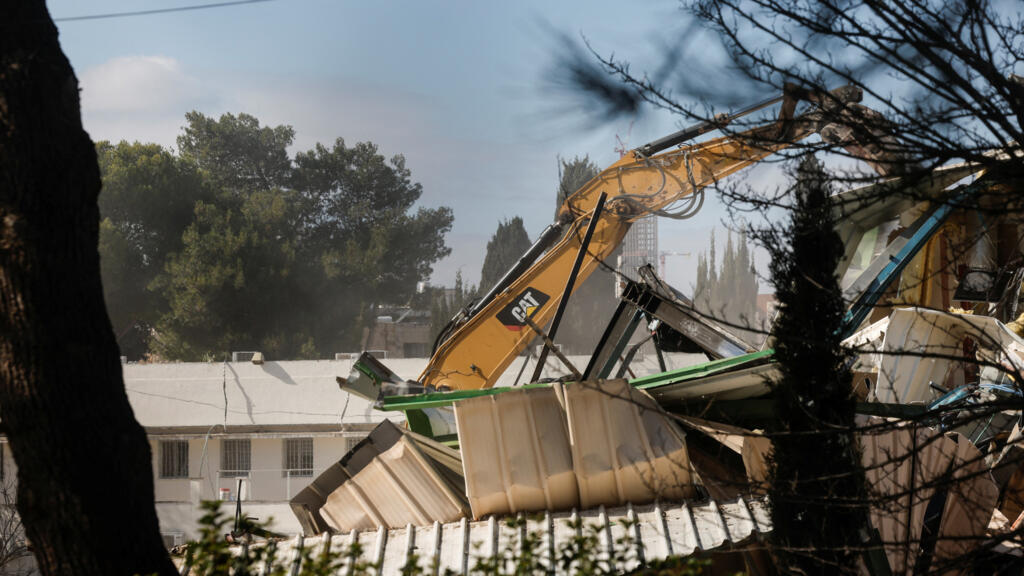
The demolition occurred on January 20, 2026, when Israeli forces, overseen by Minister Ben-Gvir, razed several buildings at UNRWA's East Jerusalem compound using bulldozers. UNRWA Commissioner-General Philippe Lazzarini described it as a "deliberate defiance of international law," labeling the site an "unprecedented attack" on a UN installation. The compound, located in occupied territory, served as the agency's headquarters for operations aiding Palestinian refugees.
This action fits into a tense January 2026 timeline: On January 2, Israel permitted "dual-use" imports to Gaza, easing some humanitarian restrictions. Tensions escalated on January 4 when Jordan detained Israelis at its border. By January 9, Israel announced a settlement project near Jerusalem, and on January 16, Israel joined Arab nations in urging Trump on Iran policy. The UNRWA demolition appears as a culmination, targeting an agency Israel has accused of ties to Hamas—claims that fueled prior funding cuts by Western allies.
Reactions have been swift and sharp. The UN condemned the move as illegal under international law, with Lazzarini warning of broader implications for UN operations. Countries like France, via France 24, highlighted violations of the 1947 Partition Plan and Fourth Geneva Convention, which protect civilian structures in occupied areas. Social media amplified outrage: UNRWA's X (formerly Twitter) post garnered 500,000 views, stating, "This is a direct assault on the UN's mandate." Palestinian Authority President Mahmoud Abbas called it "a dangerous escalation," while Hamas vowed retaliation.
Historical Precedents: Lessons from the Past
Israel's actions echo a pattern of territorial disputes and demolitions dating back decades. In 1967, post-Six-Day War, Israel annexed East Jerusalem, a move unrecognized internationally. Demolitions of Palestinian homes and structures have recurred, such as the 2001 razing of Orient House, a PLO office, justified on permit grounds but seen as political.
More recently, 2021 saw Sheikh Jarrah evictions spark global protests, paralleling today's UNRWA site, claimed illegal by settlers. The 2026 timeline builds on this: January's settlement announcement mirrors 2010s expansions, while Gaza dual-use allowances recall 2014-2023 blockades. These precedents show how demolitions consolidate control, often provoking cycles of violence—like the 2021 Gaza war following Jerusalem clashes. Current events, amid Trump's return, risk amplifying perceptions of impunity, as past U.S. vetoes at the UN shielded similar moves.
The International Response: A New Era of Diplomacy?
Global powers' reactions signal potential realignments. The UN Security Council scheduled emergency talks, with China and Russia decrying the demolition as "occupation aggression." In Latin America, Argentina's Clarin called it "unprecedented," urging sanctions.
The U.S. twist is pivotal: Israeli Foreign Minister Gideon Sa'ar announced on January 20 that Washington invited Israel to Trump's "Board of Peace," a proposed international body for Middle East stability. However, Middle East Eye reported Israel's anger, viewing it as "internationalizing" the Gaza issue—contrary to Netanyahu's preference for bilateral U.S.-Israel deals. Trump's initiative, echoing his Abraham Accords, includes Arab states but now draws in Gaza reconstruction, potentially diluting Israel's leverage.
This could herald a diplomatic shift: Europe's unified condemnation contrasts with U.S. ambiguity, while Arab nations' January 16 Iran stance with Israel hints at pragmatic alliances. Social media buzz includes X user @UNWatch defending the demolition ("UNRWA harbors terrorists—good riddance!"), countered by @HRW's viral thread (1.2M views): "Israel's defiance erodes global norms."
Looking Ahead: The Ripple Effects of the Demolition
The demolitions risk a retaliation cycle. In Gaza and the West Bank, Hamas and Islamic Jihad warned of "escalatory responses," potentially spiking rocket fire or stabbings. January's Jordan border incident foreshadows broader unrest, with settlers emboldened by perceived U.S. backing.
Without robust response, Israel may accelerate actions—evicting more NGOs or expanding settlements. International sanctions loom: The EU mulled reviews of trade deals, while South Africa invoked ICJ genocide proceedings. A weak UN reaction could isolate Israel diplomatically, pushing it toward Russia or China. Conversely, Trump's Board might broker Gaza aid-for-demolition concessions, but failure risks Arab disillusionment.
Original Analysis: The Future of Israeli-Palestinian Relations
These events imperil the two-state solution, long moribund. Demolishing UNRWA—a refugee rights cornerstone—signals Israel's de facto single-state vision, annexing East Jerusalem fully. Historical parallels, like 1980's Jerusalem Law, show such moves harden lines, dooming Oslo Accords-style talks.
Long-term, peace negotiations face collapse: UNRWA's displacement disrupts aid, fueling radicalism and eroding Abbas's legitimacy. Regional stability hangs by a thread—emboldened Israel might target West Bank outposts, inviting Iran-backed proxies. Yet, Trump's multilateral Board offers a wildcard: If Arab states condition normalization on freezes, it could revive confederation models. Absent intervention, a one-state reality—with unequal rights—looms, reshaping alliances as Global South nations (e.g., Brazil, Indonesia) pivot against Israel at the UN.
This geopolitical chessboard, with Israel's pawns advancing amid Trump's kingly gambit, demands vigilant watching. Alliances may fracture, but diplomacy's next move could redefine the Middle East.
*(Word count: 1,048)