The Evolution of Resistance: Understanding Iran's Ongoing Civil Unrest and Its Global Ramifications

Latest from X
The Evolution of Resistance: Understanding Iran's Ongoing Civil Unrest and Its Global Ramifications
Iran's streets have once again become battlegrounds for dissent, with protests escalating into what officials have described as the deadliest unrest in decades. An Iranian official confirmed at least 5,000 verified deaths amid nationwide demonstrations, marking a pivotal moment in the Islamic Republic's turbulent history. This report explores the shifting dynamics of civil unrest through international responses and the potential for grassroots coalition building, contrasting fragmented past movements with the more unified actions unfolding today.
Current Unrest: A Snapshot of the Protests
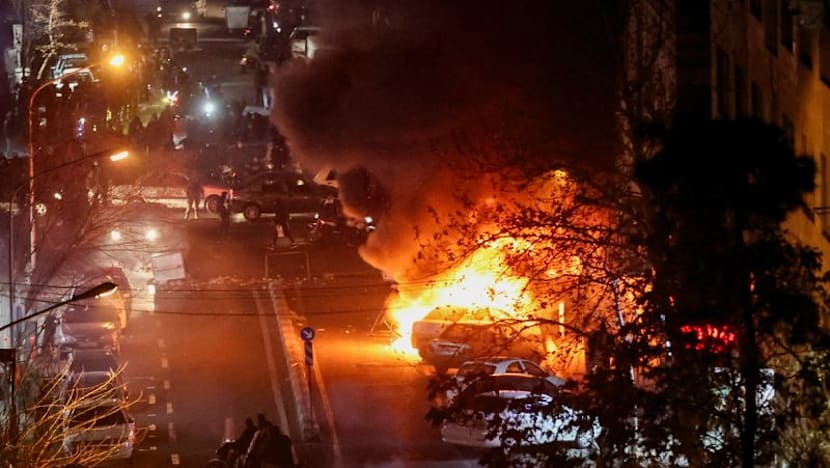
The latest wave of protests, which erupted on January 1, 2026, against Supreme Leader Ayatollah Ali Khamenei, has gripped major cities including Tehran, Isfahan, Fars, Lorestan, Rasht, Sari, and Kerman. Sparked by deepening economic woes, corruption allegations, and demands for regime change, demonstrators have clashed with security forces deploying tear gas, live ammunition, and military-grade bullets.
An Iranian official stated that verified deaths from the protests have reached at least 5,000, with the judiciary hinting at executions for ringleaders. Separate reports have circulated claiming figures as high as 16,000 killed, though these remain unverified. Hospitals in Tehran alone documented over 200 protester deaths in the early days, according to anonymous medical sources cited in media.
Compounding the crisis, Iran imposed a near-total internet blackout starting around January 8, severing communications and hindering information flow. Activists warn this could become permanent, aimed at concealing the scale of the crackdown. Limited access was briefly restored via services like Google, per IRGC-linked reports, but connectivity remains spotty. Posts on X highlight desperate circumvention efforts, including Starlink usage to leak footage of tear gas deployments in Tehran districts like Sa’adat Abad and Aryashahr. The blackout has amplified fears of a cover-up, with users decrying it as enabling a "killing spree" and issuing urgent calls for international aid.
Historical Context: The Roots of Dissent
This unrest traces deep roots, evolving from cycles of oppression and resistance. Iran's protest history includes the 2009 Green Movement against electoral fraud, the 2019 fuel price hikes sparking economic fury, and the 2022 "Woman, Life, Freedom" uprising following Mahsa Amini's death in custody—each met with brutal crackdowns but failing to topple the regime.
The 2026 demonstrations mark a stark escalation. Key timeline events underscore the momentum: Protests ignited on January 1 against Khamenei; by January 2, Iran's own Foreign Ministry voiced support for some grievances amid internal divisions; January 4 saw 16 deaths in an initial crackdown; protesters symbolically renamed a Tehran street after Donald Trump on January 7, signaling anti-regime fervor; and by January 9, unrest had spread nationwide.
Unlike past movements, which often splintered along urban-rural or ethnic lines, current actions show broader coordination. Government responses—internet shutdowns, mass arrests, and shootings—mirror tactics from prior eras but face heightened scrutiny in a more connected world. This continuity of repression has fueled a narrative of unrelenting civil discontent, transforming sporadic outrage into sustained rebellion.
International Reactions: A Double-Edged Sword
Global responses to Iran's crisis reveal a delicate balance, potentially bolstering protesters or provoking harder crackdowns. Western governments, including the U.S. and EU, have condemned the violence, calling for sanctions and investigations into the 5,000-plus deaths. France 24 and other outlets covered live updates, amplifying calls for accountability.
Yet, this solidarity cuts both ways. Iran's regime frames foreign criticism as interference, rallying hardliners. Symbolic gestures, like protesters' Trump street renaming, have drawn mixed U.S. reactions—some conservatives cheer it as anti-Khamenei defiance, while others caution against escalation. Regional powers like Saudi Arabia and Israel watch closely, with Jerusalem Post reports on partial internet restorations possibly signaling internal regime maneuvers amid external pressure.
Historically, international involvement has been inconsistent: Sanctions post-2022 protests weakened the economy but didn't prevent reprisals. Today, unified global outcry—via UN statements and activist campaigns—could pressure reforms, but overreach risks portraying the unrest as a Western proxy, fracturing domestic support. This dynamic highlights the unique angle of 2026: Protests are leveraging global attention more strategically than in past isolated uprisings.
Grassroots Movements: The Future of Unrest
At the heart of this evolution lies grassroots coalition building, a departure from previous fragmented efforts. Iran's diverse ethnic groups—Persians, Kurds, Baloch, Azeris—and social strata are increasingly uniting under anti-regime banners, sharing resources via smuggled footage and VPNs despite blackouts.
Social media plays a pivotal role, with X posts from Iranian diaspora and insiders coordinating aid, verifying casualties through doctor networks, and mobilizing hashtags like #IranRevolution2026 and #DigitalBlackoutIran. Eyewitness claims of over 5,000 deaths, drawn from hospital talks across provinces, underscore this networked resilience—contrasting sharply with 2022's more women-led focus.
Technology enables what repression stifles: Starlink bypasses controls, fostering cross-group alliances. This coalition potential, blending labor strikes, student walkouts, and ethnic demands, positions 2026 as a tipping point. Unlike earlier movements reliant on elite defections, today's unrest thrives on decentralized, tech-savvy organization, hinting at scalable resistance.
What This Means: Predictions for Iran's Civil Landscape
Forecasting Iran's trajectory involves weighing repression against momentum. Short-term, expect intensified crackdowns—executions loom, per judicial hints, and blackouts may persist to quash coordination. Yet, with 5,000 confirmed deaths eroding regime legitimacy, military defections or elite fractures could accelerate, especially if economic collapse deepens.
Grassroots coalitions offer hope for evolution: Sustained unity might force concessions, like power-sharing or Khamenei's ouster, echoing Eastern Europe's 1989 velvet revolutions. Regime change remains plausible but risky, potentially yielding chaos amid power vacuums.
International pressure will be key. Sustained sanctions and humanitarian corridors could tip scales toward reform; waning attention, as in past cycles, might embolden Tehran. By mid-2026, watch for protest resurgence post-blackout or coalition manifestos demanding federalism. Ultimately, this unrest's legacy may redefine resistance—not as isolated flares, but as a cohesive push for transformation, with global ramifications for Middle East stability.
(Word count: 1,028)
Trending report
Why this topic is accelerating
This report format is intended to explain why attention is building around a story and which related dashboards or live feeds should be watched next.
Momentum driver
Iran
Best next step
Use the related dashboards below to keep tracking the story as it develops.
Track this story live
Original Sources
- •
- •
- •
- •
- •
- •
- •Iranian official says at least 5,000 killed in protests— middleeasteye
- •
- •
- •
Editorial process: This article was synthesized from the original sources cited above using The World Now's AI editorial system, with byline accountability from our editorial team. We grade every story for source grounding, factual coherence, and on-topic match before publication. Read more about our editorial standards and contributors. Spot something inaccurate? Let us know.
Last updated: March 7, 2026