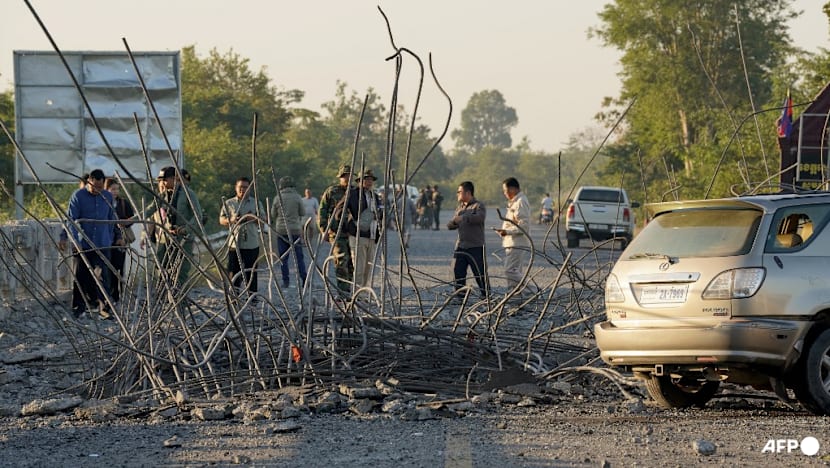

Thai Soldier Wounded in Cross-Border Strike from Cambodia, Sparking Truce Violation Claims
Bangkok, Thailand – A Thai soldier was wounded in a strike along the volatile Thailand-Cambodia border early Tuesday, prompting the Thai army to accuse Cambodia of violating a longstanding truce and heightening fears of renewed tensions between the Southeast Asian neighbors.
The incident occurred at approximately 2:55 a.m. GMT on January 6, 2026, near the disputed border region, according to reports from the Thai military. The soldier sustained injuries from what the Thai army described as a Cambodia-initiated strike, marking a potential breach of fragile agreements aimed at maintaining peace along the frontier. While the soldier's condition was not immediately detailed, the event has been classified as medium severity, underscoring its potential to escalate if not addressed swiftly.
The Thai army issued a statement condemning the action, asserting that it "violates the existing truce" established to prevent clashes in the area. Military officials emphasized that Thai forces had been adhering to de-escalation protocols, and the unprovoked strike represented a direct challenge to bilateral commitments. No immediate response from Cambodian authorities was reported in initial coverage, leaving the Phnom Penh government's position unclear as of press time.
Details of the Incident
According to Channel News Asia, the strike targeted Thai positions along the border, resulting in the wounding of at least one soldier. The Thai military highlighted the timing – predawn hours – as indicative of an intentional act amid otherwise calm conditions. Patrols in the area were routine, part of ongoing efforts to monitor the frontier following previous flare-ups.
The location remains unspecified in available reports but aligns with historical hotspots along the 800-kilometer (500-mile) border, particularly near ancient temple sites that have long fueled disputes. Thai forces reported no casualties on the Cambodian side and stated they had not retaliated, opting instead for diplomatic channels to lodge a formal protest.
This event unfolds against a backdrop of intermittent military posturing, with both nations maintaining significant troop deployments in border provinces such as Thailand's Surin and Cambodia's Preah Vihear. Eyewitness accounts from local villagers, though unverified in primary sources, have historically described similar incidents as involving artillery or small-arms fire, though specifics here remain pending official confirmation.
Historical Context of Thailand-Cambodia Border Tensions
Tensions between Thailand and Cambodia over their shared border date back decades, rooted in colonial-era demarcations and territorial claims. The most prominent flashpoint is the 11th-century Preah Vihear Temple, awarded to Cambodia by the International Court of Justice (ICJ) in 1962 but surrounded by overlapping claims to adjacent lands.
Deadly clashes erupted in 2008 and intensified in 2011, resulting in dozens of deaths, hundreds of injuries, and the displacement of thousands of civilians. Those exchanges involved artillery barrages and infantry engagements, prompting ASEAN mediation and a bilateral truce in 2011. The agreement called for demilitarized zones, joint patrols, and ICJ oversight, which largely held despite occasional accusations of incursions.
In recent years, both governments have reaffirmed commitments to peace. Thailand's military has conducted joint exercises with Cambodia under ASEAN frameworks, while high-level visits – including those by Thai Prime Minister Srettha Thavisin and Cambodian leader Hun Manet – have emphasized economic cooperation over confrontation. Trade between the two nations exceeded $10 billion in 2024, with cross-border initiatives like tourism and infrastructure projects fostering interdependence.
However, domestic politics often amplify border rhetoric. In Thailand, nationalist sentiments tied to royalist and conservative factions have historically pressured leaders to adopt firm stances. Cambodia, under the Hun family's long rule, views the border as a sovereignty issue, occasionally responding to perceived Thai encroachments with troop buildups.
The 2026 strike revives concerns from a 2023 incident where Thai and Cambodian soldiers exchanged fire near Ta Moan temple, injuring two without truce violations being formally declared. Analysts note that while fatalities are rare post-2011, such events test the resilience of diplomatic mechanisms like the Joint Border Commission (JBC).
Regional and International Reactions
As news broke, ASEAN diplomats were placed on alert, given the bloc's non-interference principle but history of facilitating talks. The Thai Foreign Ministry summoned Cambodia's envoy in Bangkok, demanding an explanation and assurances against repetition.
Cambodia's defense ministry has yet to comment publicly, but past patterns suggest a counterclaim of Thai provocation. Phnom Penet has frequently accused Bangkok of violating the border in response to similar allegations.
Internationally, the United Nations and ICJ monitors remain watchful, though no emergency sessions were convened immediately. Neighboring Laos and Vietnam, as ASEAN peers, urged restraint via preliminary statements.
Outlook Amid Fragile Peace
The wounding of the Thai soldier underscores the precarity of the Thailand-Cambodia truce, nearly 15 years after its inception. While medium in severity, the incident risks snowballing if not de-escalated through the JBC or bilateral hotlines established post-2011.
Both nations face domestic pressures – Thailand grapples with political instability following recent elections, while Cambodia prioritizes stability under its post-Hun Sen transition. Economically intertwined, escalation could disrupt trade routes and tourism, sectors vital to border provinces.
Military analysts anticipate diplomatic resolutions, as full-scale conflict remains improbable given mutual deterrence and international scrutiny. Nonetheless, the event serves as a reminder that unresolved territorial ambiguities continue to simmer, potentially ignited by minor provocations.
As investigations proceed, both sides are expected to reinforce calls for restraint, with the international community monitoring for adherence to the truce. Updates on the soldier's condition and any Cambodian response are awaited.
(Word count: 748)






