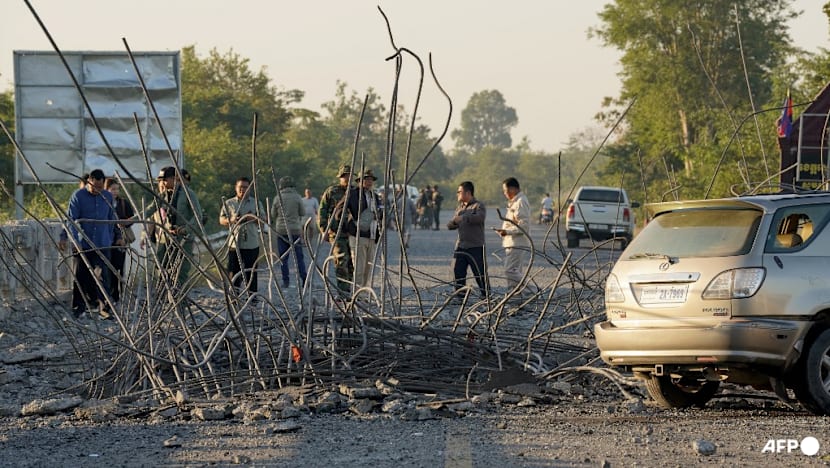

Thai Soldier Wounded in Cambodia Border Strike, Prompting Truce Violation Claims
BANGKOK — A Thai soldier was wounded in a strike along the Thailand-Cambodia border early Tuesday, with the Thai army accusing Cambodia of violating an existing truce and launching an investigation into the incident described as an "explosion" in Ubon Ratchathani province.
The event, which occurred around 2:55 a.m. GMT on January 6, 2026, has heightened tensions between the two neighboring countries, both of which maintain military presences along their shared 800-kilometer frontier. The Thai military reported the strike as originating from Cambodian territory, resulting in injuries to one soldier. No fatalities were confirmed, and the severity of the incident has been classified as medium by monitoring sources.
According to a statement from the Thai army, the strike took place in Ubon Ratchathani, a northeastern province bordering Cambodia's Oddar Meanchey and Preah Vihear provinces. The army is actively probing the "explosion," with initial assessments pointing to a possible artillery or rocket attack. "This incident clearly violates the truce agreement in place," a Thai military spokesperson said, as reported by Channel News Asia. Cambodian authorities have not yet issued an official response, leaving the attribution of responsibility unconfirmed pending further investigation.
The wounded soldier was promptly evacuated for medical treatment, though details on the extent of injuries remain undisclosed. Thai forces have reportedly increased vigilance along the border, with reinforcements deployed to sensitive areas. Local residents in Ubon Ratchathani have been advised to exercise caution amid the ongoing probe.
Historical Context of Border Tensions
Thailand and Cambodia have a long history of disputes over their shared border, particularly in disputed zones near ancient Khmer temples. The most notable flashpoint is the 11th-century Preah Vihear Temple (known as Khao Phra Viharn in Thailand), awarded to Cambodia by the International Court of Justice (ICJ) in 1962 but surrounded by overlapping territorial claims. Clashes erupted periodically between 2008 and 2011, resulting in dozens of deaths on both sides and the displacement of thousands of civilians.
In April 2011, the ICJ ordered both nations to withdraw troops from a provisional demilitarized zone around the temple, leading to a fragile ceasefire. Subsequent bilateral talks and ASEAN-mediated dialogues established truces to prevent escalation, including joint patrols and de-escalation protocols. Despite these measures, minor incidents—such as troop buildups or accidental crossings—have occasionally strained relations. The 2026 strike marks a significant breach, as it is the first reported wounding since the last major truce renewal in the early 2020s.
Ubon Ratchathani, site of the incident, lies near the Chong Bok border pass and has seen intermittent military activity due to its proximity to Cambodia's military bases. The province's strategic importance stems from its role in regional trade routes and as a gateway for cross-border movement.
Regional and Diplomatic Implications
The incident unfolds against a backdrop of improving bilateral ties under recent Thai and Cambodian leadership. Both countries have prioritized economic cooperation, including infrastructure projects under China's Belt and Road Initiative and enhanced trade via the Mekong subregion. In 2025, two-way trade exceeded $10 billion, bolstered by tourism recovery post-COVID-19.
However, border security remains a persistent irritant. ASEAN, of which both nations are members, has historically played a mediating role, as seen in 2011 when it facilitated ICJ compliance. Thai Prime Minister Srettha Thavisin’s government, focused on domestic economic reforms, is likely to pursue diplomatic channels to avoid broader conflict, while Cambodia's Hun Manet administration emphasizes national sovereignty.
Military analysts note that modern border engagements often involve artillery or drones, reflecting upgrades in both armies' capabilities. Thailand's Royal Thai Army, with over 300,000 active personnel, maintains several divisions along the eastern frontier, while Cambodia's Royal Cambodian Armed Forces number around 125,000, with a focus on border defense.
Outlook and Response
As investigations continue, both sides are urged to exercise restraint to preserve the truce. The Thai army has called for an immediate Cambodian explanation, signaling potential escalation if unanswered. International observers, including the United Nations, may monitor developments given the ICJ's prior involvement.
No evacuations have been ordered, but border crossings in Ubon Ratchathani have seen reduced activity. Diplomatic talks are expected in the coming days, possibly at the foreign minister level, to de-escalate. For now, the single wounding underscores the volatility of the frontier, reminding stakeholders of the need for sustained dialogue to prevent a return to past hostilities.
This event revives concerns over border stability in Southeast Asia, where territorial disputes—such as those in the South China Sea—continue to challenge regional peace. Updates will follow as more details emerge from official sources.
(Word count: 612)






