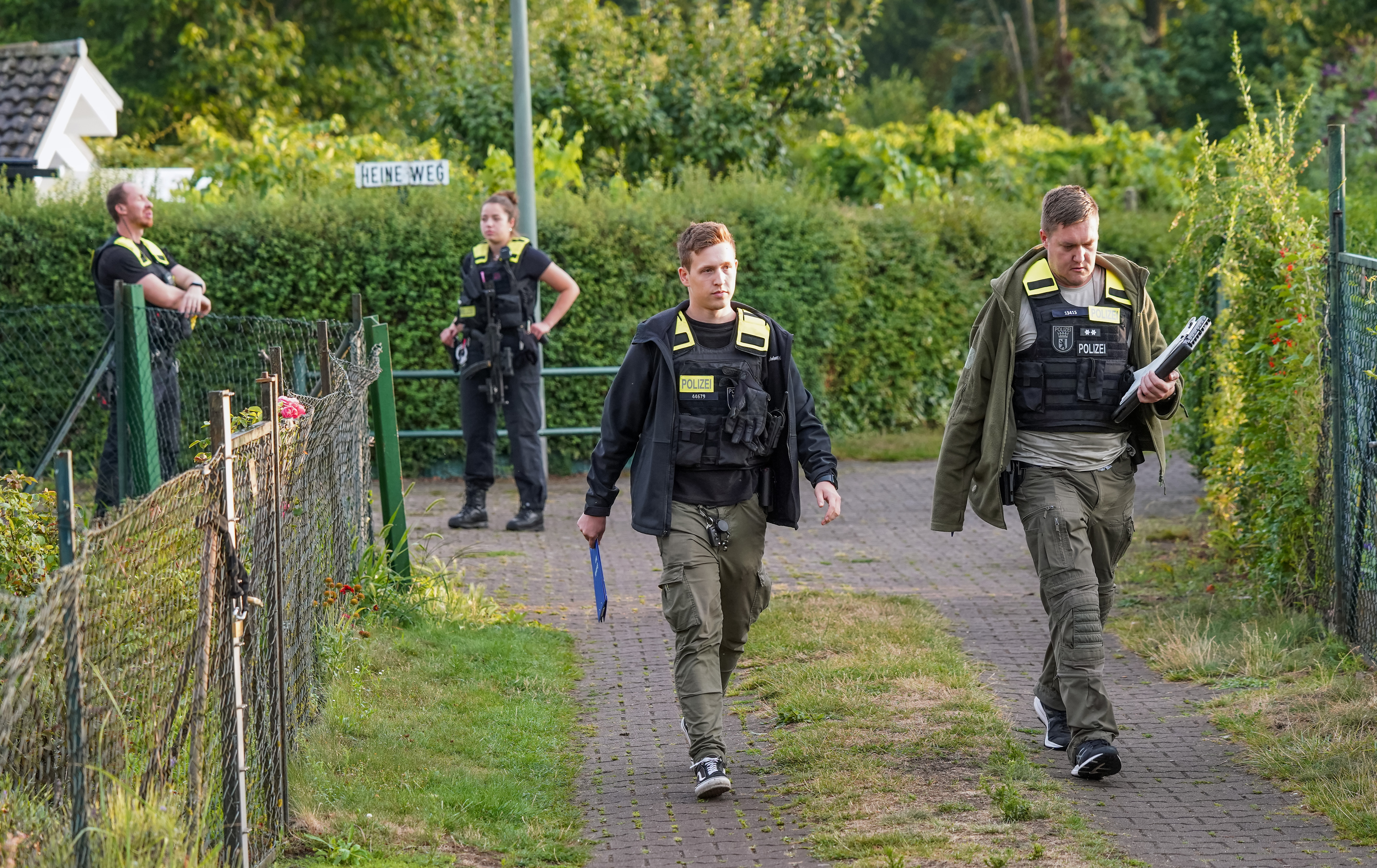
Terrorism in United States: Somaliland President Condemns White House Dinner Shooting
A shooting at the White House Correspondents' Dinner has drawn international attention amid ongoing terrorism in United States, with Somaliland's President Dr. Abdirahman Mohamed Abdillahi Irro issuing a strong condemnation of the incident. Expressing solidarity with the United States, Irro also voiced support for Donald Trump, highlighting a notable foreign response to the event.[4]
Overview of the Incident
The shooting at the White House Correspondents' Dinner occurred in a context that prompted swift international commentary, particularly from Somaliland's leadership. Somaliland President Dr. Abdirahman Mohamed Abdillahi Irro, based in Hargeisa, addressed the matter on Sunday, describing it as a deplorable act that warranted immediate denunciation.[4] This event, hosted annually to recognize journalists covering the White House, became the focal point of global diplomatic statements, underscoring vulnerabilities in high-profile U.S. gatherings. Irro's response framed the incident as an attack not just on an event, but on broader democratic institutions, aligning with patterns of violence that have marked recent U.S. security challenges. The president's statement emphasized the need for unity against such disruptions, positioning the dinner shooting as a symbol of threats to press freedom and political stability in the United States.[4] Details from reports indicate the condemnation was part of a larger expression of alliance, reflecting Somaliland's interest in strengthening ties with Washington amid its own regional aspirations for recognition. This overview situates the incident within immediate reactions, where foreign leaders like Irro provided a clear, supportive voice without delving into specifics of the attack's perpetrators or motives, as covered in diplomatic channels.[4]
International Reactions and Support
Foreign leaders have responded to the shooting at the White House Correspondents' Dinner with measured yet firm statements, led prominently by Somaliland's President Dr. Abdirahman Mohamed Abdillahi Irro. In a declaration from Hargeisa, Irro strongly condemned the violence, extending solidarity to the United States and explicitly backing Donald Trump.[4] This stance from Somaliland, a self-declared republic in the Horn of Africa seeking international legitimacy, illustrates how even peripheral actors engage with U.S. domestic crises to signal alignment. Irro's support for Trump adds a layer of political specificity, potentially reflecting shared views on security and leadership amid terrorism concerns in United States. The response, reported via Horn Diplomat outlets, underscores a broader pattern where global figures use such moments to affirm partnerships, especially in regions like East Africa where U.S. influence plays a role in countering instability.[4] While other international reactions remain less detailed in available reports, Somaliland's position stands out for its directness, offering contextual solidarity that ties into ongoing U.S. efforts against violence. This diplomatic gesture arrives at a time when transatlantic and global alliances are tested, providing a snapshot of how distant nations interpret and react to American events.[4]
Global Security Context
Amid rising terrorism in United States exemplified by the White House Correspondents' Dinner shooting, broader global security trends reveal escalating military expenditures and nuclear proliferation risks. The Stockholm International Peace Research Institute (SIPRI) reported that world military spending reached $2,887 billion in 2025, marking a 2.9 percent increase in real terms from 2024.[2] This surge was driven by regional spikes, including a 14 percent rise in Europe and an 8.1 percent increase in Asia and Oceania, even as U.S. spending declined.[2] The top three spenders—the United States, China, and Russia—accounted for $1,480 billion combined, representing 51 percent of the global total, highlighting the dominance of major powers in defense budgets.[2] These figures come as diplomats convene in New York for a four-week review of the Treaty on the Non-Proliferation of Nuclear Weapons (NPT), the world's most comprehensive nuclear arms agreement.[5] Concerns center on an accelerating nuclear arms race, with nuclear-armed states including the United States, Russia, and Israel implicated in actions described as illegal wars of aggression.[5] This diplomatic gathering, involving representatives from nearly every nation, underscores high stakes in curbing proliferation amid ongoing conflicts. The interplay of rising global spending and NPT tensions provides essential context for U.S.-centric events like the dinner shooting, where domestic security intersects with international military dynamics. SIPRI's data points to a world where European and Asian surges offset U.S. reductions, potentially straining alliances and resources allocated to counter-terrorism efforts.[2][5] Stability in the Middle East's spending, despite regional volatility, further illustrates uneven global trends that could influence U.S. responses to internal threats.[2]
US Foreign Relations Highlights
U.S. foreign relations encompass core challenges and diplomatic outreach, as evidenced by expert commentary on Iran and investment initiatives with African nations. Experts have identified the United States' fundamental issues with Iran as a persistent concern, noting that China and Russia are now fully aware of these problems, according to analysis published on April 27, 2026.[1] This awareness among major powers like Beijing and Moscow complicates multilateral dynamics, positioning Iran as a flashpoint in U.S. strategic priorities. Separately, Ghana's Ambassador to the United States, Victor Smith, visited Seattle to promote American investment in Ghana, advancing bilateral economic ties.[3] Smith's trip highlights proactive diplomacy aimed at fostering U.S. capital inflows into West Africa, unrelated directly to the White House incident but illustrative of Washington's broader international engagement. These elements—tensions with Iran known to adversaries and investment drives in Africa—paint a picture of multifaceted U.S. relations, where security dilemmas coexist with economic opportunities. The Iran focus, reiterated in expert discourse, suggests that global actors are attuned to American vulnerabilities, potentially impacting alliances.[1] Meanwhile, Smith's Seattle visit exemplifies soft power efforts, seeking to bolster ties through commerce in tech hubs like the Pacific Northwest.[3] Together, these highlights reflect a U.S. foreign policy landscape balancing confrontation and cooperation.
Implications for US Policy
The shooting at the White House Correspondents' Dinner carries implications for U.S. policy, intersecting with global military trends, nuclear diplomacy, and relational challenges like those with Iran. With world military spending at $2,887 billion in 2025—including a 14 percent European increase and 8.1 percent in Asia and Oceania despite U.S. declines—the fiscal landscape pressures Washington to recalibrate defenses against domestic threats like terrorism.[2] The dominance of the U.S., China, and Russia at 51 percent of global totals underscores competitive spending that could divert resources from internal security.[2] Concurrently, the ongoing NPT review in New York highlights risks of a nuclear arms race fueled by actions from nuclear powers including the United States, Russia, and Israel, demanding policy attention amid aggression concerns.[5] Experts' notes on U.S. core Iran issues, now recognized by China and Russia, amplify these stakes, as adversaries exploit known weaknesses.[1] For U.S. policy, this convergence suggests a need to integrate counter-terrorism with broader deterrence, potentially influencing budgets and alliances. Regional spending stability in the Middle East, per SIPRI, offers some relief but not immunity from proliferation threats tied to NPT discussions.[2][5] Diplomatic responses like Somaliland's solidarity further imply that international backing could bolster U.S. resolve, yet global trends necessitate adaptive strategies.[1][2][5] These factors collectively urge a holistic policy approach, linking event-specific responses to enduring geopolitical realities.
What to watch next: Diplomats' outcomes from the New York NPT review could shape nuclear policies, while SIPRI-tracked military spending trends in Europe and Asia may influence U.S. defense reallocations amid ongoing security challenges.[2][5]