
Tensions Escalate on Day 1406 of the Russia-Ukraine War Amid Conflicting Peace Claims
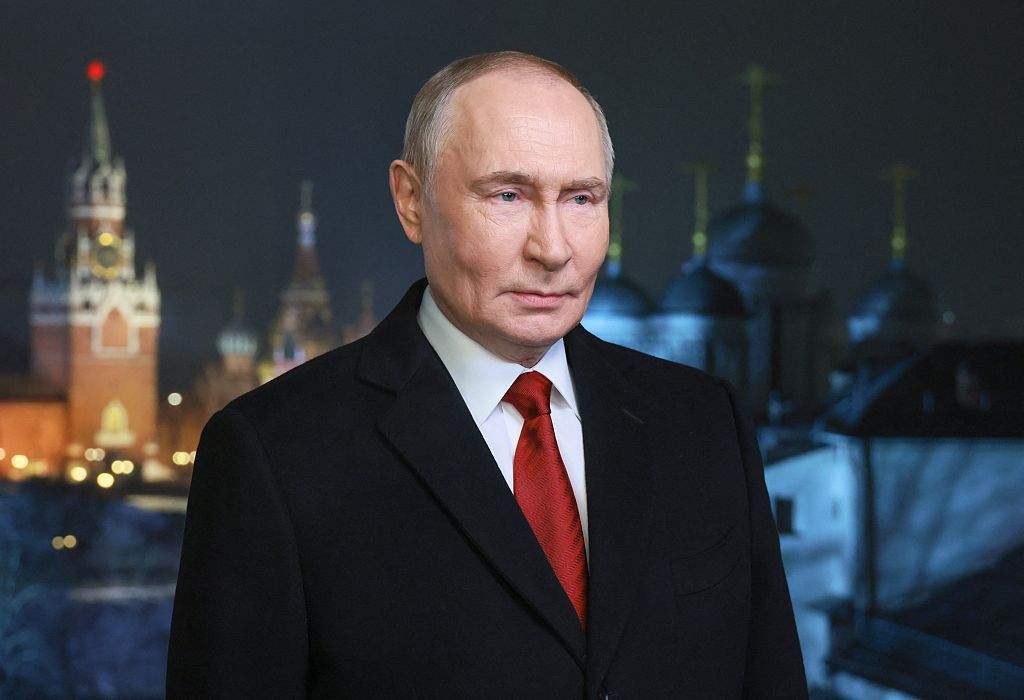
As the Russia-Ukraine war enters its 1,406th day, the landscape remains fraught with tension and conflicting narratives surrounding the future of the conflict. President Vladimir Putin's New Year address, delivered on January 1, 2026, underscored Russia's commitment to its military objectives while omitting any mention of peace negotiations. Conversely, Ukrainian President Volodymyr Zelensky has expressed optimism, claiming that a peace agreement is "90 percent" finalized.
During his New Year speech, Putin reinforced the narrative of victory in Ukraine, highlighting military achievements and framing the conflict as a defensive effort against the West. "We believe in our victory," he stated, emphasizing Russia's resolve to continue its operations. His remarks suggest a steadfast commitment to the ongoing military campaign and a lack of intention to pursue diplomatic avenues for resolution. Analysts interpret this as a signal that Russia will not ease its aggressive posture, potentially prolonging the conflict into another year.
In stark contrast, Zelensky’s statements reflect a more hopeful outlook for peace. Speaking to Ukrainian media, he indicated that substantial progress has been made in negotiations with Russia. "We are at the final stage and the agreement is 90 percent complete," he said, hinting at a possible end to hostilities in the near future. His assertions come amid a backdrop of intense military engagement, raising questions about the feasibility of achieving lasting peace under current conditions.
The diverging narratives from both leaders highlight the complexities of the situation on the ground. While Zelensky's optimism may resonate with a war-weary populace, the ongoing military operations and Putin's aggressive rhetoric suggest that any peace agreement will face substantial challenges. The current military landscape is characterized by heavy fighting, particularly in eastern Ukraine, where both sides continue to engage in fierce battles for territory.
Background
The conflict between Russia and Ukraine began in 2014, following Russia's annexation of Crimea and the subsequent outbreak of hostilities in the eastern regions of Donetsk and Luhansk. Since then, the war has escalated, leading to significant loss of life and displacement of civilians. International efforts to broker peace have been ongoing but have largely failed to yield a sustainable resolution.
In recent months, both nations have ramped up military activity, with Ukraine receiving increased support from Western allies, including advanced weaponry and training. This assistance has been critical in bolstering Ukraine's defenses, allowing it to mount a more effective resistance against the Russian military.
Conclusion
As Day 1406 of the Russia-Ukraine war unfolds, the prospects for peace remain uncertain. While Zelensky's claims of a near-finalized agreement offer a glimmer of hope, Putin's resolute stance on military operations presents a formidable obstacle. The coming days and weeks will be crucial in determining whether the conflicting narratives can converge into a tangible solution or if the war will continue unabated into 2026. The international community watches closely, as the implications of this ongoing conflict extend beyond the borders of Ukraine and Russia, affecting global security and stability.






