
Taiwan Mobilizes Search for Missing F-16 Pilot Amid Ongoing Military Operations
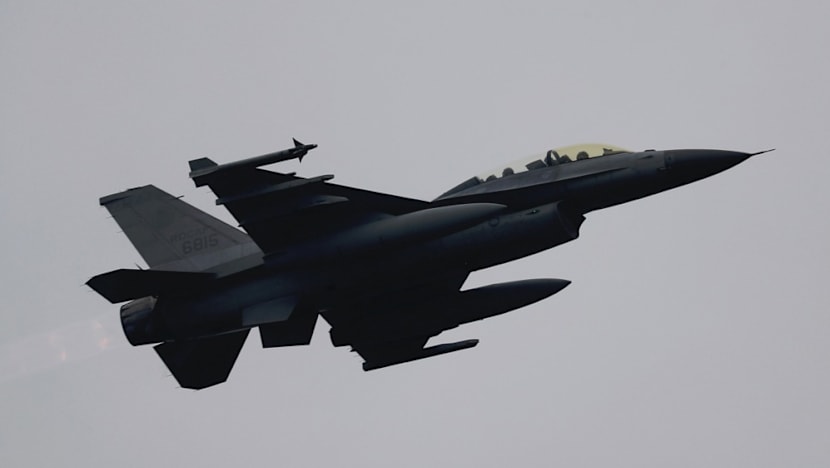
Hualien, Taiwan – Taiwan's military has launched an extensive search operation for a pilot reported missing from an F-16 fighter jet, marking a concerning incident in the island's robust air defense activities. The search, centered around the eastern county of Hualien, began on Tuesday, January 6, 2026, as rescue teams comb land and sea areas for any sign of the aviator.
The Republic of China Air Force (ROCAF) confirmed the pilot's disappearance following a routine flight operation involving the advanced F-16 Viper variant. According to reports, the aircraft lost contact during the mission, prompting immediate deployment of helicopters, vessels, and ground teams. Hualien, home to a key ROCAF base, serves as the focal point of the effort, with authorities urging civilians in the vicinity to report any unusual sightings.
Details on the exact circumstances of the incident remain limited as the investigation unfolds. The pilot was flying solo in what was described as standard training or patrol duties, common for Taiwan's fighter squadrons given the heightened regional tensions. No information has been released regarding the aircraft's status—whether it crashed, experienced mechanical failure, or remains unaccounted for—nor has there been any indication of hostile action. Taiwan's Ministry of National Defense stated that the search is being conducted "with the utmost urgency and resources available," emphasizing the pilot's safety as the top priority.
This event underscores the operational demands on Taiwan's air force, which maintains one of Asia's most capable fleets amid persistent threats from the People's Republic of China (PRC). F-16 Fighting Falcons have been a cornerstone of Taiwan's aerial defense since the 1990s, with the island operating approximately 140 of the jets, many upgraded to the F-16V configuration through a U.S.-assisted program completed in recent years. These enhancements include advanced active electronically scanned array (AESA) radars, improved avionics, and compatibility with precision-guided munitions, bolstering Taiwan's ability to counter potential invasions or gray-zone incursions.
Hualien Air Base, located in Taiwan's rugged eastern mountains, is strategically vital. It houses F-16 squadrons designed for rapid response to aerial threats from across the Taiwan Strait. The base's dispersed location provides natural protection from missile strikes, a key factor in Taiwan's "porcupine" defense strategy aimed at deterring a Chinese amphibious assault. Routine flights from Hualien often simulate intercepts of PLA aircraft, which frequently violate Taiwan's air defense identification zone (ADIZ)—with over 1,700 incursions recorded in 2025 alone, according to Taiwan's defense ministry data.
Background on Taiwan's F-16 Program and Regional Tensions
Taiwan's acquisition of F-16s dates back to 1992, when the U.S. approved the sale of 150 aircraft to offset numerical disadvantages against China's growing People's Liberation Army Air Force (PLAAF), which boasts over 1,200 combat jets, including advanced J-20 stealth fighters. Facing arms embargoes and delivery delays, Taiwan pursued indigenous upgrades. In 2019, the Trump administration greenlit a $8 billion deal for 66 new F-16Vs, with deliveries accelerating under subsequent U.S. administrations amid escalating U.S.-China rivalry.
The F-16V's role has intensified since Russia's 2022 invasion of Ukraine highlighted the importance of air superiority in modern conflicts. Taiwan conducts frequent exercises like Han Kuang, simulating PRC invasions, where F-16s practice beyond-visual-range engagements and electronic warfare. However, the fleet has not been immune to accidents; a notable 2022 crash during Han Kuang killed pilot Lt. Col. Lo Shu-yao, who ejected but succumbed to injuries, prompting safety reviews.
China-Taiwan tensions provide critical context. Beijing claims Taiwan as its territory and has ramped up military drills, including simulated blockades following U.S. House Speaker Nancy Pelosi's 2022 visit and President Lai Ching-te's 2024 inauguration. The PRC's "reunification" rhetoric, coupled with hypersonic missile tests and carrier deployments, keeps Taiwan's forces on high alert. U.S. commitments under the Taiwan Relations Act ensure continued arms support, including potential F-16 sustainment packages.
Rescue Efforts and Potential Implications
As of Tuesday evening, search teams from the Coast Guard Administration, Army, and Air Force were scouring Hualien's coastal waters and mountainous terrain, utilizing drones, infrared scanners, and K-9 units. Weather conditions in the region, often turbulent due to Taiwan's monsoon influences, could complicate efforts, though no major storms were forecast.
The incident draws parallels to past ROCAF losses, such as the 2018 Mirage 2000 crash that claimed two pilots, leading to fleet-wide inspections. Should the F-16 be recovered, metallurgical analysis will likely probe for fatigue, bird strikes, or avionics issues—common in high-tempo operations.
While the event appears isolated, it highlights the human cost of Taiwan's defense posture. A safe recovery would reaffirm the resilience of ROCAF personnel, who undergo rigorous training, including U.S.-style survival, evasion, resistance, and escape (SERE) programs. President Lai's administration has pledged full support, with Defense Minister Wellington Koo briefing lawmakers on the operation.
Internationally, the U.S. Indo-Pacific Command is monitoring developments, consistent with its freedom of navigation operations in the strait. No statements from Beijing have emerged, though state media often frames such incidents as evidence of Taiwan's "inferior" military.
The search continues around the clock, with optimism tempered by the challenges of Taiwan's terrain. A resolution will offer insights into operational safety while reinforcing Taiwan's determination to safeguard its skies amid geopolitical pressures.
(Word count: 748)