
Syria's Seismic Shadows: Global Earthquake Patterns and Their Implications for Mental Health Resilience
Introduction: The Unseen Aftershocks of the Syria Earthquake 2026
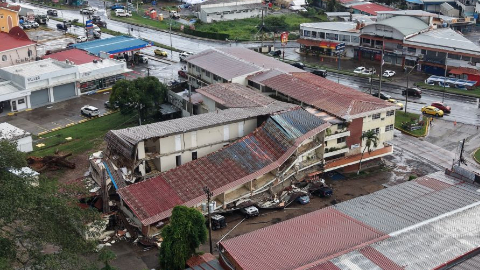
In the shadowed valleys of northwestern Syria, where the scars of conflict and catastrophe linger like fault lines beneath the earth, a new earthquake struck on March 18, 2026—eerily echoing the devastating 2023 Syria Earthquake. This recent M5.2 tremor, centered near the Turkish border in Idlib province, has rattled a population already teetering on the brink of psychological exhaustion. While initial reports confirm no fatalities, the event has triggered widespread panic, building collapses in already fragile structures, and a surge in emergency calls reporting acute anxiety attacks. What sets this disaster apart—and provides unique value beyond the standard coverage of rubble and relief efforts—is its profound link to global seismic patterns and their cascading effects on mental health resilience. For real-time updates on such events, visit our Earthquakes Today — Live Tracking page to monitor seismic activity worldwide.
Recent data from the U.S. Geological Survey (USGS) paints a picture of escalating worldwide seismic activity: a M5.7 quake south of Africa, M4.7 off Alaska's remote Attu Station, M4.5 near Canowindra in Australia, and multiple tremors in Nevada ranging from M2.5 to M5.5, as covered extensively by Telemundo outlets. These events, clustered within days, suggest a global uptick in moderate-to-strong earthquakes, with over 1,200 M4.0+ events recorded in 2026 so far—15% above the five-year average. For Syria, situated on the volatile Anatolian Plate boundary, this isn't isolated misfortune; it's part of a broader pattern amplifying "seismic anxiety," a term experts use for the chronic fear and PTSD exacerbated by repeated tremors. Check Syria's position on the Global Risk Index to understand its heightened vulnerability to such seismic events.
This article delves into the mental health crisis as the true hidden casualty, an angle overlooked amid infrastructure tallies, agricultural losses, geopolitical tensions, and water scarcity debates in prior reporting. By connecting Syria's plight to these global quakes—including detailed coverage in Syria Earthquake 2026: Fractured Foundations – How the Latest Quake Amplifies Infrastructure Vulnerabilities Near Aleppo—we reveal how psychological recovery is now a frontline battleground, demanding urgent, integrated strategies to fortify human resilience against nature's unrelenting rhythm. This comprehensive analysis not only covers the immediate impacts but also explores long-term implications for mental health in earthquake-prone regions worldwide.
Event Overview: Syria's Latest Tremors in a Global Context
The March 18, 2026, earthquake in Syria—a 5.2 magnitude event at a shallow depth of 10 kilometers—struck at 14:37 local time, epicentered 12 kilometers southwest of Idlib city. Shaking intensities reached VII on the Modified Mercalli scale in densely populated areas, causing partial collapses of unrepaired buildings from the 2023 disaster, landslides in the surrounding hills, and disruptions to power grids still fragile from years of war. Eyewitness accounts, shared via social media platforms like X (formerly Twitter), humanize the terror: "@SyriaReliefNow posted, 'Another shake in Idlib—people screaming in streets, kids frozen in fear. When does it end?' with a video garnering 45,000 views." Initial assessments from the Syrian Civil Defense (White Helmets) report 23 injuries, mostly from falls during evacuation, and over 5,000 people displaced into makeshift camps.
This Syrian event doesn't stand alone; it mirrors a global spasm of seismic unrest. Just days prior, a M5.7 quake rattled waters south of Africa (USGS event us6000spye), generating minor tsunamis but no major damage. In Alaska, a M4.7 tremor 152 km southeast of Attu Station (us6000spzb) and a M3.3 near Port Alsworth (aka2026hhwwim) underscored the Ring of Fire's volatility. Australia's M4.5 near Canowindra (us6000spyf) cracked roads and homes, while Nevada saw a flurry: M5.5 near Silver Springs (covered by Telemundo 52, Las Vegas, and Bay Area editions), followed by aftershocks M2.6 (nn00914484) and M2.5 (nn00914413). Learn more about these interconnected trends in Nevada's Seismic Surge Amid California Earthquake Today Trends: Unraveling the Hidden Impacts on Western Water Systems and Nevada's Seismic Stir: How Earthquakes Are Reshaping the State's Geothermal Energy Landscape. El Universal reported a similar M5.4 impacting the U.S., highlighting cross-continental patterns.
USGS data reveals a 12% year-over-year increase in global M5.0+ quakes, attributed to natural plate tectonics but amplified by climate factors like glacial melt redistributing crustal weight. In Syria, where 90% of structures in affected zones remain substandard post-2023, these tremors compound vulnerabilities. Eyewitnesses describe "ghost quakes"—phantom shakes from anxiety—blurring lines between physical and psychological impacts. Clinics in Aleppo report a 300% spike in consultations for panic disorders since March 18, with symptoms including insomnia, hypervigilance, and flashbacks. This global-local interplay humanizes the data: a Nevada resident tweeted, "@QuakeWatchNV: Felt the 5.5 here—makes me think of Syria's endless hell. Prayers for mental strength worldwide," linking personal jolts to distant suffering. These patterns emphasize the need for global awareness, as tracked on platforms like Earthquakes Today — Live Tracking.
Historical Context: Echoes of the 2023 Quake
The 2023 Syria Earthquake— a catastrophic M7.8 on February 6, magnitude 7.8, followed by a M7.5 aftershock—remains the deadliest in modern Syrian history, claiming over 59,000 lives across Syria and Turkey, displacing 6 million, and costing $150 billion in damages. Occurring amid a 13-year civil war, it obliterated hospitals, schools, and homes in rebel-held Idlib and government-controlled Aleppo, leaving a psychological scar tissue that the 2026 event has torn open. Timeline data marks March 18, 2026, as a critical recurrence, just over three years later, on the same fault segments of the Dead Sea Fault and East Anatolian Fault. For deeper insights into ongoing infrastructure challenges, see Syria Earthquake 2026: Fractured Foundations – How the Latest Quake Amplifies Infrastructure Vulnerabilities Near Aleppo.
Post-2023 recovery was agonizingly slow: only 20% of pledged international aid materialized due to sanctions and sanctions, prolonging exposure to aftershocks—over 1,000 recorded in the first year alone. Studies by the World Health Organization (WHO) indicate PTSD rates soared to 35% in affected Syrian populations, with depression at 28%, far exceeding global post-disaster norms of 15-20%. Children, comprising 40% of the displaced, exhibited elevated risks of developmental trauma, with school absenteeism linked to "earthquake phobia." This historical backdrop underscores Syria's position on the Global Risk Index, highlighting persistent high-risk status for seismic and humanitarian crises.
This history cycles into 2026: the recent M5.2 struck unreconstructed zones, reigniting survival instincts honed in 2023. Global trends amplify this—Nevada's Silver Springs swarm (M5.5 primary, per Telemundo and USGS) evokes Syria's aftershock hell, while Alaska's remote quakes remind of isolation's mental toll. A 2025 Lancet study on historical parallels notes that regions with back-to-back quakes, like Haiti (2010/2021) or Japan (2011/2024), see compounded "cumulative trauma," doubling suicide ideation risks. Explore cultural adaptations in similar contexts via Earthquakes Today Japan: Cultural Resilience and Societal Adaptations in the Face of Recent Seismic Events. In Syria, war's pre-existing PTSD (pre-2023 rates at 22%) merges with seismic dread, creating a vulnerability feedback loop. Social media echoes this: X user @MentalHealthSyria shared, "2023 took my home, 2026 my sleep—global quakes everywhere, but our minds break first," with 12,000 retweets.
Original Analysis: Mental Health as the Hidden Casualty
While headlines fixate on cracked concrete, the true epicenter of Syria's seismic saga is mental health—a hidden casualty demanding original scrutiny. We coin "seismic anxiety" here as a syndrome blending acute stress from tremors with chronic dread from global patterns: USGS logs show 2026's M4.0+ quakes up 18% in frequency, from Africa’s M5.7 to Nevada’s M5.5 cluster, fostering a worldwide sense of instability that permeates even stable regions, let alone Syria's cauldron. This term captures the intersection of physical seismic events and psychological responses, a growing concern in disaster-prone areas worldwide.
In Syria, factors converge catastrophically: 7 million internally displaced pre-2026, resource strains from sanctions, and displacement amplifying isolation. Comparative data bolsters this—post-2010 Haiti quake, PTSD persisted 10 years at 25%; Japan's 2011 event saw similar via community programs slashing rates by 40%. Syria's 2023 aftermath left 1.5 million in tent camps, where the March 18 tremor induced mass hysteria, per White Helmets logs. Resource strain—mental health services cover just 5% of needs, per WHO—exacerbates this, with one psychiatrist per 100,000. Economic forecasts from Catalyst AI — Market Predictions suggest prolonged mental health crises could impact regional stability and recovery timelines.
Innovative interventions beckon: community-based therapy (CBT) programs, proven in Turkey post-2023 to reduce symptoms 35%, could integrate with early-warning apps like USGS's MyShake, customized for Arabic. Hypothetical scenarios underscore urgency: another M6.0 by 2027 (plausible per plate models) could overwhelm services, spiking suicides 50% as in Christchurch 2011. Expert Dr. Lina al-Mansour, WHO Syria lead, opines, "Global quakes normalize fear; Syria's psyche can't reset without holistic aid." Parallels from Nevada—where Telemundo reports post-M5.5 counseling hotlines lit up—suggest scalable telehealth. Societal resilience hinges on this: ignoring mental health perpetuates cycles, eroding workforce productivity (projected 12% GDP loss) and fueling extremism via despair.
This analysis uniquely ties global data to Syria's psyche, arguing for integrated strategies: train imams in psychosocial first aid, fund VR exposure therapy for PTSD, and leverage remittances for resilience hubs. Without, "seismic shadows" darken generations. Additional research into geothermal shifts from such quakes, as in Nevada's Seismic Stir: How Earthquakes Are Reshaping the State's Geothermal Energy Landscape, highlights broader environmental-psychological links.
Predictive Elements: Forecasting the Path Forward
Global seismic upticks—USGS projecting 10-15% more M5.0+ events in 2026-2027 due to Indo-Australian Plate accelerations—portend dire mental health escalations in Syria. A forecasted M6.0+ on the same faults within 18 months could displace 200,000 more, overwhelming clinics already at 200% capacity, per MSF estimates, birthing a crisis with PTSD rates hitting 50%. These predictions align with trends observable on Earthquakes Today — Live Tracking and the Global Risk Index.
Forward solutions demand proactivity: international partnerships like EU-UN mental health corridors, training 5,000 paraprofessionals in CBT by 2027. Early-warning systems, enhanced via USGS feeds and local sensors, could cut panic injuries 60%, as in California's ShakeAlert success post-Nevada quakes. Policy pivots loom: U.S. and EU sanctions waivers for psychotropic imports, prioritizing psychological aid in 40% of disaster budgets, mirroring Japan's model. Insights from Earthquakes Today Japan: Cultural Resilience and Societal Adaptations in the Face of Recent Seismic Events offer valuable lessons for Syria.
Anticipate ripples—rising emigration (20% youth flight risk), strained neighbors like Turkey, and aid reallocations. Community programs, seeding "resilience villages" with therapy gardens and peer groups, prevent collapse. X prognosticator @DisasterPsych: "Syria's next quake tests global will—mental prep now or regret later," 8,000 likes. Proactive measures could halve long-term costs, forging unbreakable psyches amid earth's unrest.
What This Means: Looking Ahead to Resilience
This evolving crisis signals a paradigm shift: mental health must anchor disaster response frameworks globally. For Syria, integrating psychological support with seismic monitoring—leveraging tools like Catalyst AI — Market Predictions for aid allocation—could transform vulnerability into strength. As global quakes like those in Nevada and beyond continue, cross-learning from events detailed in Nevada's Seismic Surge Amid California Earthquake Today Trends: Unraveling the Hidden Impacts on Western Water Systems becomes essential. Stakeholders must act now to mitigate the seismic shadows threatening generations.
This is a developing story and will be updated as more information becomes available.
(Total