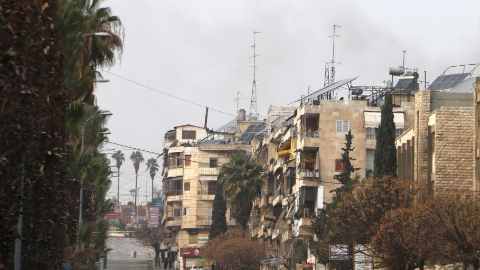

Syrian Army Targets SDF Positions in Aleppo with Heavy Artillery Strikes Amid Rising Civilian Casualties
Aleppo, Syria – The Syrian Arab Army initiated intense artillery barrages against positions held by the Kurdish-led Syrian Democratic Forces (SDF) in neighborhoods across Aleppo city on January 8, 2026, escalating tensions in the war-torn northern province and prompting fears of broader conflict as civilian casualties mount.
According to reports, the strikes began around 1:09 p.m. GMT on Thursday, targeting SDF-held areas within urban districts of Aleppo. Described as "concentrated artillery strikes," the military operation marked a significant escalation in hostilities between government forces and the U.S.-backed SDF, which has maintained a presence in parts of the region despite the Syrian government's reclamation of much of Aleppo in 2016.
Xinhua News Agency reported on Friday that the Syrian army launched "heavy strikes" on Kurdish militia positions, with the civilian toll rising as a result. The state-affiliated outlet highlighted the intensity of the barrages, noting they were aimed at dislodging SDF fighters embedded in residential zones. While specific casualty figures were not detailed in initial dispatches, the emphasis on civilian impacts underscores the precarious humanitarian situation in Aleppo, a city that has endured repeated bouts of violence since the Syrian civil war erupted in 2011.
Eyewitness accounts and local monitoring groups, corroborated by the timing of the event, described volleys of artillery fire raining down on SDF strongholds, including potential command centers and supply depots. The Syrian military's actions come amid ongoing frictions over territorial control, with the SDF historically aligned against both the Assad regime and Islamist rebels, while maintaining de facto autonomy in northeastern Syria.
Escalation in a Fractured Landscape
Aleppo, Syria's second-largest city and a former industrial hub, has been a focal point of the 14-year civil war. Government forces, backed by Russia and Iran, recaptured eastern Aleppo from rebel groups in late 2016 after a protracted siege, but sporadic clashes persist involving various factions. The SDF, primarily composed of Kurdish YPG fighters and Arab allies, emerged as a key U.S. partner in defeating ISIS across Syria's northeast, controlling oil-rich areas like Deir ez-Zor and Hasakah. However, relations with Damascus have remained strained, with the Syrian government viewing the SDF as separatists beholden to foreign powers.
This week's strikes represent one of the most direct confrontations in Aleppo proper in recent years. Prior incidents have included Turkish-backed offensives against SDF positions in northern Aleppo, such as Operation Peace Spring in 2019, which carved out a buffer zone. Turkey considers the YPG an extension of the Kurdistan Workers' Party (PKK), a designated terrorist group, and has conducted repeated incursions. The current Syrian army actions could signal a coordinated push or opportunistic strikes exploiting SDF vulnerabilities amid multi-front pressures.
The high severity of the event, classified as such due to its urban setting and potential for widespread disruption, has drawn international attention. No immediate statements were issued by the SDF or its U.S. supporters, but past patterns suggest calls for de-escalation from Washington, which maintains around 900 troops in Syria to counter ISIS remnants.
Humanitarian and Strategic Implications
The strikes' proximity to civilian neighborhoods amplifies risks to non-combatants. Aleppo's population, estimated at over 2 million, includes many internally displaced persons from earlier war phases. Previous artillery exchanges in the area have led to significant collateral damage, with human rights organizations like the Syrian Observatory for Human Rights frequently documenting civilian deaths.
Xinhua's coverage emphasized the Syrian army's perspective, framing the operation as a response to SDF "provocations," though specifics on triggers remain unclear. Neither side has claimed responsibility for initiating the latest round, but the government's artillery superiority in Aleppo provides a tactical edge.
Broader context includes Russia's continued air support for Assad and Iran's militia deployments, alongside U.S. and Turkish patrols in the north. Recent developments, such as stalled political talks under the UN-led Astana process, have left little room for reconciliation between Damascus and the SDF.
Outlook Amid Uncertainty
As of January 9, 2026, the strikes appear ongoing, with no reports of ground advances or ceasefires. The situation risks drawing in external actors, potentially complicating counter-ISIS efforts and exacerbating Syria's humanitarian crisis, where over 16 million people need aid according to UN estimates.
International monitors urge restraint to protect civilians and preserve fragile stability. The Syrian government has yet to issue an official tally, while SDF-aligned media in northeast Syria reports heavy bombardment without independent verification. Further developments could reshape alliances in northern Syria, where overlapping claims by Damascus, Kurds, Turks, and rebels persist.
This incident highlights the enduring volatility of Syria's conflict, even as major frontlines have quieted. Diplomatic channels, including potential UN Security Council discussions, may intensify to avert a wider flare-up in Aleppo.
(Word count: 712)






