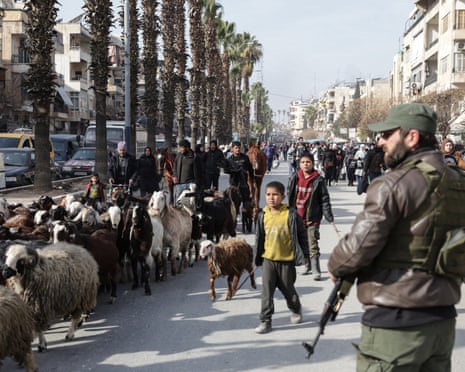

Syrian Army Targets SDF in Aleppo Amid Clashes, Followed by Ceasefire Announcement
Aleppo, Syria – The Syrian army declared positions held by the Kurdish-led Syrian Democratic Forces (SDF) in Aleppo as legitimate military targets on January 7, 2026, escalating tensions in the flashpoint city. This move followed accusations of massacres attributed to the SDF, triggering three days of clashes that prompted a government-announced ceasefire on January 9.
The conflict's onset was marked by the Syrian army's public statement at approximately 09:33 GMT on January 7, designating SDF-controlled areas as valid for military action. High-severity hostilities ensued, involving direct engagements between government forces and the SDF, a U.S.-backed alliance primarily composed of Kurdish fighters from the People's Protection Units (YPG). Reports indicate the clashes centered on strategic positions within Aleppo, a city long central to Syria's civil war dynamics.
By January 9, after 72 hours of fighting, the Syrian government announced a unilateral ceasefire, as reported by The Guardian. This development signaled a potential de-escalation, though the fragility of such truces in Syria's multi-front war remains a key concern. The ceasefire's terms were not immediately detailed, but it followed intense exchanges that highlighted ongoing frictions between Damascus and the SDF.
Escalation and Immediate Context
The Syrian army's targeting declaration stemmed from allegations that SDF forces had committed massacres in Aleppo, though specific details on casualties, locations, or evidence were not elaborated in initial reports. Aleppo, Syria's largest pre-war city and a former industrial hub, has been under government control since late 2016, following a protracted battle against rebel groups backed by Turkey and Gulf states. However, pockets of SDF influence persist in northern and eastern outskirts, often tied to their broader control of oil-rich territories in the northeast.
The SDF, formed in 2015 as a multi-ethnic coalition, gained prominence for its role in defeating the Islamic State (ISIS) with U.S. coalition support. Holding roughly a quarter of Syrian territory—including key areas like Hasakah, Deir ez-Zor, and parts of Aleppo province—the group has maintained an uneasy standoff with the Assad regime. Damascus views the SDF as separatists undermining national sovereignty, while the Kurds cite the need for autonomy amid the power vacuum left by the civil war.
Recent clashes align with a pattern of sporadic confrontations. In late 2024 and early 2025, Turkish-backed Syrian National Army (SNA) operations targeted SDF positions in northern Aleppo, displacing thousands and drawing international condemnation. The Syrian government's intervention this week appears to reposition its forces amid these dynamics, possibly in coordination with or in response to Turkish pressures against Kurdish militias.
Historical Background on Aleppo and Syrian Conflicts
Aleppo's scars from the Syrian civil war, which began in 2011 as pro-democracy protests and evolved into a proxy battlefield, underscore the latest events. The city endured a devastating siege from 2012 to 2016, with government forces, backed by Russia and Iran, reclaiming it in December 2016. That victory marked a turning point, allowing President Bashar al-Assad to regain momentum.
The SDF's presence in Aleppo traces to 2015 offensives against ISIS, when YPG fighters, with U.S. air support, captured Manbij and advanced westward. Tensions with the regime intensified post-ISIS territorial defeat in 2019, as Damascus sought to reassert control over SDF-held economic assets like oil fields. U.S. troop deployments—numbering around 900 as of late 2025—have deterred full-scale assaults but not prevented skirmishes.
Russia, a key Assad ally, has mediated past truces between the government and SDF, including a 2019 agreement allowing limited Syrian army integration into SDF areas. Turkey, viewing the YPG as an extension of the outlawed PKK, has conducted multiple incursions into northern Syria, complicating alliances. The January clashes occur against this backdrop, with no confirmed involvement from external actors in the immediate fighting.
Broader Implications and Regional Outlook
The ceasefire announcement offers a brief respite, but Syria's conflict landscape remains volatile. Over 500,000 deaths and 13 million displaced since 2011 have entrenched divisions, with ISIS remnants and al-Qaeda affiliates still active. Economic collapse, exacerbated by sanctions and corruption, fuels recruitment for armed groups.
International responses have been muted so far. The United Nations has long called for inclusive talks under the 2015 Geneva process, stalled by disagreements over Assad's role. U.S. officials, who provide the SDF with logistical aid, routinely urge de-escalation to prevent ISIS resurgence. Russia and Iran continue propping up the regime, while Turkey maintains operations against Kurdish forces.
As of January 9, 2026, no independent verification of ground conditions in Aleppo was available, and both sides have yet to comment publicly on the ceasefire's adherence. Monitoring groups like the Syrian Observatory for Human Rights, based outside the country, reported heightened artillery fire during the clashes but have not released final casualty figures.
The events in Aleppo highlight Syria's enduring fragmentation, where local flare-ups risk drawing in regional powers. A sustained truce could facilitate humanitarian access to the war-weary city, but historical precedents suggest fragility without broader political resolution.
(Word count: 712)






