Syria Declares Ceasefire in Aleppo After Intense Clashes with Kurdish SDF Forces Prompt Mass Displacement

Latest from X
Syria Declares Ceasefire in Aleppo After Intense Clashes with Kurdish SDF Forces Prompt Mass Displacement
Aleppo, Syria – The Syrian army announced a ceasefire in Aleppo on January 9, 2026, following three days of fierce clashes with the Kurdish-led Syrian Democratic Forces (SDF) that killed around 20 people and forced thousands from their homes in majority-Kurdish neighborhoods.
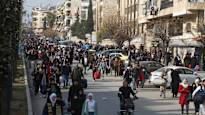
The violence erupted on January 7 when Syrian government forces declared SDF-held positions in Aleppo as legitimate military targets. Official statements cited accusations of massacres in the area attributed to the SDF, though independent verification remains limited amid the chaos. By January 8, renewed fighting had escalated, leading to a mass exodus from districts like Sheikh Maqsoud, a predominantly Kurdish enclave in northern Aleppo. Reports indicate heavy shelling by Syrian army units on SDF positions, prompting residents to flee en masse.
Finnish public broadcaster YLE reported the ceasefire declaration early on January 9, noting it came after battles that resulted in approximately 20 deaths. The outlet described the fighting as involving Kurdish forces, highlighting the toll on civilians caught in the crossfire. Meanwhile, an analysis by The Jerusalem Post warned that the clashes, if not contained, could spill over into other parts of Syria, potentially destabilizing the fragile post-conflict landscape.
Posts on X (formerly Twitter) reflected heightened alarm over the situation. Users reported Syrian army shelling sparking a "mass exodus" from Kurdish areas, with fighting raging for a third straight day as of January 8. Others mentioned a curfew imposed by the army in Kurdish neighborhoods and claims of over 100,000 displaced, with the government blaming the SDF for initiating the violence. These accounts, while capturing real-time sentiment, remain inconclusive without corroboration from verified sources.
Escalation and Humanitarian Toll
The clashes mark a sharp deterioration in relations between the Syrian government and the SDF, the U.S.-backed Kurdish-led alliance that controls much of northeastern Syria. Aleppo, Syria's second-largest city, has long been a flashpoint. Sheikh Maqsoud, a SDF stronghold since 2016, has seen periodic tensions with government forces amid competing claims over the divided city.
Eyewitness accounts and social media footage depicted scenes of panic, with families abandoning homes under artillery fire. The displacement has strained neighboring areas, exacerbating an already dire humanitarian situation in Syria. The United Nations has repeatedly warned of the risks to civilians in such urban battles, though no official displacement figures have been confirmed by international monitors as of January 9.
Syrian state media has portrayed the operations as a response to SDF aggression, including unverified claims of civilian targeting by Kurdish fighters. These accusations echo older reports from the area, but the current trigger appears tied to recent escalations. The SDF has not issued detailed public statements on the clashes, though it maintains its forces were defending against government incursions.
Historical Context
Aleppo's scars run deep from the Syrian civil war, which began in 2011. The city endured a brutal siege by government forces and allies from 2012 to 2016, culminating in the regime's recapture of most areas. Sheikh Maqsoud remained under SDF control as part of a de facto partition, with Kurdish forces coordinating uneasily with Damascus against common foes like ISIS.
Post-2024 developments, including shifts in regional alliances following the fall of certain rebel strongholds, have heightened frictions. The SDF's semi-autonomous administration in Kurdish regions has clashed with central government efforts to reassert control, complicated by U.S. troop presence and Turkish opposition to Kurdish militias. Recent economic pressures and disarmament demands from Damascus have fueled sporadic violence.
Outlook Amid Fragility
The ceasefire offers a tenuous pause, but analysts caution it may not hold. The Jerusalem Post analysis emphasized the risk of broader conflict, noting Aleppo's strategic position could draw in external actors like Turkey, which views the SDF as an extension of the PKK militant group. Containment efforts will depend on mediation, possibly involving Russia or the U.S., both with stakes in Syrian stability.
International observers, including the UN, have called for de-escalation and humanitarian access. As of early January 9, no major violations of the truce have been reported, but the underlying grievances—territorial control, accusations of atrocities, and power-sharing—persist. For Aleppo's residents, weary from years of war, the latest flare-up underscores the precarious path to lasting peace in Syria.
(Word count: 612)
Track this story live
Live World Map
Monitor global events in real time with a live activity map and hotspot summaries.
Global Conflict Map
Follow active conflict zones, strike activity, and emerging geopolitical hotspots.
Current Wars
Track all active wars and armed conflicts happening in the world right now.
Iran War
Track the Iran war in real time with proxy network monitoring, Strait of Hormuz risk, and market impact.
Original Sources
- •
- •
Editorial process: This article was synthesized from the original sources cited above using The World Now's AI editorial system, with byline accountability from our editorial team. We grade every story for source grounding, factual coherence, and on-topic match before publication. Read more about our editorial standards and contributors. Spot something inaccurate? Let us know.
Last updated: January 26, 2026






