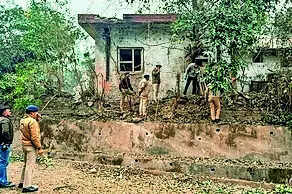

Suspected ISI Orchestration in Himachal Pradesh Blast Raises Security Concerns
A recent explosion in Nalagarh, Himachal Pradesh, has drawn significant attention from authorities, with Punjab police suggesting that the incident may be linked to Pakistan's Inter-Services Intelligence (ISI). The blast, which occurred on January 2, 2026, has been characterized as a medium-severity event, raising alarms about potential terrorism activities in the region.
The explosion reportedly targeted a public area in Nalagarh, leading to immediate investigations by local law enforcement. Punjab police have indicated that the blast bears the hallmarks of a broader strategy to destabilize the region. While two local groups, Babbar Khalsa International (BKI) and the Punjab Sovereignty Alliance (PSA), have claimed responsibility for the attack, police sources have dismissed these assertions, suggesting that these organizations are operating under the influence or direct orchestration of the ISI.
Authorities have expressed concern that the involvement of these groups is part of a larger pattern of escalating violence linked to cross-border terrorism. "The claims made by these groups are ideologically driven and do not reflect an independent operational capability," a police spokesperson stated. “We believe they are acting on behalf of foreign entities seeking to create unrest in India.”
The Nalagarh incident is being viewed within the context of ongoing tensions in the region, particularly relating to separatist sentiments and the historical influence of Pakistan-based terrorist organizations in Punjab and neighboring areas. The BKI and PSA have long been associated with pro-Khalistani movements, which seek to establish a separate Sikh state in India. Their resurgence is concerning to security agencies, especially against the backdrop of a long-standing conflict with Pakistan.
Background on the Groups Involved
Babbar Khalsa International was established in the 1980s and has been involved in various acts of violence aimed at promoting Khalistani nationalism. The Punjab Sovereignty Alliance, while less prominent, shares similar ideologies and has been implicated in various protests and actions against the Indian government. Both groups have a history of receiving support from elements within Pakistan, which has led to increased scrutiny from Indian security forces.
The ISI has long been accused of fostering terrorism in India as part of an asymmetric warfare strategy, often utilizing local insurgent groups to carry out attacks while maintaining plausible deniability. The current climate of political and social unrest in India, particularly in Punjab, presents fertile ground for such tactics.
Security Implications
This incident has prompted a renewed focus on security measures within Himachal Pradesh and the surrounding northern states. The Punjab police have indicated that they will enhance surveillance and intelligence-gathering efforts in areas previously deemed stable. Local authorities are urging citizens to remain vigilant and report any suspicious activities that may indicate further attacks.
Authorities have also reiterated the importance of community cooperation in counter-terrorism efforts, emphasizing that local residents play a crucial role in identifying and preventing potential threats. "Public awareness and cooperation are vital in our fight against terrorism," said a senior police official.
Conclusion
The blast in Nalagarh serves as a stark reminder of the persistent threat of terrorism in India, particularly from cross-border elements. As investigations continue, the focus will remain on ensuring the safety of citizens while addressing the underlying issues that contribute to such violence. The situation is fluid, and further developments are expected as police work to dismantle any networks potentially linked to the ISI and its local operatives.






