
Strike Ukraine: Russian Forces Conduct 1,600 Drone Attacks in One Week
Russian forces carried out 1,600 drone attacks, 1,100 aerial bomb strikes, and three missile strikes against Ukraine over the past week, as summarized by Ukrainian President Zelenskyy.[1] These figures highlight the intensity of ongoing strike Ukraine operations, with a particular emphasis on drone deployments targeting key infrastructure. In a single 12-hour window on 1 May, more than 400 drones struck Ukraine's energy infrastructure, critical infrastructure, and residential buildings.[4] Meanwhile, Ukrainian forces have responded with their own drone strikes deep into Russian territory, hitting oil facilities including a terminal in Tuapse.[5] A Russian drone even briefly entered Romanian airspace during attacks on the night of 1-2 May.[2]
Overview of Recent Russian Strikes on Ukraine
The scale of Russian military actions against Ukraine in the past week underscores a sustained campaign of aerial assaults, dominated by drones but encompassing a range of weaponry. According to Ukrainian President Zelenskyy, Russia executed 1,600 drone attacks, 1,100 aerial bomb strikes, and three missile strikes over this period.[1] This breakdown reveals a heavy reliance on unmanned aerial vehicles, which allow for persistent harassment of Ukrainian positions and infrastructure without risking manned aircraft. The drone attacks alone represent a significant escalation in volume, potentially overwhelming Ukrainian air defenses through sheer numbers.
A stark example of this intensity occurred on 1 May, when more than 400 drones targeted Ukraine's energy infrastructure, critical infrastructure, and residential buildings within just 12 hours.[4] Such concentrated barrages not only strain defensive resources but also aim to disrupt daily life and economic functionality across wide areas. Energy facilities, vital for power generation and distribution, have been repeatedly hit, suggesting a strategic intent to impair Ukraine's ability to sustain military and civilian operations during warmer months when electricity demands might otherwise stabilize.
These strikes fit into a broader pattern of attrition warfare, where the cumulative effect of high-volume, lower-cost munitions like drones and guided bombs seeks to erode Ukrainian resilience. Zelenskyy's summary points to 1,100 aerial bomb strikes, which typically involve heavier payloads delivered by aircraft such as Su-34 bombers, capable of causing widespread destruction to fortified targets.[1] The inclusion of three missile strikes adds a precision element, possibly reserved for high-value assets. Together, these tactics reflect Russia's adaptation to the conflict's demands, prioritizing volume over individual strike sophistication to maintain pressure on Ukrainian frontlines and rear areas.
The impact on Ukrainian critical infrastructure is evident from the targeted nature of these attacks. Residential buildings caught in the crossfire indicate either collateral damage or deliberate strikes to demoralize civilians, complicating recovery efforts.[4] Ukrainian defenses have intercepted many of these threats, but the sheer numbers—1,600 drones in a week—test the limits of systems like Patriot and NASAMS, forcing reallocations of resources across the front.[1] This overview of recent Russian strikes on Ukraine illustrates a multifaceted aerial offensive designed for sustained disruption.
Incidents Involving Neighboring Airspace
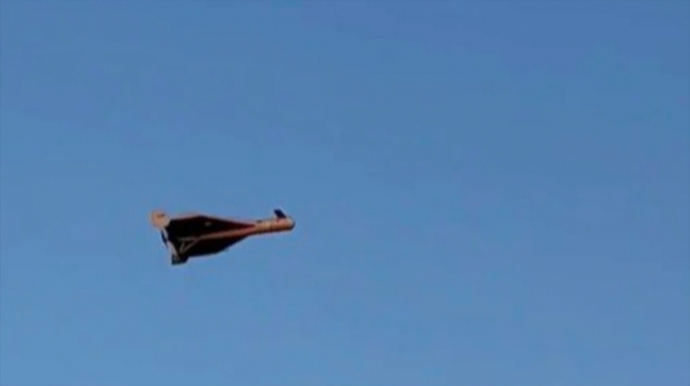
A Russian drone enters Romanian airspace. — Source: ukrainskapravda
A notable spillover from the ongoing strike Ukraine campaign involved a Russian drone briefly entering Romanian airspace on the night of 1-2 May.[2] Romania, a NATO member bordering Ukraine, detected the incursion amid intensified Russian attacks on Ukrainian territory, raising immediate concerns about the conflict's potential to draw in neighboring states. The drone's path into Romanian territory, even if fleeting, highlights the challenges of containing drone warfare within national borders, as these low-flying, small-signature weapons can drift off course or be intentionally routed near sensitive areas.
This incident occurred during a period of heightened Russian drone activity, including the mass assault of over 400 drones earlier that day.[4] Romanian authorities likely scrambled air defenses or monitoring assets in response, though specifics on interception or further pursuit remain unconfirmed in available reports.[2] The brevity of the entry—described as brief—suggests it may have been an unintended deviation rather than a provocative maneuver, possibly due to navigational errors, evasive maneuvers to avoid Ukrainian fire, or wind influences common in drone operations.
From a strategic perspective, such events underscore the risks of proximity in modern conflicts. Ukraine's position along NATO's eastern flank means that Russian strikes, especially those launched from Black Sea platforms or southern Russia, can inadvertently or otherwise encroach on allied airspace.[2] Previous similar incidents have prompted NATO statements of vigilance, but this case adds to the tally, potentially influencing alliance-wide alert postures. For Ukraine, it complicates defensive calculations, as intercepting drones near borders requires coordination with neighbors to avoid friendly fire or escalation.
The Romanian airspace breach also amplifies the international dimensions of the strike Ukraine efforts. While no damage or further engagement was reported, it serves as a reminder of the thin line separating the Ukrainian theater from NATO territories, where any perceived threat could trigger Article 5 considerations.[2] Monitoring such incursions will remain critical as Russian drone launches continue at high tempos.
Ukrainian Strikes on Russian Oil Infrastructure
In response to relentless Russian assaults, Ukrainian forces have conducted targeted drone strikes on Russian oil infrastructure, with a recent hit on the oil terminal in the Black Sea city of Tuapse marking the fourth such attack on the region's facilities in just over two weeks.[5] Ukraine's General Staff confirmed the strike, noting explosions and a fire at the site, which disrupted operations at this key export point.[5] These operations demonstrate Ukraine's growing capability to project force deep into Russian territory using long-range drones, shifting the conflict's dynamics beyond Ukraine's borders.
The Tuapse terminal strike exemplifies a pattern of precision attacks aimed at economic choke points. Located on the Black Sea, Tuapse serves as a vital node for Russia's oil exports, handling shipments to global markets.[5] The fourth attack in this short timeframe—spanning just over two weeks—indicates a deliberate campaign to degrade this infrastructure, with each incident compounding damage through fires and potential structural impairments. Ukrainian drones, likely variants like the Lyutyi or modified commercial models, have proven adept at penetrating Russian air defenses over extended ranges.
Parallel reports confirm Ukrainian drones striking oil facilities deep inside Russia, extending beyond border regions to core economic assets.[3] These strikes have ignited fires visible from space, as satellite imagery captures massive plumes of smoke rising from refineries and storage sites. The frequency and depth of these operations reflect advancements in Ukrainian drone technology, including improved navigation, stealth features, and payload capacities suited for igniting volatile hydrocarbon targets.
This tit-for-tat escalation in strike Ukraine contexts sees Ukraine mirroring Russia's infrastructure-focused strategy but targeting revenue streams. Oil terminals like Tuapse are not merely logistical hubs but symbols of Russia's war economy, where petroleum exports fund military expenditures.[3][5] The General Staff's public acknowledgment underscores confidence in these strikes' attribution and impact, potentially deterring Russian convoys or forcing defensive reallocations.
Broader Impacts of the Strikes
The Ukrainian drone campaign against Russian oil facilities carries significant potential to disrupt Moscow's oil exports, a cornerstone of its war financing.[3] By hitting targets deep inside Russia, these strikes aim to curtail export volumes, creating bottlenecks at terminals and refineries that could ripple through global energy markets. Fires from these attacks not only halt immediate operations but also necessitate costly repairs, straining Russia's petroleum sector amid existing sanctions.
Environmental consequences add another layer, with plumes of smoke from struck sites visible from space and reports of toxic rain affecting Black Sea tourist destinations.[3] The combustion of oil infrastructure releases pollutants that can drift over wide areas, contaminating water bodies and coastal regions popular for recreation. This dual economic and ecological toll amplifies the strikes' strategic value, pressuring Russia on multiple fronts without direct territorial confrontation.
For Russia, reduced oil exports translate to revenue shortfalls at a time when budget deficits are mounting due to war costs. Ukraine's focus on these deep strikes signals an intent to impose asymmetric costs, leveraging inexpensive drones against high-value targets.[3] Meanwhile, the Russian response—intensified drone and bomb campaigns—perpetuates a cycle of infrastructure degradation on both sides.[1][4]
These broader impacts highlight how aerial strikes have evolved into tools for economic warfare, where disrupting supply chains yields long-term advantages over battlefield gains alone.
What to watch next: Continued high-volume Russian drone attacks on Ukrainian infrastructure, as per Zelenskyy's weekly tallies, alongside Ukrainian follow-on strikes on Russian oil sites like Tuapse to further pressure exports.[1][3][5]