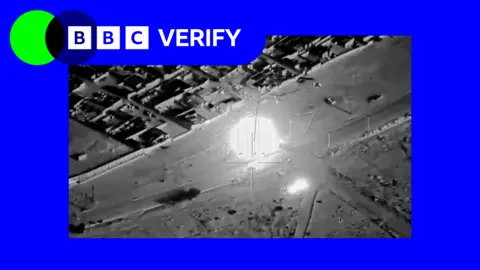

Strike Russia: Ukraine Destroys $100 Million Nebo-M Radar in Belgorod
Ukraine has intensified its military operations deep into Russian territory, marking a significant escalation in the ongoing conflict. In a notable strike Russia action, crews from Ukraine's 429th Achilles Brigade destroyed a high-value Russian Nebo-M radar system valued at US$100 million in Belgorod Oblast [1]. This operation was accompanied by Ukrainian drone strikes on key oil facilities in Perm and Orsk, building on prior attacks such as those in Tuapse [4]. President Volodymyr Zelenskiy has publicly affirmed that Ukraine intends to extend the range of these strikes even further, referencing an operation reaching over 1,500 km [3]. These developments underscore Ukraine's growing capability to target critical Russian infrastructure, as detailed in recent reports.
Overview of Recent Strikes
Recent Ukrainian military actions against Russian targets represent a calculated expansion of operations beyond frontline positions. The destruction of the Nebo-M radar in Belgorod Oblast stands out as a precision strike executed by specialized Ukrainian forces [1]. This incident highlights the brigade's role in neutralizing advanced surveillance assets that Russia relies on for air defense coordination. Complementing this, Ukrainian drones have targeted energy infrastructure, with strikes reported on oil facilities in Perm and Orsk [4]. These attacks follow a pattern established by previous operations, such as those on the Tuapse oil facility, indicating a sustained campaign against Russia's economic backbone [4].
The Belgorod strike, in particular, involved crews from the 429th Achilles Brigade, who utilized video footage to document the radar's complete destruction [1]. Such operations demonstrate Ukraine's ability to penetrate Russian border regions, disrupting systems integral to Moscow's defensive posture. Meanwhile, the drone strikes on Perm and Orsk extend the reach into Russia's interior, affecting facilities critical for fuel production and distribution [4]. These events, occurring in quick succession, signal a broader strategy of attrition against high-value targets, forcing Russia to divert resources to protect rear-area assets [1][4].
Specific Attacks on Russian Assets
The targeted destruction of the Russian Nebo-M radar exemplifies the precision and impact of Ukraine's recent offensive capabilities. Positioned in Belgorod Oblast, this radar—estimated at US$100 million—was obliterated by Ukraine's Achilles Brigade, with crews from the 429th unit confirming the strike through released video evidence [1]. The Nebo-M system is a sophisticated multi-band radar designed for long-range detection, making its loss a substantial blow to Russian early-warning networks in the region [1].
In parallel, Ukrainian drones delivered strikes on oil facilities in Perm and Orsk, locations deep within Russian territory [4]. These attacks are described as follow-ups to earlier operations against the Tuapse oil facility, suggesting a deliberate sequencing to maximize disruption [4]. Perm and Orsk host key refining and storage infrastructure, vital for Russia's energy sector and military logistics. The repeated nature of these drone incursions—linking back to Tuapse—illustrates Ukraine's operational tempo, where successive strikes compound damage to Russia's fuel supply chain [4].
Details from the Achilles Brigade's action reveal the tactical execution: crews methodically engaged the radar, ensuring its total elimination [1]. Similarly, the oil facility hits in Perm and Orsk align with Ukraine's drone warfare expertise, allowing strikes at distances that challenge Russian air defenses [4]. These specific attacks not only degrade material assets but also impose ongoing repair and protection costs on Russia, as each incident requires reallocating defenses from other fronts [1][4].
Ukrainian Leadership Statements
President Volodymyr Zelenskiy has directly addressed these escalating operations, emphasizing Ukraine's commitment to pushing boundaries. In a statement on Wednesday, he declared that Ukraine "will continue extending the range of strikes on Russia," accompanied by footage of an attack targeting a site more than 1,500 km (930 miles) away [3]. This announcement comes amid a recent uptick in long-range operations, aimed at neutralizing threats far from the front lines.
Zelenskiy's remarks position these strikes as a core element of Ukraine's defensive strategy, with the 1,500 km reference serving as concrete evidence of expanded reach [3]. By posting the footage publicly, he signals both domestic resolve and international awareness of Ukraine's advancing technological edge in drone and missile applications [3]. The president's words frame the strikes not as isolated events but as part of an evolving doctrine, where range extension directly counters Russian aggression [3].
This leadership endorsement provides strategic clarity: Ukraine's military is gearing up for deeper penetrations, leveraging recent successes like the Belgorod radar destruction and oil facility hits to build momentum [3]. Zelenskiy's focus on "increasing the range" implies ongoing investment in standoff weapons, potentially deterring further Russian advances by raising the cost of sustained operations [3].
Broader Context of Operations
Ukraine's strikes on Russian territory occur within a dynamic operational landscape, where both sides engage in high-stakes maneuvers across multiple domains. The Achilles Brigade's radar destruction in Belgorod Oblast fits into a pattern of border-adjacent operations that exploit vulnerabilities in Russian surveillance [1]. Similarly, the drone campaign against oil facilities in Perm, Orsk, and previously Tuapse reflects a resource-intensive effort to erode Russia's economic resilience [4].
These actions align with President Zelenskiy's vision of progressively longer-range engagements, as evidenced by the over-1,500 km strike footage [3]. The cumulative effect pressures Russian command structures to address threats originating from afar, complicating their overall military posture. While Ukrainian forces focus on precision targeting of radars and energy sites, the operations underscore a shift toward symmetric deep strikes, mirroring tactics employed elsewhere in the conflict [1][3][4].
Significance of the Strikes
The destruction of the US$100 million Nebo-M radar carries profound tactical and symbolic weight. Located in Belgorod Oblast, this asset was critical for Russia's aerial monitoring, and its elimination by the 429th Achilles Brigade—documented via video—represents a direct hit on a cornerstone of Moscow's defense apparatus [1]. Valued at such a high figure, the radar's loss equates to a major financial and operational setback, equivalent to removing a key node from Russia's integrated air defense system [1].
Beyond the radar, the strikes on Perm and Orsk oil facilities amplify the economic dimension, following the Tuapse precedent and targeting Russia's energy lifeline [4]. Each facility struck disrupts production capacity, with ripple effects on fuel availability for military and civilian use. The brigade's success in Belgorod further validates Ukraine's special operations model, where elite units deliver outsized impact against fortified targets [1].
These strikes' significance lies in their demonstration of reach and resolve: a $100 million radar gone, oil infrastructure repeatedly hit, and ranges pushing past 1,500 km [1][4]. They compel Russia to invest heavily in countermeasures, stretching resources thin and highlighting vulnerabilities in protecting vast territory [1].
What to watch next: Monitor Ukraine's follow-up strikes, as President Zelenskiy has pledged continued range extensions beyond 1,500 km, potentially targeting additional high-value assets like radars and oil facilities [3].