
Strike on Ukraine: Russian attacks kill eight in Dnipro region.
Russian strikes on Ukraine have killed at least six people, with a major attack targeting the city of Dnipro.[3][5] This strike Ukraine endured marked a prolonged assault, as Russia bombarded Dnipro for 20 hours straight, resulting in eight deaths.[2] Amid the barrage, Ukrainian forces shot down a drone during the major Russian attack.[1] The incidents underscore the ongoing intensity of the conflict, with debris from Russian drones even reaching neighboring Romania.[4]
Overview of the Attacks
The recent Russian strikes on Ukraine represent a sustained military operation that combined aerial bombardment and drone incursions across multiple regions. Officials reported that these attacks unfolded over an extended period, with a particular focus on eastern Ukraine, where the city of Dnipro bore the brunt of the assault.[3] In Dnipro, the bombardment lasted a full 20 hours, a duration that highlights the relentless nature of the operation.[2] This prolonged engagement not only targeted urban areas but also involved drone activity that extended the threat beyond Ukrainian borders.[1][4]
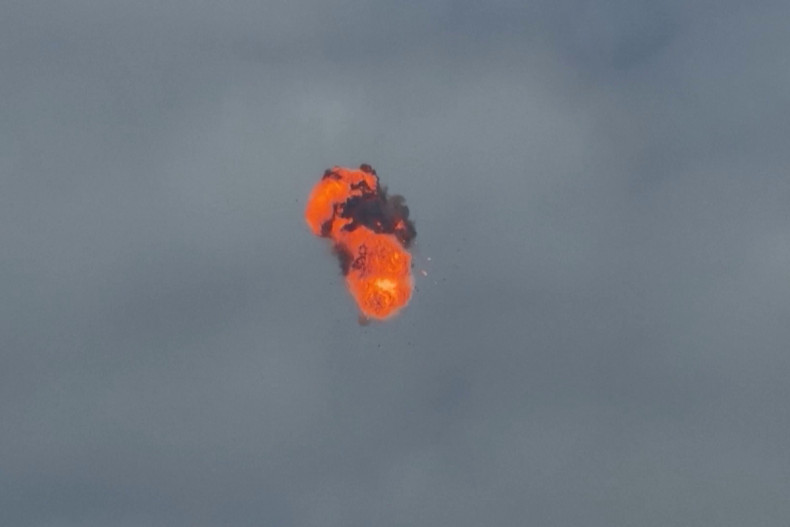
During this major Russian attack, Ukrainian air defenses demonstrated responsiveness by intercepting at least one drone, capturing the moment of the shootdown amid the chaos.[1] The strikes across Ukraine resulted in multiple fatalities, with at least six people confirmed dead as of Saturday, according to officials.[3][5] The assault's scope included residential areas, amplifying the civilian impact in Dnipro.[3] Furthermore, the overnight nature of some attacks led to the recovery of drone fragments outside Ukraine, prompting diplomatic responses from affected neighbors.[4]
This overview of the attacks reveals a pattern of escalated aerial warfare, where Russia's use of drones and missiles tested Ukraine's defensive capabilities while causing widespread disruption. The 20-hour barrage in Dnipro alone stands out as an indicator of intensified pressure on key infrastructure and population centers.[2] Reports from various outlets confirm the immediacy of the threat, with real-time documentation of drone interceptions underscoring the high-stakes aerial battles occurring simultaneously.[1] Casualty figures from across Ukraine, pegged at a minimum of six, reflect the broader toll, even as specific incidents like the Dnipro residential strike drew particular attention.[3][5] The cross-border element, involving drone parts in Romania, adds a layer of regional tension to what was primarily a Ukrainian theater of operations.[4]
Details of the Dnipro Assault
The Dnipro assault formed the centerpiece of the recent Russian strikes, characterized by an unprecedented 20-hour continuous bombardment that devastated parts of the city.[2] This extended operation, described as Russia pounding Ukraine’s Dnipro relentlessly, culminated in eight confirmed deaths, marking one of the most intense single-city attacks in recent phases of the conflict.[2] The duration—spanning a full day of near-constant fire—allowed for significant damage accumulation, particularly in densely populated zones.[2][3]
Within Dnipro, a residential building became a focal point of destruction, where most of the casualties occurred during the strikes.[3] Officials noted that the attack on this structure contributed heavily to the overall death toll, illustrating how civilian infrastructure was directly in the line of fire.[3] The 20-hour timeframe suggests a strategic intent to overwhelm defenses and maximize impact, with Russia deploying a mix of munitions that sustained the pressure without respite.[2] This assault's specifics align with broader patterns in the strike Ukraine faced, where prolonged exposure increased the risk to non-combatants.[2][3]
Eyewitness accounts and official statements captured the assault's ferocity, with the continuous nature of the pounding leaving little opportunity for evacuation or respite.[2] The eight fatalities in Dnipro alone exceed the reported minimum across Ukraine, emphasizing the city's role as ground zero for this operation.[2][3] Recovery efforts following the bombardment would have been complicated by the attack's length, as ongoing threats likely delayed assessments of full damage.[2]
Reported Casualties and Locations
Casualty reports from the Russian strikes paint a grim picture, with at least six people killed across Ukraine, the majority stemming from the Dnipro incident.[3][5] In Dnipro specifically, the toll reached eight deaths amid the 20-hour assault, including those affected in the residential building strike.[2][3] These figures, confirmed by officials on Saturday, highlight the concentrated lethality in the eastern city while underscoring the nationwide scope.[3][5]
The primary location of fatalities was Dnipro, where the residential building attack accounted for several of the deaths.[3] Bangkok Post reports explicitly noted six killed across Ukraine from Russian strikes, aligning with France 24's account of at least six, most in Dnipro.[3][5] This convergence of sources confirms the reliability of the minimum six-figure toll, even as the Dnipro-specific count of eight provides a localized high-water mark.[2][3][5] No other specific locations beyond Dnipro were detailed in immediate reports, but the "across Ukraine" phrasing indicates dispersed impacts.[3][5]
The human cost in these strikes extends beyond numbers, as residential targeting in Dnipro suggests deliberate exposure of civilians to harm.[3] Officials' Saturday updates allowed for initial tallies, but the full extent may evolve with further investigations.[3] The disparity between Dnipro's eight deaths and the national minimum of six illustrates how one city's ordeal dominated the casualty ledger.[2][3][5]
International Implications
The Russian strikes on Ukraine carried repercussions beyond its borders, as Romania recovered fragments of two drones following an overnight attack.[4] Parts were discovered in the southeastern city of Galati, where an electricity pole and a household annex sustained damage, signaling the strikes' spillover effect.[4] Romania's defense ministry issued statements on Saturday detailing the recoveries, while the foreign ministry summoned the Russian ambassador in protest.[4]
This incident marks a second instance of drone parts found in Romania linked to Russian operations against Ukraine, heightening concerns over aerial incursions near NATO territory.[4] The overnight timing of the attack that led to these fragments parallels the Dnipro bombardment's intensity, suggesting coordinated drone usage across the front.[2][4] Diplomatic escalation, via the ambassador summons, underscores Romania's firm stance against such violations.[4]
The presence of debris in Galati raises questions about flight paths and potential risks to civilian areas in neighboring states, even as no casualties were reported there.[4] This international dimension amplifies the strikes' profile, transforming a bilateral conflict into one with wider European stakes.[4]
Key Incident Highlights
A pivotal moment amid the major Russian attack on Ukraine was the shootdown of a drone, documented in real-time footage.[1] This interception occurred during the height of the assault, showcasing Ukrainian air defenses' effectiveness against incoming threats.[1] Bangkok Post highlighted "the moment drone shot down," capturing the precision amid widespread bombardment.[1]
This key incident not only disrupted Russian aerial operations but also provided visual evidence of the defensive countermeasures in play.[1] In the context of the strike Ukraine weathered, such shootdowns represent critical successes that mitigate potential damage.[1] The event's documentation emphasizes the technological and tactical duel unfolding in the skies over Ukraine.[1]
What to watch next: Further updates on Ukrainian air defense responses, potential diplomatic fallout from Romania's protest, and official tallies of casualties from the Dnipro strikes.[1][3][4]






