

Israel Conflict Sees Iran Halt Attacks After Retaliation Over Beirut Strikes
In the Israel conflict, Iran launched retaliatory strikes on Israel in response to Israeli attacks on Beirut suburbs that targeted its Hezbollah ally, prompting both sides to halt attacks while issuing further threats, as Israeli ministers called for escalated action including bombing Beirut. [1] [2]
Iran's Retaliatory Strikes and New Strategic Doctrine
Iran views its retaliation as a formal declaration of a new strategic doctrine to defend any component of the Axis of the Resistance, extending responses beyond geographic borders after Israel struck beyond southern Lebanon. [1] The attack of Iran in defense of Lebanon was not simply a military response but the declaration of a strategic doctrine, according to Sadegh Larijani, president of the powerful Council of Expediency of Iran. [1] If any component of the Axis of the Resistance is attacked, the response will extend beyond geographic borders and alter the regional balance of power, Larijani stated. [1] Iran wants to project strength and demonstrate that it has the power to escalate the conflict, said Omid Memarian, an Iran expert at DAWN. [1] They are sending the message that they are ready to resume the war if necessary, Memarian added. [1] During the last decade under the previous supreme leader Ayatollah Ali Khamenei, Iran was more cautious about attacking Israel and the United States. [1] In 2020 Iran only carried out limited retaliatory attacks against Washington after the killing of Qassem Soleimani. [1] During the twelve-day war last June its retaliation was limited to attacks against a single US base in Qatar. [1] In recent weeks Iranian authorities largely tolerated Israeli attacks against Hezbollah as long as the strikes remained limited to southern Lebanon. [1] Iran warned the situation would change if Israel extended attacks to the suburbs south of Beirut. [1] On Sunday Israel did exactly that. [1] With these actions Iran aims to demonstrate its commitment to defending its allied militias in the region. [1]
Israeli Cabinet Calls for Escalation Against Hezbollah and Beirut
Israeli ministers including Itamar Ben-Gvir, Gideon Saar, and Miki Zohar called for occupying Lebanese territory, detaining women and children, and bombing Beirut's Dahiyeh in response to Hezbollah drone strikes. [2] We must think outside the box regarding Hezbollah and we should also consider occupying territory and killing many terrorists, National Security Minister Itamar Ben-Gvir said during a meeting of Israel’s Security Cabinet on Monday evening. [2] Ben-Gvir also called for arresting their women and children, saying this is what hurts them most. [2] Foreign Minister Gideon Saar accused Hezbollah of seeking to drag Israel into a war of attrition. [2] Settlement Affairs Minister Orit Strock also called for the occupation of territory in Lebanon. [2] Israeli Minister of Culture and Sports Miki Zohar called for intensified airstrikes on Beirut’s southern suburbs. [2] I believe the Iranians understand that entering a direct confrontation with Israel is not wise, Zohar told Israel’s local 103 FM radio. [2] The next time Hezbollah fires on Israeli towns we will immediately attack the Dahiyeh, Zohar said. [2] During the Cabinet meeting Israeli Defence Minister Israel Katz said the fate of the Dahiyeh in Beirut is the fate of the towns in the north. [2] We categorically reject the Iranian threats and any Iranian attempt to link Lebanon to Iran or attack Israel will be met with great force as happened yesterday, Katz said. [2] Yitzhak Wasserlauf, Minister for the Development of the Periphery, the Negev and the Galilee, told the meeting that Israel needs a lot of weapons. [2]
Israeli ministers urge bombing of Beirut in response to Hezbollah attacks. — Source: dawn
Humanitarian Impact and Strikes in Southern Lebanon
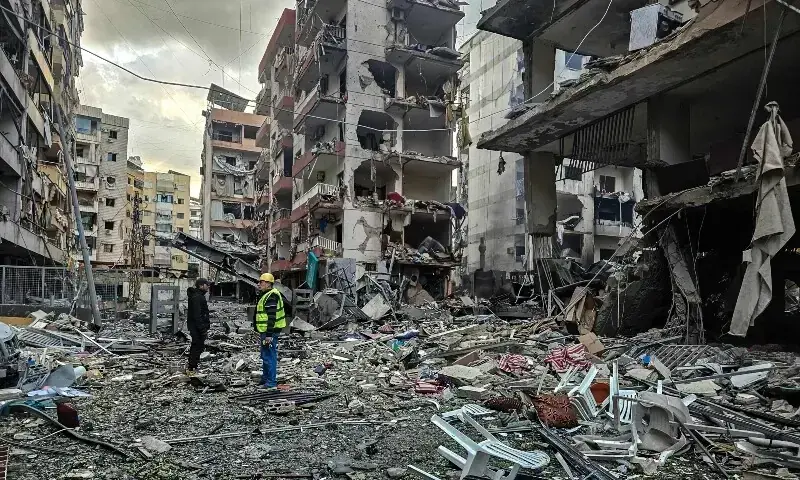
The death toll in Lebanon from Israeli strikes since early March has risen to over 3,666 killed and 11,321 wounded, with new evacuation orders and strikes emptying Tyre's Christian quarter. [4] [2] The Israeli military has carried out deadly airstrikes on Lebanon since a Hezbollah cross-border attack on March 2, killing more than 3,600 people, injuring over 11,100 and displacing more than one million others. [2] The Christian quarter in southern Lebanon’s Tyre was largely emptied on Tuesday as Israel issued its first-ever evacuation order for the entire city and launched strikes that killed at least eight people, according to Lebanon’s Health Ministry. [2] The deaths followed a single strike on the city’s eastern edge. [2] A video of the aftermath showed debris strewn across the length of a road. [2] In a smoke-filled alleyway a crane could be seen operating near a damaged building. [2] The health ministry said rescuers were still searching through the rubble of the strike for survivors. [2] The Israeli military had issued an online evacuation warning for the entire city. [2] Last week the Israeli military said people from Iran-backed Hezbollah were hiding out in the area without providing evidence. [2] The United Nations Office for the Coordination of Humanitarian Affairs warned that the humanitarian situation in the southern Lebanese city of Tyre and its surrounding is deteriorating. [4] The UN reiterates the urgent need to protect civilians, ensure safe and sustained humanitarian access, and respect international humanitarian law, it said in its latest update. [4]
US Involvement and Trump's Response
US President Donald Trump called for both sides to de-escalate, after which Iran's Revolutionary Guard announced it would stop its attacks but warned of resumption if Israel continued operations in southern Lebanon. [1] In the night a US military helicopter crashed off the coast of Oman. [3] According to President Trump the Iran stands behind it. [3] The US military has begun retaliatory strikes against Iran on the instructions of US President Donald Trump and in response to the downing of a US military helicopter, the US Regional Command Centcom announced on X. [3] The mission represents a proportionate response to the unjustified Iranian aggression, the US military justified its approach. [3] The attacks began at 5:00 p.m. US East Coast time. [3] Two pilots of the downed Apache helicopter were uninjured and safe. [3] Explosions were reported by residents in the port city of Sirik on the Gulf of Oman and surrounding area in the evening local time. [3]

People stand near the wreckage of an Iranian rocket that struck the West Bank. — Source: gdelt
Shift in Iranian Posture and Regional Calculations
New Iranian leadership has adopted a more aggressive posture than under Ayatollah Ali Khamenei, believing retaliation has strengthened their position against Israel and the US, including testing relations between Trump and Netanyahu. [1] Since the war between the United States and Israel began in February in which many of the senior Iranian leaders died including Khamenei, the new rulers of Iran believe that their willingness to act more aggressively from the blockade of the vital Strait of Hormuz to the attack on their Gulf neighbors has been a great success. [1] According to analysts being more aggressive allowed them not only to survive the attacks by Washington and Israel but also to inflict economic damage and gain a strategic advantage through control of the strait. [1] The new Iranian leaders have also found President Donald Trump more receptive to their more aggressive strategy. [1] Last week he convinced Israel not to attack Beirut. [1] On Monday after the Israeli attacks on the suburbs of Beirut and the Iranian retaliation he called on both sides to back down. [1] These attacks could also give Iran the opportunity to test the relationship between Trump and Israeli Prime Minister Benjamin Netanyahu. [1] They understand that there is a gap between Israeli and US objectives and want to pressure Trump to contain Israel, said Memarian. [1] Iran considered the group's ability to continue attacking northern Israel during the recent war to be crucial to having room to maneuver. [1] Allowing Israel to further weaken Hezbollah would have a high military cost for Iran in a future conflict that it considers inevitable. [1] Iran also considered its retaliation necessary because it sees Israel's attacks as part of an apparent US-Israeli strategy to quietly erode its strategic gains. [1] The Iranians believe that the United States and Israel are using the ceasefire to shape the reality on the ground in a way that would erode the influence that Iran has achieved during this war. [1] The willingness of Iran to retaliate forcefully also shows how unlikely the country considers it that Trump who is about to host the World Cup matches and faces a growing global economic crisis before the midterm elections this fall will return to the fray. [1] They do not believe that Trump will go to war but even if he did they are quite confident that they could control it, said Farzan Sabet, an Iran analyst. [1]
Status of Ceasefire and Ongoing Threats
The extended ceasefire between Israel and Lebanon now set to end mid-June, Iran's warning to resume attacks if operations in southern Lebanon continue, and both sides' continued threats despite halting immediate strikes. [5] [1] [2] A 10-day ceasefire between Israel and Lebanon came into effect on 16 April. [5] It was extended by three weeks on 23 April and again by 45 days on 15 May bringing the current end date to mid-June. [5] US-facilitated political negotiations continued on 2 June at the State Department. [5] After Trump's statements the Iranian Revolutionary Guard quickly announced that it would stop its attacks but warned that it could attack again if Israel continued with the attacks in southern Lebanon something that was almost certain. [1] Tehran vowed a crushing response if Israeli attacks on Lebanon continued while Tel Aviv said it would press ahead with its offensive. [2] Netanyahu has made it clear that if Iran tries to harm us we will destroy it completely Zohar added. [2] We continue to shape the Middle East as it should be he said. [2]
What to watch next: Iran warned that it could resume attacks if Israel continued operations in southern Lebanon while the ceasefire between Israel and Lebanon is set to end mid-June.






