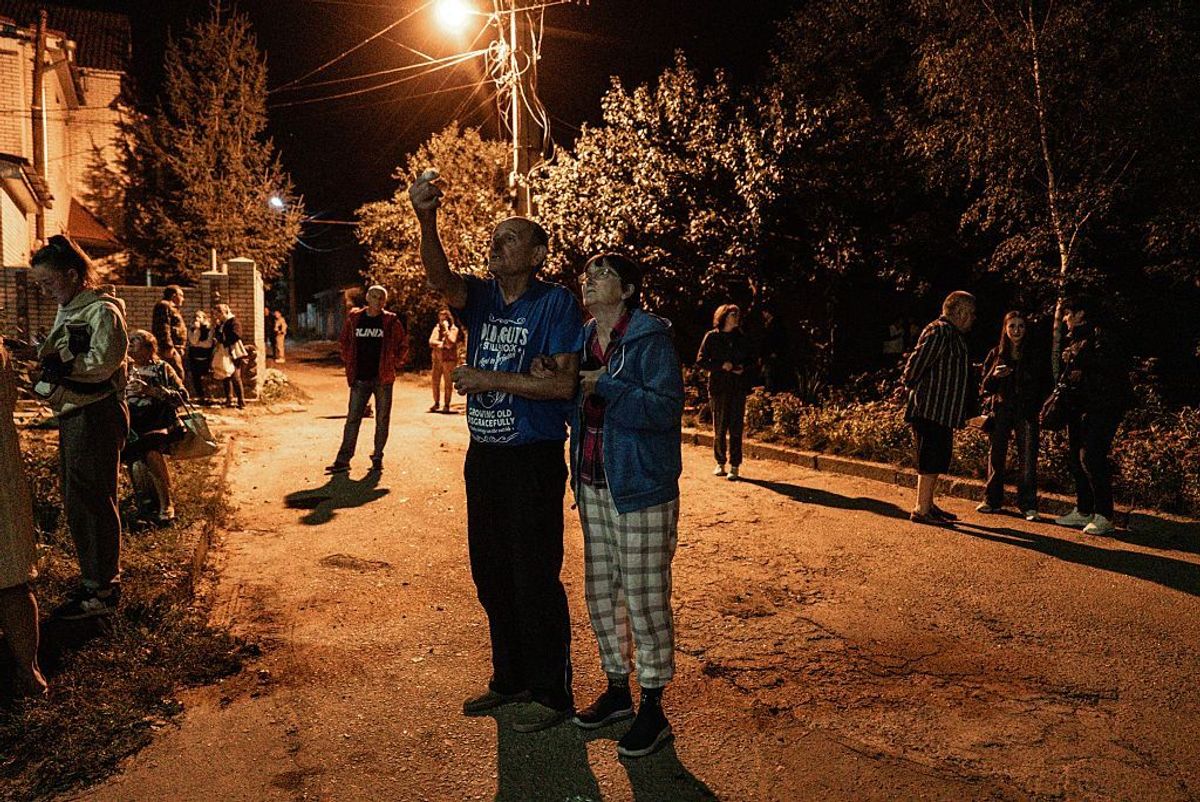
Strike on Iran Wounds Supreme Leader, Requiring Surgery and Prosthetic
Ayatollah Mojtaba Khamenei was severely wounded in a strike in Iran that killed his father, leaving him in need of plastic surgery and a prosthetic leg.[1] The incident has sparked a cascade of military responses, including the activation of air defenses in Tehran amid reports of explosions.[3] Tensions have escalated in the Strait of Hormuz, where Iran has attacked container ships and vowed to restrict shipping, prompting U.S. orders for naval action against Iranian mine-laying boats.[2][5] Meanwhile, a seven-year-old child remains the only one missing from a bombed school, with authorities closing the case after weeks of searching.[4] U.S. President Donald Trump has extended a ceasefire without conditions as these developments unfold.[5]
Overview of the Recent Strike
The recent strike in Iran has had profound effects on the country's leadership, particularly impacting Ayatollah Mojtaba Khamenei, who is now Iran's Supreme Leader.[1] According to reports from Newsmax, Khamenei has been unseen and unheard from since assuming the role in March, following the death of his father in the same strike.[1] The severity of his injuries is such that he struggles to speak, requires extensive plastic surgery, and is awaiting a prosthetic leg.[1] This level of wounding underscores the intensity of the attack, which not only eliminated the previous Supreme Leader but also left his successor in a compromised physical state.[1]
Details emerging from the coverage highlight the personal toll on Khamenei. The need for plastic surgery suggests significant facial or bodily disfigurement, while the prosthetic leg indicates a limb loss or severe damage that prevents normal mobility.[1] Since becoming Supreme Leader in March, Khamenei's absence from public view has fueled speculation about his condition, but these reports provide concrete medical necessities tied directly to the strike.[1] The transition to Mojtaba Khamenei marked a significant shift in Iran's theocratic structure, with him stepping into the highest office amid ongoing regional conflicts.[1] The strike's precision or impact in targeting the previous leader while severely injuring the successor points to the high-stakes nature of operations in the region, though specifics of the attack's origin remain unstated in available sources.[1]
This event sets the stage for broader instability, as the Supreme Leader's role is central to Iran's political, military, and religious decisions. Khamenei's reported speech difficulties could affect public addresses or internal deliberations, potentially influencing command chains during this period of activation of defenses and naval confrontations elsewhere.[1] The prosthetic leg requirement further implies long-term rehabilitation, which may delay his full engagement in leadership duties.[1] Reports emphasize that these injuries stem directly from the strike that killed his father, positioning it as a pivotal moment in Iran's recent history.[1] Iranian state responses, such as air defense activations, appear linked temporally to this leadership crisis, amplifying the strike's ripple effects across military postures.[3]
In-depth examination of the source reveals a focus on Khamenei's post-strike condition as the core narrative. Newsmax's headline, "Iran Supreme Leader Needs Plastic Surgery, Prosthetic Leg," encapsulates the gravity, with the body text confirming the familial connection and timeline.[1] Ayatollah Mojtaba Khamenei's emergence as leader in March was already a notable development, but the strike has transformed it into a story of survival and adaptation.[1] The combination of unseen status and medical needs paints a picture of a leader sidelined by injury at a critical juncture, coinciding with explosions in Tehran and Hormuz escalations.[1]
Military and Defensive Actions in Iran
Iran has taken swift defensive measures in response to perceived threats, activating its air defenses in Tehran following reports of explosions.[3] Iranian state media, including the Tehran Times, confirmed the activation via a post on X, accompanied by a video showing defensive fire lighting up the capital's sky.[3] The newspaper stated, "Las defensas aéreas están activas en Teherán," highlighting the immediacy of the response.[3] Complementing this, the Mehr agency reported that the systems were engaged against "objetivos hostiles," or hostile targets, indicating a proactive stance against potential aerial incursions.[3]
This activation comes amid the broader context of the strike in Iran that wounded the Supreme Leader, suggesting a heightened state of alert.[1][3] The sounds of several explosions in Tehran, as noted by Clarín citing Iranian media, prompted the defensive measures, with visuals capturing tracer fire and anti-aircraft activity.[3] Such activations are not isolated; they reflect Iran's layered air defense strategy in its capital, designed to protect key political and military sites.[3] The Tehran Times' video evidence provides visual corroboration, showing bursts of light against the night sky, a common sight in reports of surface-to-air engagements.[3]
The purpose of these actions aligns with protecting against what state media describes as hostile objectives, potentially linked to the recent leadership strike or ongoing regional tensions.[3] Mehr's specification of "hostile targets" implies detection of incoming threats, whether drones, missiles, or aircraft, though exact details are withheld in the reports.[3] This defensive posture in Tehran occurs as Iran faces naval challenges in the Strait of Hormuz, indicating a multi-front military readiness.[2][5] The explosions heard in the capital add urgency, with state media's rapid dissemination via social media underscoring the government's intent to project control and vigilance.[3]
Further detail from the sources reveals the coordinated nature of the response. The Tehran Times' X post, timestamped amid the events, served as an official alert, while Mehr provided technical context on targeting.[3] In a city like Tehran, home to government institutions and the Supreme Leader's apparatus, such activations carry symbolic weight, signaling resilience despite the leadership injuries reported elsewhere.[1][3] The absence of further casualties or damage details in the coverage focuses attention on the defensive success claimed by Iranian outlets.[3]
{IMAGE_2}
Incidents in the Strait of Hormuz
The Strait of Hormuz has become a flashpoint, with Iranian attacks on two container ships occurring amid vows to restrict shipping in the vital route.[5] Mercopress reports that these strikes took place on Wednesday, following U.S. President Donald Trump's ceasefire extension the previous day.[5] Iran has vowed to keep the key shipping route closed to all but a few vessels, escalating risks to global trade.[2] Concurrently, U.S. President Donald Trump ordered the U.S. Navy to attack Iranian boats laying mines in the strait, a direct counter to Iran's restrictive measures.[2]
These incidents highlight the strait's strategic chokepoint status, through which a significant portion of global oil transits.[2][5] Iran's attacks on the container ships were not characterized as ceasefire violations by the White House, as neither vessel was American or Israeli.[5] This distinction allows the U.S. to maintain the extended truce while addressing mine-laying threats separately.[2][5] The NZ Herald details Trump's order for naval attacks on mine-laying boats, framing it as a response to Iran's vow to limit access.[2]
The sequence—Trump's unconditional ceasefire extension on Tuesday without a deadline, hours before his two-week truce expired, followed by Iran's Wednesday ship attacks—illustrates fragile diplomacy.[5] Domestic backlash against Trump accompanies these moves, though sources focus on the military directives.[5] Iran's mine-laying activities pose hazards to navigation, prompting the U.S. Navy's aggressive posture.[2] Container ship strikes further disrupt commerce, aligning with Iran's stated intent to restrict the strait.[2][5]
US Military Response in the Strait of Hormuz
U.S. President Donald Trump has directed the U.S. Navy to engage Iranian boats laying mines in the Strait of Hormuz, a measure aimed at securing the critical waterway.[2] This order comes as Iran vows to close the route to most vessels, threatening international shipping.[2] The NZ Herald reports emphasize the direct presidential command, underscoring U.S. commitment to freedom of navigation amid escalating tensions.[2]
Mine-laying represents a asymmetric tactic by Iran to control the strait, prompting a robust naval response.[2] U.S. forces are authorized to attack such boats preemptively, reflecting lessons from past Hormuz incidents where mines endangered vessels.[2] This directive aligns with broader U.S. strategy to counter Iranian disruptions, separate from the ceasefire framework.[5] The timing, post-strike in Iran and amid air defense activations, positions the U.S. as actively shaping the maritime domain.[1][3]
Reports detail Iran's vow explicitly: keeping the strait closed to all but a few vessels, which could spike energy prices globally.[2] Trump's order counters this by targeting the means of enforcement—mine-laying boats—potentially involving destroyers, patrol craft, or carrier groups stationed in the region.[2] No specific engagements are detailed yet, but the authorization signals readiness.[2]
{IMAGE_3}
Human Impact of the Conflicts
The human cost of conflicts in Iran is exemplified by the case of seven-year-old Makan Nasiri, the only child still missing from a school bombed in the country.[4] After nearly seven weeks of exhaustive searches for remains, authorities informed the child's parents that the case is closed.[4] Al Jazeera's coverage highlights the prolonged effort, underscoring the tragedy amid military escalations.[4]
This incident reveals the civilian toll, with a school as the target site, affecting young lives directly.[4] Makan Nasiri's status as the sole unresolved missing person after weeks of operations points to the challenges in rubble clearance and identification in bombed structures.[4] Parents' notification of case closure brings finality but also grief, as searches yielded no traces.[4] The bombing's context ties into broader strikes, including the one wounding the Supreme Leader, illustrating spillover to non-combatants.[1][4]
Authorities' decision after seven weeks reflects resource limits or conclusive evidence absence, yet leaves a lingering void for the family.[4] Such cases humanize the statistics, contrasting with military activations in Tehran and Hormuz.[3][4] The school's destruction disrupts education and community, with Nasiri's case symbolizing unresolved losses.[4]
International and Ceasefire Developments
U.S. President Donald Trump extended the ceasefire with Iran on Tuesday without conditions or a set deadline, mere hours before his own two-week truce was due to expire without a deal.[5] This move occurred as Iran attacked two container ships in the Strait of Hormuz the following day.[5] The White House declined to label the strikes a violation, citing that neither ship was American or Israeli.[5]
Mercopress notes domestic backlash facing Trump for the extension, amid Iran's continued actions.[5] The unconditional nature avoids escalation triggers, preserving a fragile pause despite mine-laying and ship attacks.[2][5] Iran's Hormuz strikes test the ceasefire's limits, yet U.S. restraint on non-aligned vessels maintains technical compliance.[5]
This development intersects with Iran's air defenses in Tehran and leadership injuries, shaping international responses.[1][3][5] Trump's decision prioritizes de-escalation, even as naval orders target mines.[2][5]
Key Facts and Broader Context
Iranian state media reported air defense activations in Tehran with explosions.[3] U.S. Navy ordered to strike mine-laying boats amid Iran's shipping restrictions.[2] Two container ships hit in Hormuz post-ceasefire extension.[5] Makan Nasiri's missing case closed after seven weeks.[4] These facts trace the strike's aftermath.[1]
What to watch next: Developments on Ayatollah Mojtaba Khamenei's recovery and public appearances, given his injuries from the strike;[1] potential further engagements in the Strait of Hormuz involving U.S. Navy and Iranian boats;[2] status of shipping through the strait amid attacks and restrictions;[5] and any reopening of investigations into missing persons like Makan Nasiri, despite case closure.[4]