
Strike on Iran: February 2026 Airstrikes Escalate Risks in Asia-Pacific Region
The February 2026 airstrikes on Iran triggered a rapid escalation of risks across the Asia-Pacific region, heightening exposure to gender-based violence and straining protection systems.[1][2] This strike on Iran has drawn attention to interconnected humanitarian challenges and ongoing military tensions involving Iran-backed groups.[1][2]
Key Facts
- The airstrikes led to increased gender-based violence risks in countries including Afghanistan, Bangladesh, Iran, Myanmar, Pakistan, Philippines, and Sri Lanka, as reported by the Gender Based Violence Area of Responsibility and the United Nations Population Fund.[1][2]
- Iran revised the death toll from a school bombing in Minab to 155, including 73 boys, 47 girls, 26 teachers, seven parents, a school bus driver, and a pharmacist, which occurred on 28 February 2026.[3]
- Israeli Prime Minister Benjamin Netanyahu stated that Hezbollah's rockets and drones pose a threat, with Israel's military expanding strikes on Lebanon despite a ceasefire, involving Iran-backed groups.[4]
- Hezbollah, an Iran-linked group, has engaged in threats and strikes with Israel across Lebanon's border, as reported in ongoing exchanges.[5]
These facts underscore the multifaceted repercussions of the strike on Iran, from direct casualties to broader regional vulnerabilities.[1][2][3][4][5]
Overview of the Airstrikes
The February 2026 airstrikes on Iran marked a pivotal event that set off a chain reaction across the Asia-Pacific region.[1][2] According to reports from ReliefWeb, these airstrikes prompted a rapid escalation of risks, particularly in heightening exposure to gender-based violence (GBV) while placing additional strain on already fragile protection systems and service delivery mechanisms.[1][2] The documents, titled "Afghanistan: Asia-Pacific Gender Based Violence in Emergencies Update - Q1 2026," include a special release focused on the Middle East escalation, highlighting how the strike on Iran reverberated beyond its borders.[1]
This overview positions the strike on Iran within a context of pre-existing regional pressures. The Asia-Pacific area was described as facing multiple acute humanitarian challenges prior to the incident, which the airstrikes exacerbated.[1][2] Sources from the Gender Based Violence Area of Responsibility (GBV AoR) and the United Nations Population Fund (UNFPA) emphasize that the event unfolded in early 2026, specifically in February, leading to immediate concerns over protection systems.[1][2] The regional overview in these updates stresses the interconnected nature of emergencies in the zone, where military actions like the airstrikes amplify vulnerabilities.[1][2]
Further detailing the timeline, the strike on Iran occurred amid rising tensions, triggering monitoring and updates from international bodies dedicated to GBV in emergencies.[1][2] The special release format of the Q1 2026 update indicates a focused response to the Middle East escalation, with the Asia-Pacific region bearing indirect but significant consequences.[1] Protection systems, already under duress from ongoing crises, faced intensified demands as risks proliferated.[1][2] This summary aligns with the core narrative that the airstrikes were not isolated but part of a broader escalation pattern affecting service delivery and humanitarian response capacities.[1][2]
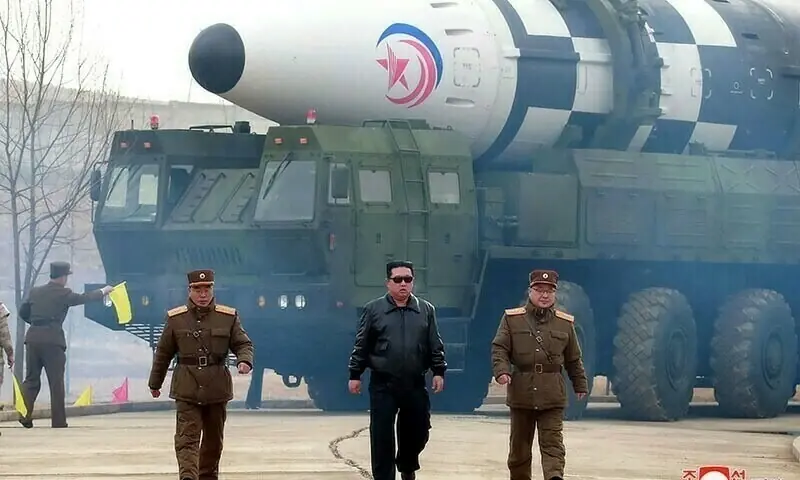
Airstrikes on Iran escalate tensions and risks in the Asia-Pacific region. — Source: dawn
Humanitarian and Social Impacts
The humanitarian fallout from the February 2026 airstrikes on Iran has prominently featured heightened risks of gender-based violence across multiple Asia-Pacific countries.[1][2] Reports detail increased exposure in Afghanistan, Bangladesh, Iran, Myanmar, Pakistan, the Philippines, and Sri Lanka, as documented by the GBV AoR and UNFPA.[1][2] These nations, already grappling with fragile protection systems, experienced further strain on service delivery following the strike on Iran.[1][2]
The updates describe a region confronting multiple acute humanitarian issues, where the airstrikes accelerated GBV risks.[1][2] Protection systems, critical for safeguarding vulnerable populations, were pushed to their limits, complicating efforts to address emergencies.[1][2] The Q1 2026 special release underscores how the Middle East escalation, initiated by the strike on Iran, spilled over into Asia-Pacific dynamics, amplifying GBV exposure.[1] Service delivery disruptions were noted as a key concern, with existing fragilities making coordinated responses more challenging.[1][2]
In practical terms, this escalation meant heightened monitoring needs for GBV in emergencies across the listed countries.[1][2] The involvement of authoritative sources like GBV AoR and UNFPA lends weight to the assessment that the strike on Iran directly contributed to these strains.[1][2] Social impacts extended to broader protection frameworks, where the rapid risk increase demanded urgent adaptations in humanitarian programming.[1][2] The reports' emphasis on the regional overview paints a picture of interconnected vulnerabilities, where one event like the airstrikes ripples outward, taxing resources and heightening dangers for at-risk groups.[1][2]
Specific Incidents in Iran
Iran has revised the death toll from the school bombing in Minab to 155, providing a detailed breakdown of the victims.[3] This incident, which took place on 28 February 2026—the first day of the war—targeted a primary school and resulted in the deaths of 73 boys and 47 girls.[3] Additional casualties included 26 teachers, seven parents, a school bus driver, and a pharmacist.[3]
Press TV and other Iranian media outlets reported this updated figure, noting it was lower than earlier estimates exceeding 175 fatalities.[3] The strike's precision in targeting an educational facility underscores the human cost, with children comprising a significant portion of the victims: 73 boys and 47 girls lost their lives.[3] Adults affected included educators and accompanying family members, as well as support staff like the school bus driver and a pharmacist.[3]
This revision to 155 deaths reflects ongoing efforts to account for the full extent of the tragedy in Minab.[3] The timing on the war's inaugural day links it directly to the broader conflict sparked by the airstrikes.[3] Iranian media's coverage highlights the incident's gravity, focusing on the diverse victim profiles from students to school personnel.[3]
{IMAGE_3}
Ongoing Conflicts and Responses
Ongoing conflicts involving Iran-backed groups have intensified, with exchanges between Hezbollah and Israel across Lebanon's border.[4][5] Hezbollah, described as an Iran-linked group, has reiterated defiance amid threats and strikes.[5] Israeli Prime Minister Benjamin Netanyahu stated on Monday that Hezbollah's rockets and drones remain a key threat necessitating military action.[4]
Israel's army has expanded strikes on Lebanon despite a ceasefire, targeting areas linked to these activities.[4] Lebanese President Joseph Aoun commented on direct negotiations with Israel aimed at ending the Israel-Hezbollah war, accusing those who involved Lebanon of "treason"—a reference to the Iran-backed Hezbollah, which has claimed attacks on Israeli targets in south Lebanon.[4] Israel's defense minister has threatened to "burn all of Lebanon" in response to the provocations.[5]
These developments illustrate a pattern of swapped threats and strikes, with Hezbollah engaging actively.[4][5] Netanyahu's remarks emphasize the persistent danger posed by Hezbollah's arsenal, justifying continued operations.[4] The ceasefire's fragility is evident as military actions persist, involving Iran-backed elements.[4]
Regional Context
The regional context of the February 2026 airstrikes on Iran reveals profound implications for Asia-Pacific stability, particularly through elevated GBV risks.[1][2] Countries such as Afghanistan, Bangladesh, Iran, Myanmar, Pakistan, Philippines, and Sri Lanka face compounded challenges, with protection systems under severe strain.[1][2] The GBV AoR and UNFPA updates frame this within a Middle East escalation that triggered rapid risk proliferation.[1][2]
Tying into broader conflicts, actions by Iran-linked Hezbollah against Israel add layers of tension that indirectly influence Asia-Pacific humanitarian landscapes.[4][5] Israel's expanded strikes on Lebanon, despite ceasefires, and Netanyahu's warnings about rockets and drones highlight persistent threats from Iran-backed groups.[4] Lebanese leadership's push for negotiations underscores the war's drag on regional actors.[4]
This interplay positions the Asia-Pacific as vulnerable to spillover effects, where military escalations like the strike on Iran exacerbate GBV exposure and service delivery issues.[1][2][4][5] Pre-existing acute humanitarian pressures in the region amplify these dynamics, as noted in the Q1 2026 reports.[1][2] The special release on Middle East escalation contextualizes how such events strain interconnected protection frameworks across listed nations.[1][2]
Implications for Protection Systems
Protection systems across the Asia-Pacific have been notably strained by the repercussions of the strike on Iran, as detailed in specialized updates.[1][2] The GBV AoR and UNFPA emphasize that fragile infrastructures were already challenged by multiple acute humanitarian situations before February 2026.[1][2] The airstrikes accelerated this, leading to heightened GBV risks that demand enhanced monitoring and response capabilities.[1][2]
In this extended view, the involvement of Iran-backed groups in border conflicts with Israel contributes to a volatile environment affecting distant regions.[4][5] Hezbollah's threats and strikes, met with Israeli responses, illustrate ongoing military pressures that parallel humanitarian strains elsewhere.[5][4] Lebanon's internal dynamics, including presidential calls for negotiation, reflect the broader web of escalations.[4]
Authorities must navigate these intersections, where the Minab incident's toll—155 lives, predominantly children—serves as a stark reminder of direct impacts.[3] Collectively, sources paint a region where the strike on Iran catalyzed multifaceted risks, from GBV surges to sustained conflicts.[1][2][3][4][5]
What to watch next: Monitor GBV trends in Afghanistan, Bangladesh, Iran, Myanmar, Pakistan, Philippines, and Sri Lanka amid strained protection systems, alongside Hezbollah-Israel exchanges and potential ceasefire breakdowns in Lebanon.[1][2][4][5]