Strike on Iran Escalates Asia-Pacific Risks as Reported in Regional Updates
The airstrikes on Iran in February 2026 have escalated risks across the Asia-Pacific region, straining protection systems and service delivery.[1] This development, tied to a broader conflict involving direct strikes and related border tensions, has drawn international scrutiny. Key updates include Iran's revised death toll from the Minab school bombing to 155 victims, Israeli Prime Minister Benjamin Netanyahu's emphasis on Hezbollah threats, ongoing exchanges of threats and strikes between Hezbollah and Israel along Lebanon's border, and a Russian envoy's condemnation of the US-Israeli operation.[1][2][3][4][5] The strike on Iran has set off a chain of regional implications, heightening vulnerabilities in an area already facing multiple challenges.[1]
Overview of the Airstrikes
The February 2026 airstrikes on Iran marked a significant escalation in regional tensions, with immediate ripple effects extending to the Asia-Pacific area.[1] According to a regional update from the Gender Based Violence Area of Responsibility and the United Nations Population Fund, these airstrikes triggered a rapid escalation of risk across countries including Afghanistan, Bangladesh, Iran, Myanmar, Pakistan, the Philippines, and Sri Lanka.[1] The strikes have heightened exposure to gender-based violence (GBV) while further straining already fragile protection systems and service delivery mechanisms.[1] This overview underscores how the strike on Iran has compounded existing humanitarian pressures in a region grappling with multiple acute humanitarian situations.[1]
The context provided in the report highlights the interconnected nature of security events in the Asia-Pacific, where military actions in one area can amplify vulnerabilities elsewhere.[1] Protection systems, designed to safeguard vulnerable populations, are now under increased pressure due to the diversion of resources and heightened instability following the airstrikes.[1] Service delivery, including essential aid and emergency responses, faces disruptions that could prolong recovery efforts.[1] The report's regional overview positions the strike on Iran as a catalyst for these dynamics, emphasizing the need for coordinated international monitoring.[1]
Furthermore, the inclusion of Iran in this Asia-Pacific assessment illustrates the broadening scope of conflict impacts, linking Middle Eastern military operations to wider humanitarian concerns.[1] Analysts reviewing such updates note that when airstrikes occur amid ongoing regional fragilities, the strain on systems becomes exponential, potentially leading to secondary crises.[1] This event, occurring in early 2026, serves as a benchmark for understanding how isolated strikes can evolve into sustained regional challenges.[1] The attached file referenced in the update provides detailed metrics, though the core message remains the escalation triggered by the February actions.[1]
Specific Incidents in Iran

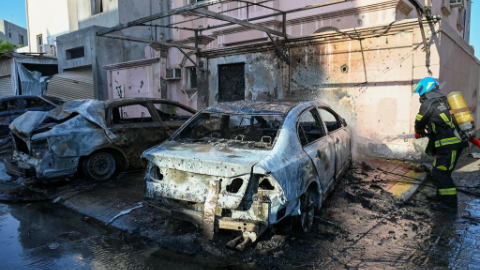
Children killed in the Minab school bombing in Iran. — Source: middleeasteye
Details from Iranian media, including Press TV, confirm a tragic incident in the Minab school bombing, where the death toll has been revised to 155 people.[2] This strike targeted a primary school on 28 February 2026, described as the first day of the war, resulting in the deaths of 73 boys and 47 girls, alongside 26 teachers, seven parents, a school bus driver, and a pharmacist.[2] The updated figure represents a downward adjustment from earlier estimates exceeding 175 fatalities, reflecting ongoing efforts to accurately tally the losses.[2]
This specific event exemplifies the direct human cost of the airstrikes, with the breakdown of casualties underscoring the impact on educational and civilian infrastructure.[2] The primary school setting amplifies the severity, as children formed the majority of the victims—73 boys and 47 girls—highlighting vulnerabilities in everyday community hubs.[2] Teachers, numbering 26, were also heavily affected, pointing to disruptions in Iran's education system amid the conflict.[2] Additional losses included seven parents, likely present for school-related activities, a school bus driver essential for student transport, and even a pharmacist, suggesting proximity to community services.[2]
Iranian reports emphasize the precision of these figures, gathered through official channels, as a means to document the strike's toll.[2] The revision process itself indicates the challenges in immediate post-strike assessments, where initial chaos can lead to inflated estimates before verification.[2] This incident stands as a focal point for understanding the ground-level consequences of the broader military operations, with the 28 February timing aligning it directly to the onset of hostilities.[2] The Minab bombing thus serves as a concrete illustration of how airstrikes penetrate civilian areas, affecting multiple demographics in a single event.[2]
Israeli Prime Minister's Statements on Hezbollah
Israeli Prime Minister Benjamin Netanyahu has identified Hezbollah's rockets and drones as a persistent key threat, advocating for military action in response.[3] Speaking on Monday amid expanded Israeli strikes on Lebanon—despite an existing ceasefire—Netanyahu stressed the necessity of addressing these capabilities head-on.[3] This position comes as Israel's army intensifies operations, reflecting a strategic calculus that views Hezbollah's arsenal as an immediate danger.[3]
Netanyahu's remarks occur against a backdrop of cross-border activities, where Hezbollah, backed by Iran, has claimed several attacks on Israeli targets in southern Lebanon.[3] The Prime Minister's call for action underscores Israel's broader security doctrine, prioritizing preemptive measures against rocket and drone threats.[3] This stance aligns with ongoing military engagements, even as diplomatic efforts persist.[3]
Lebanese President Joseph Aoun has weighed in, stating that direct negotiations with Israel aim to end the Israel-Hezbollah war.[3] Aoun accused those who "dragged Lebanon into it" of committing "treason," a clear reference to the Iran-backed Hezbollah.[3] This internal Lebanese critique highlights divisions over the group's role, framing its actions as detrimental to national interests.[3] Netanyahu's emphasis on military responses thus intersects with these domestic Lebanese dynamics, complicating ceasefire adherence.[3]
The interplay of these statements reveals escalating rhetoric, with Israel's leadership justifying strikes based on Hezbollah's provocations.[3] The persistence of rockets and drones as focal threats suggests a protracted dimension to the conflict, beyond initial truces.[3]
Hezbollah and Israel Exchange Threats and Strikes Across Lebanon’s Border
Hezbollah and Israel continue to swap threats and strikes along Lebanon’s border, intensifying frontier hostilities.[4] The Iran-linked group has reiterated its defiance, maintaining pressure through cross-border actions.[4] In response, Israel's defence minister has issued stark warnings, threatening to "burn all of Lebanon" in escalation.[4]
These exchanges represent a volatile pattern, with both sides engaging in tit-for-tat operations that sustain tension.[4] Hezbollah's Iran connection positions it as a proxy in the wider US-Israeli-Iran confrontation, amplifying the stakes.[4] Israeli threats signal a readiness to expand operations if provocations persist, potentially drawing in more Lebanese territory.[4]
The border dynamic, characterized by mutual strikes, undermines stabilization efforts and risks broader involvement.[4] Hezbollah's defiance serves as a message of resilience, while Israel's responses aim to deter further incursions.[4] This ongoing cycle links directly to the strike on Iran, as Hezbollah's posture aligns with Tehran's interests.[4]
Reports detail the frequency of these swaps, with threats escalating verbal and kinetic confrontations.[4] The Israeli defence minister's rhetoric marks a high point in warnings, intended to convey resolve amid repeated border incidents.[4]

Russian envoy condemns US-Israeli operation against Iran as flagrant and unprecedented. — Source: anadolu
International Reactions
A Russian envoy has labeled the US-Israeli operation against Iran a "flagrant and unprecedented" act.[5] This characterization frames the bombing of Iranian nuclear sites as a direct undermining of the global non-proliferation framework.[5] Moscow's warning highlights concerns over the long-term stability of nuclear oversight mechanisms.[5]
The envoy's statement positions Russia as a vocal critic, emphasizing the operation's breach of international norms.[5] By targeting nuclear facilities, the strikes raise alarms about proliferation risks, potentially encouraging other actors to pursue aggressive postures.[5] This reaction adds a layer of geopolitical tension, with Russia advocating for adherence to established treaties.[5]
Such responses from major powers illustrate the divisive international landscape surrounding the airstrikes.[5] The focus on nuclear sites elevates the issue beyond regional skirmishes, invoking global security implications.[5]
Current Situation
The current situation reflects sustained escalation following the February 2026 airstrikes on Iran, with risks permeating the Asia-Pacific region.[1] Protection systems and service delivery remain strained, as the initial strikes have triggered broader vulnerabilities including heightened GBV exposure.[1] Ongoing military expansions, such as Israel's strikes on Lebanon despite ceasefires, compound these pressures.[3]
Hezbollah-Israel border exchanges persist, with threats and strikes maintaining a high tempo of conflict.[3][4] Netanyahu's insistence on action against Hezbollah's rockets and drones signals no immediate de-escalation, while Lebanese leadership navigates internal divisions over the Iran-linked group.[3] Russian condemnation of the US-Israeli operation as flagrant further internationalizes the crisis, spotlighting nuclear site bombings.[5]
Synthesis of these elements points to a multifaceted standoff: direct impacts like the Minab school bombing with its 155 revised casualties illustrate human costs,[2] while proxy dynamics via Hezbollah extend the theater.[4] The Asia-Pacific linkage underscores humanitarian ripple effects, where regional systems face overload.[1] Despite negotiations mentioned in Lebanon, military actions dominate, heightening overall risks.[3]
This status quo demands vigilant monitoring, as interconnected threats— from border clashes to nuclear concerns—sustain instability.[1][3][4][5]
What to watch next: Continued exchanges between Hezbollah and Israel along the border could further strain regional ceasefires, while international responses to the nuclear site strikes may influence non-proliferation efforts, amid ongoing Asia-Pacific risk escalations from the initial Iran airstrikes.[1][3][4][5]