
Strike Lebanon: Israeli PM Orders Attacks on Hezbollah Targets Amid Ceasefire Violations
Israeli Prime Minister Benjamin Netanyahu has ordered strikes on Hezbollah targets in Lebanon, instructing the army to act forcefully due to ceasefire violations.[1] In a significant escalation amid a fragile truce, these actions come as reports emerge of multiple casualties from recent Israeli military operations in southern Lebanon, with exchanges of fire continuing between Israeli forces and Hezbollah.[2][4]
Overview of Recent Strikes
Recent Israeli strikes in southern Lebanon have resulted in significant casualties, highlighting the precarious state of the ongoing ceasefire. According to reports, six people were killed in Israeli strikes on south Lebanon, part of a pattern where Israeli forces have been accused of repeatedly violating the truce brokered by the US last week.[2] State media in Lebanon further detailed that four people were killed on Saturday in these strikes, specifically targeting areas in southern Lebanon.[4] Additional coverage specifies that Israeli attacks killed four individuals in the town of Yohmor al-Shaqif, with raids focusing on a truck and a motorcycle.[5]
These incidents underscore the intensity of the military engagements in the region. The strikes represent a direct response to perceived threats, but they have also drawn attention to the human cost on the ground. Lebanon's state news agency reported the four deaths promptly, emphasizing the locations and nature of the attacks, which involved precise targeting of vehicles.[4][5] Meanwhile, the broader context of these operations reveals a cycle of retaliation, as Israeli forces continue operations despite the ceasefire framework intended to curb hostilities.[2] The repetition of such strikes—whether resulting in six or four confirmed fatalities in overlapping reports—illustrates the challenges in verifying exact tolls during active conflict zones, yet the consistency across sources points to a concentrated effort in southern Lebanon.[2][4][5]
This overview of the strikes paints a picture of targeted military actions that have not abated fully under the ceasefire. The focus on Hezbollah-linked areas suggests a strategic aim to neutralize immediate threats, but the resulting deaths have fueled narratives of ceasefire fragility from multiple perspectives.[2][4] Expanding on the details, the raids in Yohmor al-Shaqif exemplify the tactical nature of these operations, hitting mobile targets that could be associated with militant activities.[5] Such precision strikes, while minimizing broader collateral in theory, have still led to civilian or combatant casualties as reported, complicating the path to de-escalation.[4]
Prime Minister's Directive
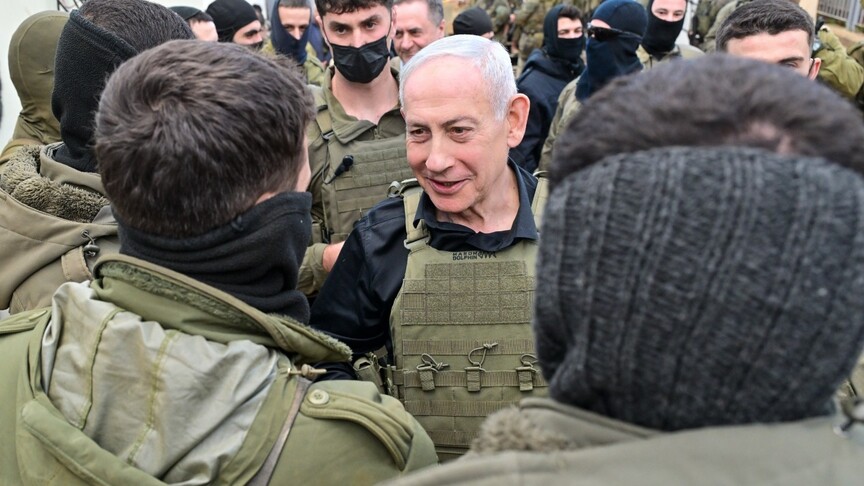
Israeli Prime Minister Benjamin Netanyahu has directly ordered strikes on Hezbollah targets in Lebanon, providing clear instructions to the military.[1] In his directive, Netanyahu emphasized that the army should act "forcefully," explicitly citing ceasefire violations as the justification for these operations.[1] This order marks a pivotal moment in Israel's approach to the border tensions, signaling a willingness to respond aggressively to any breaches.
The prime minister's statement, as covered by Anadolu Agency, frames the strikes as a necessary measure to enforce the ceasefire terms.[1] By instructing forceful action, Netanyahu is underscoring Israel's commitment to its security interests, particularly against Hezbollah, which has been a longstanding adversary. This directive does not appear in isolation; it aligns with the broader pattern of military readiness in response to rocket fire and other provocations from across the border.[1] The language of "forcefully" implies an escalation in operational tempo, potentially involving increased airstrikes or ground support, though specifics on tactics remain tied to the immediate context of violations.[1]
Analyzing the implications, Netanyahu's order reinforces Israel's stance that the ceasefire is conditional on compliance from all parties, particularly Hezbollah. This leadership-level authorization ensures that military units have political backing for intensified actions, which could deter further violations but also risks broadening the conflict.[1] The timing of the announcement coincides with reports of recent strikes, suggesting a rapid decision-making process in Jerusalem to address emerging threats.[1]
Ceasefire Violations and Context
Ceasefire violations have been a recurring issue since the truce was brokered, with both sides accusing each other of breaches. Israeli Prime Minister Netanyahu cited these violations as the direct reason for ordering strikes on Hezbollah targets, instructing the army to respond forcefully.[1] Reports indicate that Israeli forces have repeatedly violated the fragile ceasefire with Hezbollah, which was arranged by the US last week.[2] Lebanon's state media and Israeli military statements highlight Hezbollah firing rockets at Israel, described as the latest challenges to a tenuous, recently extended ceasefire.[4]
The context reveals a ceasefire that has led to a significant reduction in hostilities overall, yet persistent incidents undermine its stability.[4] Israeli actions, including the recent strikes, are positioned as responses to Hezbollah's rocket fire, creating a tit-for-tat dynamic.[4] From the Lebanese perspective, as per reports, Israeli strikes constitute violations, with six killed in south Lebanon amid this cycle.[2] Netanyahu's forceful directive explicitly ties military escalation to these breaches, emphasizing that Israel will not tolerate provocations.[1]
This ongoing pattern of violations has implications for regional stability. The US-brokered deal aimed to halt the exchanges that had intensified prior to the truce, but the "repeated" nature of breaches—whether by Israeli strikes or Hezbollah rockets—suggests enforcement challenges.[2][4] The recently extended ceasefire's tenuous status is evident in the continued exchanges, where each side's actions provoke retaliation.[1][4] Broader analysis grounded in these reports shows that while hostilities have decreased significantly, isolated incidents like rocket fire and subsequent strikes prevent full disengagement.[4] The context also includes the strategic border area in southern Lebanon, a hotspot for Hezbollah operations, making violations particularly volatile.[2]
Casualty Statistics
Casualty figures from Israeli attacks in Lebanon provide a stark measure of the conflict's toll. Over 2,490 people have been killed in Israeli attacks in Lebanon since March 2, according to Anadolu Agency reports.[3] In the past 24 hours alone, five deaths have been reported, even as ceasefire violations continue unabated.[3]
These statistics highlight the sustained impact of military operations over months, with the cumulative total exceeding 2,490 fatalities marking a significant humanitarian concern.[3] The recent uptick—five deaths in the last day—coincides with the fragile truce period, underscoring that violations have not halted the violence entirely.[3] Breaking down the data, the period since March 2 encompasses a phase of escalated exchanges, leading to this high death toll, which includes both combatants and civilians in the affected areas.[3]
In depth, these numbers reflect the intensity prior to and during ceasefire attempts. The continuation of five deaths in 24 hours amid violations illustrates the fragility, as even limited strikes contribute to the running total.[3] This data serves as a benchmark for assessing the ceasefire's effectiveness, showing partial success in reduction but persistent lethality.[3]
Current Developments
Current exchanges of fire between Israel and Hezbollah are testing the limits of the recently extended ceasefire. Lebanon's state media reported four people killed in Israeli strikes on southern Lebanon on Saturday, while the Israeli military stated that Hezbollah had fired rockets at Israel, marking the latest challenges to the truce.[4] Further details from Al Jazeera confirm that Israeli attacks in Yohmor al-Shaqif killed four, targeting a truck and a motorcycle.[5]
These developments indicate active hostilities despite the ceasefire's intent for de-escalation. The rocket fire from Hezbollah prompted Israeli responses, perpetuating the cycle.[4] State media's reporting on the four deaths aligns with specifics of the raids, providing on-the-ground accounts.[4][5] The ceasefire has achieved a significant reduction in overall fighting, but these incidents reveal ongoing friction.[4]
The status remains tense, with both sides engaged in cross-border actions that challenge the agreement's durability.[4][5]
What to watch next
Monitor for further Israeli military responses to any additional Hezbollah rocket fire, as well as updates on casualty figures amid ongoing ceasefire violations, which continue to strain the US-brokered truce.[1][2][3][4]