
Conflict in Mali: Coordinated Attacks Target Capital Bamako and Northern Regions
Violence erupted in Mali with coordinated attacks on the capital Bamako and other regions, including Kati, Sevare, Gao, and Kidal, highlighting ongoing security challenges in this conflict in Mali.[1] These incidents, confirmed by the Malian army, involved clashes with armed fighters targeting army barracks and other strategic locations across the country.[4] The attacks underscore the persistent instability in the region, where multiple armed groups continue to challenge government control, representing a significant escalation in the conflict in Mali.[3]
Overview of the Attacks
The violence in Mali began early in the morning, marking a coordinated wave of assaults that spanned from the capital Bamako to nearby towns and northern regions.[1] According to reports, the attacks targeted multiple locations simultaneously, including Kati town near Bamako, the central area of Sevare, and northern strongholds such as Gao and Kidal.[1] This multi-front approach suggests a level of organization among the perpetrators, amplifying the scope and impact of the unrest.[1]
Mali's army officially confirmed its involvement in clashes with armed fighters who had launched attacks on army barracks in Bamako and other parts of the country.[4] These confrontations were reported on Saturday, indicating a rapid response from security forces to what appeared to be a widespread offensive.[4] The choice of targets—military installations in key urban and regional centers—points to a deliberate strategy aimed at undermining state authority and disrupting normal operations in these areas.[1][4]
In the broader context of Mali's security landscape, such coordinated strikes represent a rare instance of violence penetrating deep into the capital and its environs, while also reigniting tensions in the north.[1] The simultaneous nature of the attacks across diverse geographies, from the densely populated south to remote northern deserts, complicates containment efforts and exposes vulnerabilities in the national defense posture.[1][4] Eyewitness accounts and initial reports described intense fighting, with the element of surprise allowing attackers to gain initial footholds before army reinforcements arrived.[4]
This overview aligns with the pattern of insurgent activities in Mali, where groups exploit vast terrains and porous borders to launch operations that stretch security resources thin.[1] The involvement of army barracks as primary targets further emphasizes the military's central role in these events, as fighters sought to challenge government presence directly.[4] Overall, the attacks paint a picture of a nation grappling with synchronized threats that test the limits of its defensive capabilities.[1][4]
Specific Incidents in Key Areas
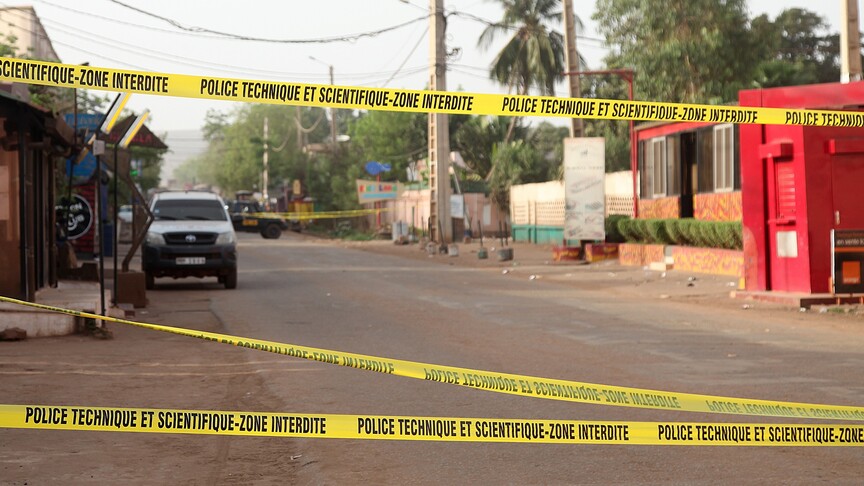
Detailed reports highlight clashes in several critical locations, beginning with the capital Bamako, where armed fighters assaulted army barracks, prompting immediate army engagement.[1][4] Nearby Kati town also saw violence erupt early in the morning, positioning it as a secondary flashpoint close to the political heart of the country.[1] These southern incidents disrupted security in and around Bamako, areas typically under tighter government control.[1]
Further north, Sevare in the central region experienced attacks, adding to the strain on central Malian defenses.[1] In Gao, a northern city with historical significance in regional conflicts, fighting was reported as part of the broader offensive.[1] The most striking claim came from Kidal, where Tuareg rebels announced they had conquered the area during clashes with the Malian army.[2]
These specific incidents illustrate the geographic breadth of the violence, from urban barracks in Bamako—where the army confirmed direct confrontations with armed fighters—to remote northern outposts like Kidal.[1][2][4] In Kidal, the Tuareg rebels' assertion of conquest suggests they overwhelmed local army positions, potentially seizing control of infrastructure and supplies in the process.[2] Sevare's central location makes it a logistical hub, and attacks there could sever supply lines supporting operations elsewhere.[1]
Gao's involvement further complicates the situation, as it lies along key routes connecting central and northern Mali, often contested by various armed factions.[1] Kati's proximity to Bamako allowed attackers to threaten the capital's outskirts, forcing a diversion of resources from urban defense.[1][4] The Malian army's confirmation of clashes across these sites indicates sustained combat, with fighters employing tactics suited to each terrain—urban assaults in Bamako and more mobile operations in the north.[2][4]
This distribution of incidents reveals tactical coordination, where southern strikes distracted forces while northern advances, like in Kidal, aimed for territorial gains.[1][2] The army's reports emphasize defensive actions against barracks raids, underscoring the fighters' focus on military weakening.[4]
Government and Security Challenges
The coordinated attacks on Bamako and beyond have been described as a "dramatic setback" for the junta-led Malian government, exposing deep-seated vulnerabilities in its security apparatus.[3] Research Fellow Andrew Lebovich from Clingendael's Conflict Research Unit highlighted how these events reveal the tenuous security situation across Mali, particularly as authorities, alongside their Russian partners, struggle to prevent incursions in and around the capital.[3]
Mali's army confirmed clashes with armed fighters attacking barracks in Bamako and other areas, yet the scale of the operation overwhelmed initial responses, allowing violence to spread.[4][3] The junta, which has relied on alliances including with Russian entities for bolstering defenses, faces criticism for failing to secure even the capital's periphery.[3] This partnership, intended to enhance counter-insurgency efforts, appears strained under the pressure of multi-site assaults.[3]
The challenges extend to resource allocation, where defending Bamako diverts troops from northern fronts like Kidal and Gao, perpetuating a cycle of overextension.[3][4] Lebovich's analysis points to the attacks as indicative of broader fragility, where despite foreign support, Malian forces could not avert the coordinated push.[3] Russian partners, involved in training and operations, share in this struggle, as their presence has not yet translated into impenetrable defenses around key urban centers.[3]
Government control is further eroded by the inability to maintain security in diverse regions simultaneously, from central Sevare to northern Kidal.[1][3] This setback for the junta undermines its narrative of stabilization post-coups, as armed groups exploit gaps to launch high-impact raids.[3][4]
Claims by Involved Parties
Tuareg rebels have publicly claimed responsibility for significant gains in Kidal, stating they conquered the area amid clashes with the Malian army.[2] This bold assertion, reported in Italian-language coverage dated April 25, 2026, frames the incident as a victory over government forces in a symbolically important northern enclave.[2]
The rebels' statement positions Kidal as a reclaimed territory, potentially bolstering their recruitment and morale while challenging Bamako's authority in Tuareg heartlands.[2] References to clashes between the army and "terrorists" in broader reports contextualize the rebels' role within ongoing confrontations involving multiple actors.[2] By proclaiming conquest, the Tuareg group signals intent to hold ground, complicating army recapture efforts.[2]
These claims add a layer of propaganda to the violence, as rebels leverage media to amplify their successes against state forces.[2]
Current Implications
The attacks represent a "dramatic setback" for the junta-led government, as articulated by Andrew Lebovich, underscoring the fragility of Mali's security framework.[3] With authorities and Russian partners unable to fully secure Bamako and its surroundings, the incidents highlight persistent challenges to national stability.[3] This escalation in the conflict threatens to embolden other armed groups, prolonging instability in a country already divided by regional insurgencies.[3]
Broader implications include strained military resources and eroded public confidence in the junta's governance, as coordinated strikes penetrate defended areas.[3] The tenuous hold on key cities like Bamako signals risks of further territorial losses, particularly in the north.[3]
What to watch next: Monitor the Malian army's ability to regain control in affected areas like Kidal and Bamako, as ongoing struggles with authorities and partners could lead to intensified clashes and further setbacks in security.[3][4]