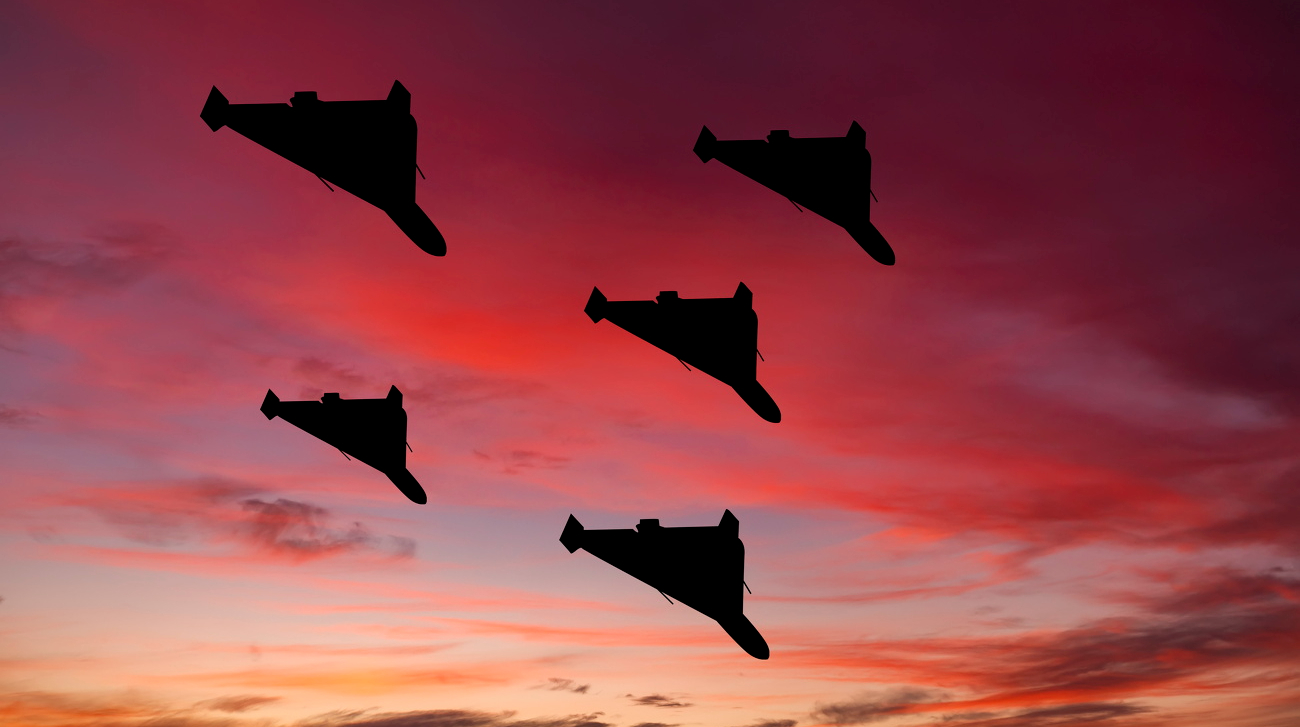

Strike in Ukraine: Russian Drones Hit Danube Port
Russian drones have struck Ukraine's Danube port, as reported by officials, marking another escalation in the ongoing conflict along critical infrastructure routes.[3][4] This strike in Ukraine comes amid a series of aerial assaults, with Ukrainian forces responding through targeted operations against Russian military assets in occupied territories.[1][2] Officials have confirmed the drone impacts on the Danube port, a vital hub for grain exports and regional trade, highlighting the persistent threats to Ukraine's logistical networks.[3][4]
Overview of Russian Drone Strikes
Russian drone strikes have targeted key Ukrainian infrastructure, with officials reporting direct hits on the country's Danube port facilities.[3][4] These attacks underscore the intensifying use of unmanned aerial vehicles in the conflict, focusing on ports along the Danube River, which serve as essential alternatives to Black Sea routes disrupted earlier in the war. The Danube port, located in southwestern Ukraine, plays a crucial role in facilitating exports, particularly agricultural goods, making it a strategic point of contention.[3][4]
Reports indicate that the strikes occurred as part of a broader overnight operation, involving multiple drones launched toward Ukrainian territory.[5] Ukrainian officials have noted the precision and frequency of such drone incursions, which aim to degrade economic and logistical capabilities.[3][4] The Danube port's vulnerability has been evident in previous incidents, but this latest strike in Ukraine represents a confirmed impact on its infrastructure, as stated by local authorities.[3][4] The use of drones allows for strikes from standoff distances, complicating air defenses and enabling repeated pressure on frontline and rear-area targets.
In the context of the wider campaign, these drone operations align with patterns observed in recent months, where Russia has employed swarms of unmanned systems to overwhelm defenses and strike fixed infrastructure.[3][4] The Danube port's role in sustaining Ukraine's export economy amplifies the strategic significance of these attacks, potentially affecting global supply chains reliant on Ukrainian grain shipments. Officials have yet to release detailed damage assessments, but the confirmation of hits signals ongoing risks to maritime and riverine trade routes.[3][4] This incident fits into a series of aerial campaigns that have tested Ukraine's integrated air defense systems, prompting calls for enhanced international support to protect such vital assets.
Ukrainian Counter-Strikes on Russian Assets
Ukrainian military units have conducted precise counter-strikes against Russian positions, targeting logistics and artillery deep in occupied areas.[1][2] On the night of 16-17 April, units from the Special Operations Forces of Ukraine (SOF) struck a classified Russian logistics base known as Rubicon, located near Mariupol in occupied Manhush, Donetsk Oblast.[1] This base supports Russia's secret Rubicon unmanned technology center, making it a high-value target for disrupting drone production and supply chains.[1]
The operation by Ukrainian SOF was documented with video evidence, showcasing the effectiveness of special forces in penetrating enemy rear areas to hit critical support infrastructure.[1] The Rubicon base's role in logistics for unmanned systems directly counters the drone threats faced by Ukraine, as these facilities enable the sustained deployment of aerial assets against Ukrainian targets.[1] By neutralizing such hubs, Ukrainian forces aim to degrade Russia's capacity for long-range strikes, including those on ports like the Danube facility.[1]
Complementing this, fighters from the National Guard of Ukraine's Lasar's Group unit reported striking a concentration of Russian 300mm Smerch multiple-launch rocket systems in Luhansk Oblast.[2] These heavy artillery systems, known for their long-range firepower, were targeted deep in Russian-controlled rear areas, demonstrating Ukraine's ability to project force beyond frontline positions.[2] The Smerch systems represent a significant threat to Ukrainian ground forces and infrastructure, capable of delivering devastating salvos over wide areas.[2]
Lasar's Group emphasized the strike's success in hitting the artillery concentration, which could impair Russian offensive capabilities in the eastern theater.[2] These counter-strikes reflect a doctrine of active defense, where Ukraine responds to aerial threats with symmetric operations against enablers like logistics bases and heavy weapons depots.[1][2] The timing of these actions, shortly after Russian drone incursions, suggests coordinated retaliation to maintain pressure on occupied territories and deter further escalations.[1][2]
Incident Involving Romanian Airspace
During a large-scale Russian attack on Ukraine overnight, one Russian drone entered Romanian airspace before disappearing from radar near the border.[5] This incursion highlights the spillover risks of drone operations into NATO member territory, as Romania shares a border with Ukraine in the Odessa region.[5]
Romanian authorities tracked the drone as it briefly violated airspace amid the broader assault, which involved multiple unmanned vehicles targeting Ukrainian sites, including the Danube port area.[5] The drone's path took it into Romanian territory before it vanished from detection, raising concerns about the accuracy and containment of Russian strikes.[5] Such incidents have occurred previously, prompting NATO responses like air patrols, but this event underscores the challenges of operating drones near international borders during intensified campaigns.[5]
The disappearance near the border complicates attribution and response, as Ukrainian and allied defenses monitor for potential threats.[5] This airspace breach occurred in parallel with strikes on Ukrainian infrastructure, illustrating the regional dimensions of the conflict and the need for cross-border coordination to mitigate inadvertent escalations.[5]
Key Locations and Targets of Strikes
The strikes in Ukraine have centered on strategically vital locations across multiple oblasts, with Russian drones targeting the Danube port and Ukrainian forces hitting Russian assets in Donetsk and Luhansk.[1][2][3] In Donetsk Oblast, the Rubicon logistics base near Mariupol in occupied Manhush was struck by Ukrainian SOF, focusing on support for Russia's unmanned technology operations.[1] This site, tied to drone development, lies in a heavily contested area where Russian forces maintain supply lines from Crimea.[1]
Further north in Luhansk Oblast, Lasar's Group targeted a concentration of Smerch heavy artillery systems, which are positioned to support advances and bombard Ukrainian positions.[2] Luhansk's terrain favors such long-range systems, making them prime targets for Ukrainian precision strikes aimed at disrupting fire support.[2]
Russian operations, meanwhile, focused on the Danube port in southwestern Ukraine, a critical node for exports along the river that connects to the Black Sea via Romania.[3] This port's infrastructure, including loading facilities and storage, was hit by drones, reflecting efforts to choke Ukraine's alternative trade routes.[3][4] These locations—Danube port, Manhush near Mariupol, and Luhansk rear areas—span Ukraine's southern and eastern fronts, illustrating the geographic breadth of the exchanges.[1][2][3]
The selection of targets reveals mutual priorities: Russia aims at economic lifelines, while Ukraine counters with hits on military enablers like logistics and artillery.[1][2][3][4] Donetsk's proximity to Mariupol amplifies the Rubicon base's importance for Russian sustainment, whereas Luhansk's Smerch concentrations threaten Donbas stability.[1][2] The Danube port strike integrates into this pattern, pressuring Ukraine's wartime economy.[3][4]
What to watch next: Further Ukrainian special operations targeting Russian drone logistics like the Rubicon base, potential Romanian or NATO reactions to airspace violations, and damage assessments from the Danube port strike.[1][3][5]