
Strike in Ukraine: Russia Pounds Dnipro for 20 Hours, Killing Six
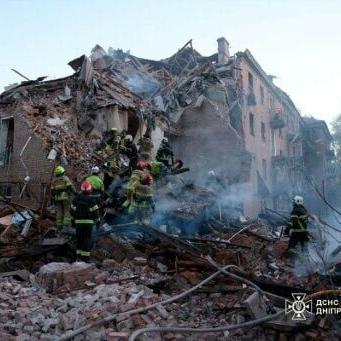
In a significant escalation of the ongoing conflict, Russia conducted a prolonged bombardment of Dnipro in Ukraine, lasting 20 hours and resulting in multiple civilian deaths, as part of intensified strikes across the region.[1][2][3] This strike in Ukraine underscores the sustained intensity of Russian military operations, with reports detailing a barrage that targeted civilian areas and infrastructure in the southeastern city.[1][2][3]
Overview of Recent Russian Strikes
Russian forces have intensified their military actions against Ukraine, with a notable focus on the city of Dnipro, where a continuous bombardment persisted for 20 hours straight.[1][2] This extended assault, described in multiple reports, highlights the scale and duration of the operation, marking it as one of the prolonged attacks in recent sequences.[1][2] According to one account published on April 25, 2026, at 18:30 UTC, the strikes in Dnipro alone resulted in significant impact, while a subsequent report from the same day at 20:00 UTC provided updated details on the event.[1][2]
Broader Russian strikes across Ukraine involved a large-scale barrage of missiles and drones, targeting multiple regions and escalating concerns over the conflict's trajectory.[3] Ukrainian officials reported that more than 660 drones and missiles were launched in this coordinated effort, affecting various parts of the country.[3] The southeastern city of Dnipro was particularly highlighted in these operations, where the attacks continued unabated for the full 20-hour period.[1][2][3] This combination of missile and drone usage represents a multifaceted approach by Russian forces, aimed at overwhelming Ukrainian defenses across a wide geographic area.[3]
The timing of these strikes, clustered around late April 2026, suggests a pattern of intensified activity, with the Dnipro bombardment serving as a centerpiece of the day's military engagements.[1][2] Reports indicate that the attacks were not isolated but part of a wider campaign that included drone attacks intensifying across Ukraine, contributing to heightened geopolitical tensions.[3] The use of over 660 projectiles in a single wave demonstrates the logistical capacity behind these operations, with implications for regional stability as the strikes hit civilian-populated zones.[3]
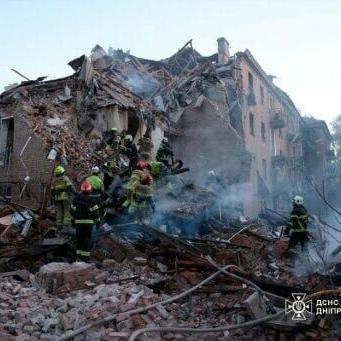
Russian forces bombard Dnipro for 20 hours, killing six civilians. — Source: gdelt
Impact on Civilian Population
The human toll from the recent Russian strikes has been severe, with varying reports detailing casualties in Dnipro and across Ukraine.[1][2][3] In Dnipro, one report confirmed that the 20-hour bombardment killed six people, emphasizing the direct impact on civilians during the prolonged assault.[1] A later update from the same event raised the death toll to eight, illustrating the evolving nature of casualty assessments in the immediate aftermath.[2]
Nationwide, Russian strikes killed at least seven people and wounded dozens more, as Ukrainian officials documented the effects of the missile and drone barrage.[3] This figure encompasses impacts from over 660 drones and missiles that targeted multiple regions, with civilians bearing the brunt in areas like Dnipro.[3] The southeastern city's exposure to continuous shelling for 20 hours amplified the risks to non-combatants, leading to these confirmed losses.[1][2][3]
The scale of the attacks—described as a large-scale operation—has raised alarms about civilian safety amid escalating drone attacks.[3] Wounded individuals numbered in the dozens, reflecting the widespread dispersal of the barrage across Ukraine's regions.[3] In Dnipro specifically, the extended duration of the pounding likely exacerbated the damage to residential and public areas, contributing to the reported deaths.[1][2] These incidents underscore the challenges faced by civilians in enduring such sustained military pressure, with official tallies providing a snapshot of the immediate human cost.[3]
Discrepancies between reports, such as the six versus eight fatalities in Dnipro, are common in fast-moving conflict zones where initial counts are revised as rescue and medical efforts progress.[1][2] Overall, the civilian casualties from this strike in Ukraine highlight the broader pattern of intensified Russian operations affecting everyday life.[3]
Ukrainian Military Responses
Ukrainian forces have mounted counteractions against Russian military assets, particularly in Crimea, where significant destructions were reported.[4] The Security Service of Ukraine targeted ships and an airfield in Sevastopol and Belbek, resulting in the destruction of three Russian warships, a fighter jet, and an air defense system.[4] Photos accompanying the reports visually confirmed the strikes on these key locations in Crimea, demonstrating the precision and effectiveness of the operations.[4]
These responses focused on degrading Russian naval and air capabilities in the region, with Sevastopol—a major Black Sea port—and Belbek airfield serving as critical hubs.[4] The downing of a fighter jet and the elimination of an air defense system represent direct blows to Russian aerial dominance, while the warships' destruction impacts their maritime presence.[4] Ukrainian actions in Crimea thus provide a retaliatory dimension to the ongoing exchanges, countering the intensified strikes elsewhere.[4]
Regional Spillover Effects
The Russian strikes have led to spillover effects beyond Ukraine's borders, with drone wreckage discovered in neighboring Romania for the third time in two days.[5] In Tulcea County, near the border with Ukraine, new debris from a drone was found following an overnight attack on Odesa Oblast the previous day.[5] This marks a repeated incident, as wreckage had already been located in the area after prior engagements.[5]
These findings in Romania highlight the cross-border implications of the intensified drone attacks, with debris landing in close proximity to Ukraine.[5] The third occurrence in such a short timeframe—spanning two days—points to the proximity of operations near the border regions, particularly after strikes on Odesa Oblast.[5] Such events raise concerns about unintended escalations involving NATO member Romania, though the wreckage is attributed to Russian drones.[5]
{IMAGE_3}
Current Situation Summary
The current situation in Ukraine reflects a cycle of intensified Russian strikes met with Ukrainian countermeasures, centered around events like the 20-hour Dnipro bombardment.[1][2][3][4] Casualties from these operations include at least six to eight deaths in Dnipro and seven nationwide, alongside dozens wounded from over 660 missiles and drones.[1][2][3] Ukrainian forces' destruction of three Russian warships, a fighter jet, and an air defense system in Crimea provides a key response element.[4]
Regional effects extend to drone wreckage in Romania, occurring three times in two days near the Ukraine border after Odesa attacks.[5] This consolidation of reports from Dnipro's prolonged assault to broader barrages and retaliations illustrates the ongoing dynamics.[1][2][3][4][5] The escalation, with its civilian toll and cross-border debris, defines the immediate conflict landscape.[3][5]
Developments to Monitor
Key developments to watch next include updates on casualty figures from Dnipro, where reports vary between six and eight deaths, and further Ukrainian operations in Crimea targeting Russian assets.[1][2][4] Continued monitoring of drone and missile barrages across regions, alongside any additional spillover incidents like those in Romania, will be critical.[3][5]