
Strike in Ukraine: Russia Conducts 1,100 Aerial Bomb Strikes Over the Past Week
Over the past week, Russia carried out 1,600 drone attacks, 1,100 aerial bomb strikes, and three missile strikes against Ukraine, as summarized by President Zelenskyy [5]. This intense wave of strike Ukraine operations underscores the ongoing military pressure on Ukrainian positions and infrastructure, with Zelenskyy's statement providing an official tally of the aerial assaults documented in recent days.
Overview of Recent Russian Strikes
President Volodymyr Zelenskyy has provided a comprehensive summary of Russian military actions targeting Ukraine over the past week, highlighting the sheer volume of operations conducted by Russian forces [5]. According to Zelenskyy, Russia executed 1,600 drone attacks, which represent a significant reliance on unmanned aerial vehicles to probe and harass Ukrainian defenses across multiple fronts [5]. These drone strikes, combined with 1,100 aerial bomb strikes, indicate a sustained campaign of bombardment aimed at degrading Ukrainian military capabilities and civilian infrastructure [5]. Additionally, three missile strikes were reported, adding a layer of precision-guided threats to the broader assault [5].
This overview from Zelenskyy serves as a key indicator of the operational tempo maintained by Russian forces, with the numbers reflecting daily accumulations over the seven-day period [5]. The 1,600 drone attacks alone suggest a high rate of launches, potentially numbering over 200 per day on average, which challenges Ukrainian air defense systems to maintain coverage over vast territories [5]. The 1,100 aerial bomb strikes further amplify the destructive potential, as these typically involve guided or unguided munitions dropped from aircraft, targeting both frontline positions and rear areas [5]. The inclusion of three missile strikes points to the use of longer-range systems, capable of striking deeper into Ukrainian-held territory [5].
Zelenskyy's video statement emphasizes the cumulative impact of these actions, framing them within the context of Russia's broader strategy in the conflict [5]. Official sources like Ukrainska Pravda have amplified this summary, ensuring that the scale of these strike Ukraine efforts is documented for international awareness [5]. The breakdown—drones for reconnaissance and loitering munitions, aerial bombs for area saturation, and missiles for high-value targets—illustrates a multi-faceted aerial doctrine employed by Russia [5]. This level of activity necessitates constant vigilance from Ukrainian forces, who must allocate resources to counter both the volume and variety of incoming threats [5].
In detailing these figures, Zelenskyy's account provides a factual baseline for assessing the week's military dynamics, where Russian air power has dominated the skies with relentless operations [5]. The precision of the numbers—1,600 drones, 1,100 bombs, three missiles—offers transparency into the intensity of engagements, allowing analysts to gauge the strain on Ukrainian interception capabilities [5]. As the primary source for this overview, Zelenskyy's summary remains the authoritative reference point for understanding the scope of Russian strikes during this period [5].
Ukrainian Defensive and Offensive Actions
Ukraine's defense forces have demonstrated proactive measures in response to Russian aggression, including targeted strikes on key Russian assets [3]. The General Staff of the Armed Forces of Ukraine reported that Ukraine’s defence forces struck an Iskander tactical group, radar systems, UAV depots, and a Russian command post [3]. These operations represent calculated counterstrikes aimed at disrupting Russian command, control, and offensive capabilities [3].
The Iskander tactical group, a critical component of Russia's missile arsenal, was among the targets hit by Ukrainian forces [3]. Iskander systems are known for their mobility and precision in delivering tactical ballistic missiles, making their neutralization a significant blow to Russian fire support [3]. Complementing this, strikes on radar systems degrade Russia's ability to detect and track Ukrainian movements, creating windows of opportunity for Ukrainian maneuvers [3]. UAV depots, storage and launch sites for Russian drones, were also engaged, directly addressing the 1,600 drone attacks summarized by Zelenskyy [3][5]. Finally, the command post strike targets the nerve center of Russian operations, potentially disrupting coordination across sectors [3].
These actions by Ukraine's General Staff highlight a strategy of attrition against high-value Russian targets [3]. By focusing on Iskander groups, radars, UAV infrastructure, and command elements, Ukrainian forces aim to mitigate the effects of the week's intense Russian aerial campaign [3][5]. The General Staff's confirmation underscores the effectiveness of Ukrainian intelligence and strike capabilities in occupied and frontline areas [3].
{IMAGE_2}
Destruction of Russian Electronic Warfare System by Lasar's Group
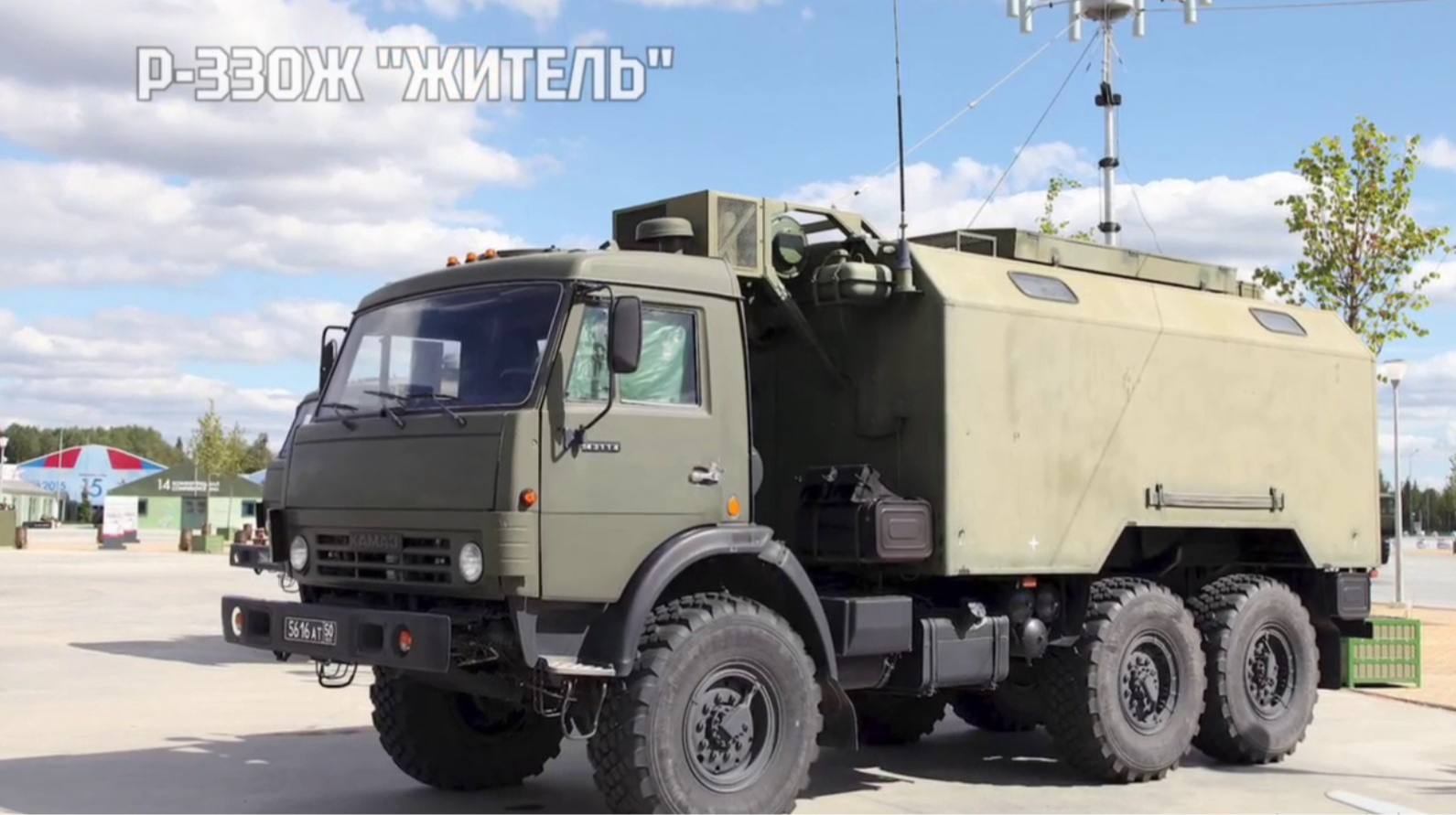
In a notable defensive success, the Ukrainian unit Lasar's Group, a special-purpose unit of Ukraine's National Guard, destroyed a rare Russian R-330Zh Zhitel electronic warfare (EW) system in Kharkiv Oblast [1]. This operation, captured in video footage reported by Ukrainska Pravda, marks a precise elimination of advanced Russian equipment designed to jam communications and disrupt Ukrainian signals [1].
The R-330Zh Zhitel is described as a rare system within Russia's EW arsenal, emphasizing its scarcity and strategic value [1]. Deployed in Kharkiv Oblast, a region that has seen frequent Russian incursions, the system's destruction hampers Moscow's ability to suppress Ukrainian drones, artillery guidance, and troop communications [1]. Lasar's Group's involvement, as a specialized National Guard unit, reflects the integration of elite forces in counter-EW operations [1].
This strike not only removes a tactical asset from the battlefield but also boosts Ukrainian morale amid the week's 1,600 drone and 1,100 aerial bomb assaults [1][5]. The video evidence provides visual confirmation of the destruction, lending credibility to claims of Ukrainian technical prowess against sophisticated Russian defenses [1]. In the broader context of strike Ukraine engagements, such targeted eliminations counterbalance Russian numerical superiority in certain domains [1].
Russian Attacks on Ukrainian Infrastructure
Russian forces have continued their pattern of targeting critical Ukrainian infrastructure, with a recent aerial bomb damaging a gas pipeline in Zaporizhzhia Oblast [2]. This incident marks the second consecutive day of attacks on facilities operated by Naftogaz Group, Ukraine's largest national oil and gas company [2]. The strike on the gas pipeline disrupts energy supply lines in a region vital for civilian and industrial needs [2].
Naftogaz Group's infrastructure, central to Ukraine's energy sector, has now faced back-to-back assaults, highlighting a deliberate focus on economic targets [2]. The aerial bomb's impact on the Zaporizhzhia pipeline could lead to interruptions in gas distribution, affecting heating and power generation amid ongoing hostilities [2]. Ukrainska Pravda's reporting details the attack's timing and location, confirming the pattern of sequential strikes [2].
These infrastructure hits compound the challenges posed by Zelenskyy's reported 1,100 aerial bomb strikes over the week [2][5]. By targeting Naftogaz assets, Russian forces aim to strain Ukraine's logistical backbone, forcing resource diversion from frontline defenses [2]. The second-day repetition underscores persistence in this tactic, with Zaporizhzhia emerging as a focal point [2].
{IMAGE_3}
Developments in Occupied Territories
Reports from areas under Russian control in Ukraine include evictions in Mariupol, additional strikes on Crimea, and instances of stolen grain [4]. The Kyiv Independent has compiled these updates, shedding light on activities in occupied zones [4]. Evictions in Mariupol, a city devastated earlier in the conflict, suggest ongoing displacement of residents under Russian administration [4]. More strikes on Crimea indicate escalating tensions in this strategic Black Sea peninsula, potentially linked to Ukrainian counteroffensives [4]. Stolen grain reports point to economic exploitation in occupied agricultural regions [4].
These developments paint a picture of instability in Russian-held territories, where civilian hardships and military actions intersect [4]. Mariupol's evictions reflect administrative pressures, while Crimea's strikes highlight its role as a logistics hub vulnerable to attack [4]. The theft of grain underscores resource extraction from Ukrainian lands [4]. In the context of the week's broader exchanges, these events from occupied Ukraine add layers to the conflict's humanitarian and strategic dimensions [4][5].
Summary of the Week's Military Exchanges
The week's military exchanges encapsulate a high-intensity period, with Zelenskyy's summary of 1,600 Russian drone attacks, 1,100 aerial bomb strikes, and three missile strikes setting the backdrop [5]. Ukraine's responses, including strikes on an Iskander tactical group, radar systems, UAV depots, and a command post, demonstrate resilience [3][5]. The destruction of the rare R-330Zh Zhitel EW system by Lasar's Group in Kharkiv further illustrates Ukrainian precision [1][3].
Russian infrastructure attacks, such as the gas pipeline strike in Zaporizhzhia for the second day, reveal targeting of Naftogaz assets [2]. Occupied territories saw evictions in Mariupol, Crimea strikes, and grain theft [4]. Collectively, these actions reflect mutual escalation, with Russia leveraging aerial volume and Ukraine focusing on quality strikes [3][5].
This recap, drawn from official sources, frames the week's dynamics as a contest of endurance [5].
What to watch next: Monitor for continued Russian drone and bomb campaigns as per Zelenskyy's summary [5], alongside Ukrainian strikes on systems like Iskander and EW assets [3], and potential further attacks on Naftogaz infrastructure [2].






