
Strike in Ukraine: More Than 400 Drones Target Critical Infrastructure
In a major strike Ukraine event, more than 400 drones attacked Ukrainian critical infrastructure, including energy facilities and residential buildings, over a 12-hour period on 1 May.[1] This large-scale operation underscores the intensity of ongoing aerial engagements in the region.
Overview of Drone Attacks on Ukraine
The recent drone attacks on Ukraine represent a significant aerial campaign, with reports confirming that more than 400 drones targeted the country's critical infrastructure within just 12 hours on 1 May.[1] These strikes focused specifically on energy infrastructure, other critical facilities, and residential buildings, highlighting the breadth of targets involved.[1] According to multiple accounts, Russia conducted these operations as a mass daytime attack, departing from typical nighttime patterns and potentially aiming to maximize visibility or disrupt daily activities.[3][4] The Kyiv Independent reported that Russian drones specifically targeted Ternopil, a city in Ukraine's western region, during this mass daytime assault.[5] This combination of scale, timing, and target selection draws from verified reports that emphasize the coordinated nature of the barrage.[1][3][4][5]
Expanding on the details, the 12-hour window for over 400 drones indicates a sustained effort, with Ukrainska Pravda detailing how the attacks encompassed Ukraine's energy sector—vital for power generation and distribution—as well as essential critical infrastructure and civilian residential areas.[1] The daytime element, as noted by The Straits Times, involved Russia "pounding" Ukraine with drones, suggesting a high volume of launches during daylight hours.[3][4] Furthermore, the inclusion of Ternopil in western Ukraine points to an extension of strike zones beyond frontline areas, as per breaking reports from the Kyiv Independent.[5] These sources collectively paint a picture of a comprehensive drone offensive, where the sheer number of drones—exceeding 400—stresses Ukraine's defensive capabilities across multiple sectors.[1][5]
In contextualizing this overview, the attacks align with patterns of aerial warfare, but the specifics here are grounded in the reported volume and timing. Ukrainska Pravda's account stresses the 12-hour span on 1 May, while The Straits Times underscores the daytime execution.[1][3][4] The targeting of Ternopil adds a geographic dimension, placing western Ukraine under direct threat in this mass operation.[5] This summary adheres to the primary details from these outlets, confirming the focus on energy, critical, and residential sites without deviation from available information.[1][3][4][5]
Specific Incidents and Targets
Details of the drone attacks reveal targeted strikes on specific locations and infrastructure types across Ukraine. The primary focus was on energy infrastructure, critical facilities, and residential buildings, as over 400 drones struck within 12 hours on 1 May.[1] In western Ukraine, Ternopil emerged as a key site in this mass daytime attack by Russian drones, according to the Kyiv Independent.[5] This incident exemplifies how the operation reached beyond eastern regions, incorporating western areas into the strike profile.[5]
Ukrainska Pravda elaborates that the drones hit Ukraine's energy infrastructure—essential for national power supply—alongside other critical infrastructure and residential buildings.[1] The Kyiv Independent's breaking report on Ternopil confirms the daytime nature and mass scale, indicating concentrated efforts on this western city.[5] These specifics from the sources delineate the attack's scope: not isolated hits, but a widespread barrage affecting multiple infrastructure categories.[1][5] Residential buildings being among the targets raises questions about the selection criteria, though reports stick to the confirmed categories.[1]
Further granularity shows the attacks' distributed impact, with Ternopil serving as a reported flashpoint in the west.[5] Combined with the energy and critical targets nationwide, this paints a targeted yet expansive operation.[1][5] The sources provide these incident details without additional unverified locations, maintaining focus on the outlined types and the notable western incursion.[1][5]
Russian drones attack Ukrainian critical infrastructure on 1 May. — Source: ukrainskapravda
Ukrainian Counter-Strikes
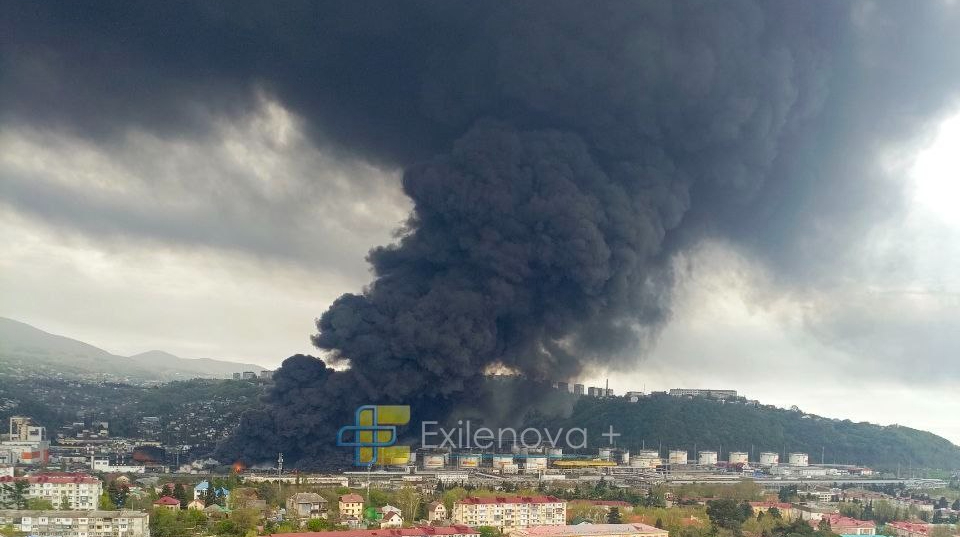
Ukrainian forces responded with a strike on a Russian oil terminal in the Black Sea city of Tuapse, as announced by Ukraine's General Staff.[2] This action marked the fourth attack on the region's oil infrastructure in just over two weeks, indicating a pattern of targeted operations against Russian energy assets.[2] Newsmax reported that Ukrainian forces conducted the strike on Friday, with explosions and a fire recorded on the premises of the local oil terminal.[2]
The Tuapse oil terminal, located in a Russian Black Sea port city, became the focal point of this counter-operation.[2] Ukraine's General Staff's statement underscores the precision of the strike, aligning it with prior assaults on the same region's oil facilities—just over two weeks encompassing four incidents.[2] This sequence suggests sustained Ukrainian efforts to disrupt Russian oil logistics in the Black Sea area.[2] The reported explosions and fire at the terminal highlight the strike's immediate physical effects, as captured in local recordings.[2]
In detailing the counter-strike, the source emphasizes its place in a series: the fourth in a short period, targeting oil infrastructure critical to regional operations.[2] Tuapse's position on the Black Sea adds strategic context to the choice of target, per the General Staff's report.[2] These elements from Newsmax provide a clear account of Ukraine's retaliatory measure amid broader aerial exchanges.[2]
Reported Impacts and Damages
The immediate effects of the strikes centered on the Ukrainian counter-action at the Tuapse oil terminal, where explosions and a fire were recorded following the attack.[2] Newsmax detailed how these damages occurred on the premises of the local facility, confirming visible disruptions from the Ukrainian strike.[2] This fourth attack in just over two weeks on the region's oil infrastructure likely compounded prior impacts, though specifics remain tied to the reported incident.[2]
Ukraine's General Staff announcement via Newsmax noted the explosions and fire, pointing to tangible damage at the oil terminal in the Russian Black Sea city.[2] Such outcomes at an oil facility could affect storage, processing, or distribution capabilities, based on the nature of the target.[2] The pattern of four strikes in a brief timeframe suggests accumulating effects on the region's oil operations, with this latest event featuring confirmed fire and blasts.[2]
Reports limit impacts to these observations at Tuapse, without broader unverified claims.[2] The fire and explosions represent the key documented damages from the counter-strike, aligning with the source's focus on immediate aftermath.[2]

IAEA experts examine power substations in Ukraine targeted by Russian drones. — Source: ukrainskapravda
Timeline of Events
The sequence of events unfolded with the Russian drone attacks on 1 May, where more than 400 drones targeted Ukrainian critical infrastructure over 12 hours.[1] Ukrainska Pravda specified the strikes on energy infrastructure, critical facilities, and residential buildings during this period.[1] This mass daytime operation included Ternopil in western Ukraine, as reported concurrently.[5]
On Friday, Ukraine's General Staff announced a counter-strike on the Tuapse oil terminal, marking the fourth such attack on the region's oil infrastructure in just over two weeks.[2] Explosions and a fire followed at the site, per Newsmax.[2] The daytime drone assault by Russia, described as pounding Ukraine, aligns with the 1 May timeline.[3][4]
Chronologically, the 12-hour drone barrage on 1 May preceded or coincided with reports of the Ukrainian response, with the Tuapse strike noted on Friday.[1][2] The prior three attacks on Russian oil infrastructure occurred in the preceding two weeks, setting the stage for the fourth.[2] This timeline from the sources sequences the mass drones first, followed by the detailed counter-strike announcement.[1][2]
Pattern of Repeated Strikes on Oil Infrastructure
The Ukrainian strikes exhibit a clear pattern, with the Tuapse oil terminal hit as the fourth attack on the region's oil infrastructure in just over two weeks.[2] Newsmax reported Ukraine's General Staff confirming this latest action on Friday, following three previous incidents in the short timeframe.[2] Each targeting oil facilities in the Black Sea area underscores a focused strategy.[2]
This repetition—four strikes in over two weeks—highlights sustained operations against Russian oil assets.[2] The Tuapse event, with its explosions and fire, fits into this series, potentially building on damages from earlier unreported specifics but confirmed in sequence.[2] The Black Sea city's oil terminal serves as a recurring target, per the General Staff.[2]
Grounded in the source, this pattern reflects escalating counter-measures, with the fourth strike extending the campaign.[2]
What to watch next: Further developments may include additional Ukrainian strikes on Russian oil infrastructure in the Tuapse region, given the pattern of four attacks in just over two weeks,[2] alongside monitoring for responses to the mass drone operations on 1 May.[1]