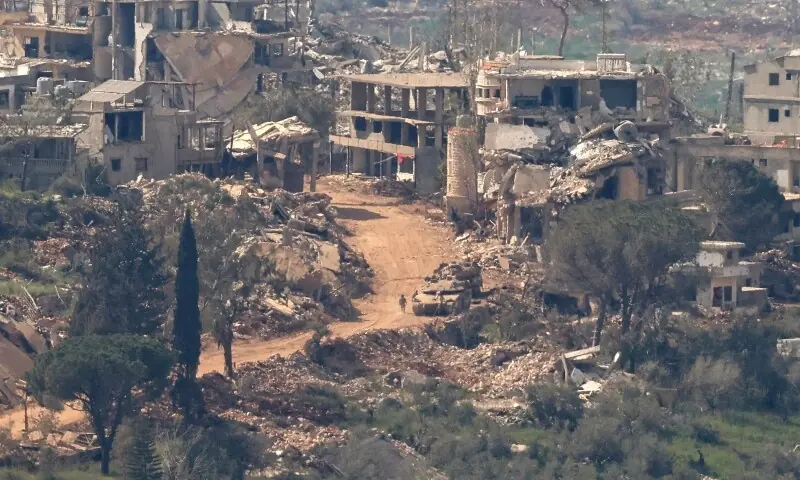

Strike in Lebanon Kills Six Despite Extended Ceasefire
Six people were killed in a strike in Lebanon carried out by Israeli forces on Saturday, despite an extended ceasefire in the ongoing war between Israel and Hezbollah.[1] Lebanon's health ministry reported the fatalities from two specific incidents in the country's south: strikes on a truck and a motorbike in the town of Yohmor al-Shaqeef in the Nabatieh district, which killed four people, and an airstrike on the town of Safad al-Battikh in the Bint Jbeil district, which resulted in two deaths.[1] These events occurred even as the ceasefire, initially brokered by the United States, was extended this week.[1][4] Israeli Prime Minister Benjamin Netanyahu had ordered the army to vigorously attack Hezbollah targets, a directive issued amid reports of ceasefire violations.[2][3] Broader data indicates that Israeli forces have repeatedly violated the ceasefire since its establishment.[4] In total, over 2,490 people have been killed in Israeli attacks in Lebanon since March 2, including five deaths reported in the past 24 hours as violations persist.[5]
This strike in Lebanon underscores the fragile nature of the truce, with Netanyahu's instructions to act forcefully against Hezbollah cited as a response to perceived breaches.[3] The health ministry's statements highlight the precise locations and methods of the attacks, providing a clear timeline of the Saturday events.[1] Meanwhile, international reporting confirms the extension of the ceasefire by three weeks, yet strikes continued.[2] The pattern of violations by Israeli forces has been noted repeatedly since the US-brokered agreement last week.[4] Casualty figures from Lebanon's health authorities and other monitors paint a picture of sustained conflict, with the recent six deaths adding to a toll that has mounted steadily since early March.[1][5]
Recent Strikes in Lebanon
The recent strikes in Lebanon that resulted in six fatalities took place on Saturday in southern towns, as detailed by Lebanon's health ministry.[1] According to a ministry statement, "Two Israeli enemy strikes, on a truck and a motorbike, in the town of Yohmor al-Shaqeef in the Nabatieh district killed four people."[1] This account specifies the targets—a truck and a motorbike—indicating targeted operations in a specific area known for its proximity to Hezbollah activity areas in southern Lebanon.[1][4] Shortly after, the ministry reported an additional "Israeli enemy airstrike on the town of Safad al-Battikh, in the Bint Jbeil district, resulted in two fatalities."[1] These locations, Yohmor al-Shaqeef and Safad al-Battikh, are both in southern Lebanon, a region central to the Israel-Hezbollah war where ceasefire terms are most tested.[1][4]
Reporting from multiple outlets confirms the six deaths from these precise incidents, emphasizing their occurrence despite the extended ceasefire.[1][4] The thenewarab noted that "Six killed in Israeli strikes on south Lebanon," directly linking the event to repeated violations of the fragile truce brokered by the US last week.[4] This strike in Lebanon fits a pattern where Israeli actions target specific vehicles and sites, potentially associated with Hezbollah movements, though the health ministry framed them as civilian-impacting strikes in populated districts.[1] The Nabatieh and Bint Jbeil districts have been focal points for such military engagements, with the ministry's rapid updates providing real-time casualty confirmation.[1]
The immediacy of these reports from Beirut-based health officials underscores the operational challenges in the south, where airstrikes and ground strikes occur amid truce negotiations.[1] Dawn's coverage, headlined "Six killed in Israeli strikes on Lebanon," integrates the ministry's details into a broader narrative of the war's continuation.[1] Similarly, the focus on south Lebanon in these accounts highlights how the strikes disrupted daily life in areas already strained by prior conflict.[4] These events represent the latest in a series of actions that test the ceasefire's enforceability, with four deaths from the initial double strike in Yohmor al-Shaqeef and two from the Safad al-Battikh airstrike forming a grim tally for a single day.[1]
Directives from Israeli Leadership
Israeli Prime Minister Benjamin Netanyahu issued direct orders to the army to intensify operations against Hezbollah in Lebanon, instructing forces to "vigorously attack" targets.[2] This directive, as reported by the BBC, came precisely as "six people were killed by strikes in Lebanon despite a ceasefire being extended by three weeks."[2] Netanyahu's command reflects a strategic posture amid the truce, prioritizing forceful responses to maintain pressure on Hezbollah positions.[2]
Anadolu Agency detailed that "Benjamin Netanyahu instructs army to act 'forcefully,' citing ceasefire violations."[3] The prime minister's statements frame the military actions as reactive, pointing to breaches of the agreement as justification for continued operations.[3] This order to strike Hezbollah targets in Lebanon aligns with the timing of the Saturday fatalities, suggesting a policy of preemptive or responsive aggression even under ceasefire terms.[2][3]
The language used—"vigorously attack" and "act forcefully"—indicates an escalation in rhetoric and potential action from Israeli leadership.[2][3] Netanyahu's instructions were publicly conveyed, positioning the army to target Hezbollah infrastructure and personnel in southern Lebanon, where the recent strikes occurred.[2][3] Coverage from both BBC and Anadolu emphasizes how these directives intersect with the extended ceasefire, creating tension between diplomatic pauses and military imperatives.[2][3] The prime minister's focus on Hezbollah as the primary adversary underscores the directives' aim to degrade the group's capabilities, regardless of truce extensions.[3]
These leadership statements provide context for the operational tempo observed in the strikes, linking high-level policy to on-the-ground results.[2] By citing violations, Netanyahu justifies the vigor of attacks, potentially signaling to both domestic audiences and Hezbollah that the ceasefire does not preclude defensive or offensive measures.[3]
{IMAGE_2}
Ceasefire Status and Violations
The ceasefire between Israel and Hezbollah, brokered by the United States last week, has been marked by repeated violations from Israeli forces.[4] Lebanon's health ministry explicitly noted that the Saturday strikes killing six occurred "despite a ceasefire that was extended this week."[1] This extension aimed to prolong the truce amid the war, yet the incidents in Yohmor al-Shaqeef and Safad al-Battikh proceeded.[1]
BBC reporting ties Netanyahu's attack orders directly to the ceasefire context: the directive was issued "despite a ceasefire being extended by three weeks."[2] This three-week prolongation highlights efforts to stabilize the front, but the prime minister's instructions to vigorously target Hezbollah suggest ongoing military readiness.[2] Anadolu corroborates this, with Netanyahu ordering strikes "citing ceasefire violations," implying reciprocal actions in response to perceived Hezbollah breaches.[3]
The thenewarab describes the ceasefire as "fragile," stating that "Israeli forces have repeatedly violated" it since inception.[4] This repeated pattern frames the recent strike in Lebanon as part of a continuum, where US-brokered terms fail to halt operations in south Lebanon.[4] Dawn's coverage reinforces the timing: strikes happened post-extension, challenging the agreement's efficacy.[1]
Across sources, the ceasefire's status emerges as tenuous—extended yet undermined by actions on both documented and alleged sides.[1][2][3][4] Violations by Israeli forces are explicitly called out, with the Nabatieh and Bint Jbeil strikes exemplifying breaches in designated hold-fire zones.[1][4] Netanyahu's forceful rhetoric further complicates enforcement, as orders to attack persist.[2][3]
Casualty Figures from Attacks
Lebanon's health ministry provided precise casualty counts from the Saturday strikes: four killed in Yohmor al-Shaqeef from attacks on a truck and motorbike, and two in Safad al-Battikh from an airstrike, totaling six deaths.[1] This official tally, issued from Beirut, details the human cost in southern districts despite the ceasefire extension.[1]
Anadolu Agency's separate reporting notes five deaths in the past 24 hours amid ongoing violations, aligning closely with but slightly varying from the ministry's six-fatality account for the strikes.[5] These figures capture the immediate toll, with the ministry's statement emphasizing "Israeli enemy strikes" as the cause.[1]
The six deaths represent a concentrated loss from targeted actions, as per health ministry updates.[1] Dawn's headline and body—"Six killed in Israeli strikes on Lebanon"—mirror this, integrating the breakdown by location.[1] The past-24-hours figure of five suggests rapid monitoring, potentially excluding confirmations or encompassing related incidents.[5]
These numbers from official Lebanese sources and Anadolu provide verifiable data points, grounding reports in ministry statements and violation trackers.[1][5] The strikes' lethality—four from vehicle targets, two from aerial—highlights precision weaponry's impact on reported civilian or suspected militant areas.[1]
{IMAGE_3}
Broader Context of the Conflict
Since March 2, Israeli attacks in Lebanon have resulted in over 2,490 deaths, according to Anadolu Agency monitoring.[5] This cumulative toll encompasses a period of intensified operations leading into the ceasefire phase, with violations continuing post-agreement.[5]
The report states "Over 2,490 killed in Lebanon in Israeli attacks since March 2," framing the conflict's scale over months.[5] The addition of five deaths in the past 24 hours ties recent events to this larger statistic, as "ceasefire violations continue."[5] This persistence indicates that the truce has not stemmed the overall casualty trend.
Southern Lebanon remains the epicenter, where strikes like those in Nabatieh and Bint Jbeil districts contribute incrementally to the total.[5] The March 2 start date marks a surge in cross-border actions tied to the Israel-Hezbollah war, predating the US-brokered ceasefire.[5]
Anadolu's figures provide a longitudinal view, showing how daily incidents—such as the recent six or five reported—accumulate amid failed de-escalation.[5] Ceasefire extensions notwithstanding, the over-2,490 deaths reflect sustained Israeli military engagement.[5]
Hezbollah Targets in the Crosshairs
Netanyahu's orders specifically directed the army to attack Hezbollah targets in Lebanon, using terms like "vigorously attack" and "act forcefully."[2][3] BBC coverage links this to the strikes killing six despite the three-week extension.[2] Anadolu notes the instructions cite violations, positioning Hezbollah as the focal point.[3]
These directives emphasize Hezbollah infrastructure and operations, aligning with the south Lebanon strike locations.[2][3] The prime minister's focus sustains pressure on the group central to the war.[1][2]
What to watch next
Continued ceasefire violations and adherence to Netanyahu's orders for attacks on Hezbollah targets could lead to further strikes in south Lebanon, as recent patterns and five deaths in the past 24 hours indicate ongoing tensions.[2][3][5]






