Strike in Lebanon Kills 14 People Despite Ceasefire
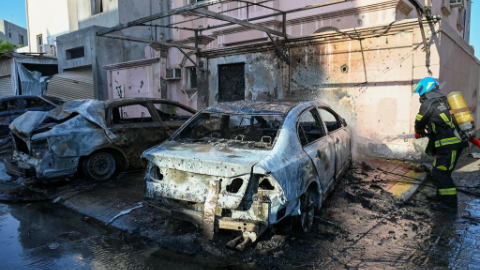
Israeli strikes in southern Lebanon killed 14 people on Sunday, despite a U.S.-brokered ceasefire agreement.[3][4] The strike in Lebanon targeted Hezbollah infrastructure in Lebanon's Bekaa Valley and southern regions, amid mutual accusations of truce violations.[1] Hezbollah has continued attacking Israeli forces and northern towns, escalating tensions.[1] The strikes have triggered mass displacement in southern Lebanon, with residents warned to leave certain areas.[2][4] Lebanon's health ministry reported 37 people wounded in the same strikes, marking the deadliest day since the ceasefire began.[3][4]
Overview of Recent Strikes
The recent military actions by the Israel Defense Forces (IDF) represent a significant escalation in the ongoing tensions along the Israel-Lebanon border, even as a fragile truce holds in name only. On Sunday, Israeli strikes targeted Hezbollah infrastructure specifically in Lebanon's Bekaa Valley and southern regions, areas long associated with the group's operations.[1] These strikes came just one day before further IDF actions reported on Monday, underscoring the rapid pace of operations despite diplomatic efforts to maintain calm.[1] Lebanon's health ministry confirmed that the Sunday strikes alone resulted in 14 deaths, highlighting the intensity of the bombardment in populated southern areas.[4]
The strikes were not isolated but part of a broader pattern of targeted operations against what Israel describes as Hezbollah targets. The IDF's focus on the Bekaa Valley, a region deep within Lebanon and a known stronghold for Hezbollah logistics and weaponry, indicates a strategic effort to degrade the group's capabilities beyond the immediate border zones.[1] Southern Lebanon, particularly areas near the Litani River, has seen repeated engagements, with these latest strikes adding to the toll.[4] The timing—mere days into an extended ceasefire—raises questions about the triggers, though both sides point fingers at the other for initiating breaches.[1]
France 24 reporting details how the strikes unfolded amid warnings from the Israeli military, which urged civilians to evacuate ahead of operations.[4] This pattern of pre-strike evacuations has become a hallmark of IDF tactics in the region, aiming to minimize civilian casualties while pressing forward with objectives.[4] The deadliness of Sunday's actions, as the highest since the ceasefire's inception, points to the challenges in enforcing de-escalation when hostilities persist on multiple fronts.[3][4]
Ceasefire and Accusations
The U.S.-brokered ceasefire agreement, extended until mid-May, was intended to pause the intense Israel-Hezbollah war that had raged for weeks prior.[1] However, the agreement has proven fragile, with both Israel and Hezbollah trading accusations of violations almost immediately after its implementation.[1][3] Lebanon's health ministry noted that Sunday's strikes marked the deadliest day since the truce came into force over a week earlier, suggesting that the ceasefire has failed to fully contain the conflict.[3]
Israel has pointed to Hezbollah's continued attacks on Israeli forces and northern towns as justification for its strikes, viewing these as direct breaches of the truce terms.[1] Hezbollah, in turn, has accused Israel of provocative actions that necessitate defensive responses.[3] Prime Minister Benjamin Netanyahu emphasized that the Israeli military is "vigorously" targeting Hezbollah, framing the strikes as necessary to counter ongoing threats.[3] This exchange of blame has created a cycle where each side claims the moral and legal high ground, complicating international mediation efforts.[1][3]
The ceasefire's structure includes provisions for a buffer zone, which Israel had occupied prior to the agreement, but reports indicate that hostilities have not abated within or beyond these lines.[4] The mutual accusations extend to specific incidents, with Hezbollah vowing to respond to what it calls Israeli "violations," while Israel maintains its operations are preemptive against imminent dangers.[3] Over a week into the truce, these developments illustrate the ceasefire's tenuous nature, reliant on restraint that neither party appears fully willing to exercise.[1][3]
Human and Civilian Impact
The human cost of the recent strikes has been stark, with Lebanon's health ministry reporting 14 killed and 37 wounded on Sunday alone.[4] These figures position the incident as the deadliest since the ceasefire began, amplifying concerns over civilian safety in southern Lebanon.[3] The strikes' focus on areas with dense populations has exacerbated vulnerabilities, leading to widespread fear and disruption.[2]
Mass displacement has followed swiftly, as the Israeli army's strikes in southern Lebanon triggered evacuations on a large scale.[2] The IDF explicitly warned residents to leave seven towns located beyond the buffer zone it occupied before the ceasefire, a directive that has prompted thousands to flee their homes.[4] This warning underscores the military's intent to create separation between civilians and Hezbollah elements, but it has also intensified the humanitarian strain in a region already battered by prior conflict.[2][4]
The wounded, numbering 37, include individuals requiring medical attention amid strained Lebanese healthcare resources.[4] Reports from the ground highlight scenes of chaos, with families packing essentials and heading north or to safer areas, echoing patterns seen throughout the recent war.[2] The combination of fatalities, injuries, and forced movements paints a picture of profound civilian hardship, directly tied to the failure of the ceasefire to shield non-combatants from the crossfire.[3][4]
Responses from Parties Involved
Israel's leadership has been unequivocal in defending the strikes, with Prime Minister Benjamin Netanyahu stating that the military is "vigorously" targeting Hezbollah to neutralize threats.[3] This rhetoric signals a commitment to offensive operations despite the ceasefire, positioning the actions as essential for national security.[3][4] The IDF's warnings to civilians in seven specific towns further demonstrate a calculated approach, balancing military necessity with efforts to limit collateral damage.[4]
Hezbollah, backed by Iran, has responded with vows to continue countering what it perceives as Israeli aggressions.[3] The group's persistence in attacking Israeli forces and northern towns has been cited by Israel as provocation, yet Hezbollah frames its actions as legitimate responses to truce violations.[1][3] Lebanon's health ministry's casualty reports have fueled Hezbollah's narrative, portraying the strikes as disproportionate and aimed at civilian areas.[3][4]
These responses from both sides reflect entrenched positions, with little indication of de-escalation. Israel's occupation of a buffer zone prior to the ceasefire provides context for its ongoing presence and operations, while Hezbollah's vows suggest sustained resistance.[4] The interplay of statements and actions continues to test the ceasefire's viability.[3]
Current Status of Hostilities
Hostilities remain active despite the ceasefire, with Israel conducting strikes against Hezbollah targets in the Bekaa Valley and southern Lebanon as recently as Monday.[1] Hezbollah's attacks on Israeli forces and northern towns persist, contributing to a volatile environment where violations are routine.[1] The truce, extended until mid-May, has not fully halted fighting, as evidenced by Sunday's deadly strikes—the worst since its start.[3]
The situation is marked by ongoing mutual accusations, with both parties alleging the other as the primary aggressor.[1][3] Israel's military warnings and evacuations indicate preparations for potential further actions, while Hezbollah's commitments to respond keep the border tense.[3][4] Over a week in, the ceasefire appears more nominal than effective, with hostilities simmering across multiple fronts.[1][3]
What to watch next: Observers will monitor whether Hezbollah escalates attacks on Israeli northern towns or if Israel expands strikes beyond the Bekaa Valley and southern regions, as both sides' vows and accusations suggest continued truce breaches.[1][3]