Strike in Lebanon: Israeli Attacks Kill 14 Despite Ceasefire
Israeli strikes in Lebanon have killed 14 people despite a ceasefire agreement, escalating tensions in a fragile truce framework.[3][5] Hezbollah is using suicide drones to challenge Israeli forces in response to perceived ceasefire violations,[1] while the group claims to have targeted an Israeli tank and bulldozer in southern Lebanon as retaliation for ceasefire breaches.[2] The Israeli army has conducted fresh attacks on Hezbollah infrastructure in southern Lebanon and the Bekaa region,[4][5] with both sides accusing each other of violating the ceasefire amid ongoing exchanges of attacks. This strike in Lebanon highlights the precarious nature of the U.S.-brokered ceasefire, extended until mid-May, as military actions persist on both fronts.[5]
Overview of the Conflict
The ongoing conflict in southern Lebanon and the Bekaa Valley reflects a cycle of retaliatory strikes despite the ceasefire agreement brokered by the United States.[5] Israeli Defense Forces (IDF) launched strikes against Hezbollah infrastructure in these regions on Monday, actions that come even as the truce remains nominally in place until mid-May.[5] This overview underscores how both parties have pointed fingers at one another for initiating breaches, with Israel reporting strikes that resulted in 14 deaths on Sunday, while Hezbollah maintains operations against Israeli positions.[5] The strikes represent a continuation of hostilities that have tested the ceasefire's durability, as military engagements persist in areas long contested between the two sides. Lebanon's reports emphasize the human cost of these operations, framing them as violations occurring under the shadow of the truce.[5] The IDF's targeting of Hezbollah sites in the Bekaa Valley and southern Lebanon illustrates a strategic focus on degrading the group's operational capabilities, even as diplomatic efforts aim to sustain the pause in broader fighting.[5] This pattern of events reveals the challenges in enforcing ceasefire terms amid entrenched positions and mutual distrust, with each side justifying its actions as defensive responses to the other's provocations.[5]
Hezbollah's Military Actions
Hezbollah has employed suicide drones to pose a significant challenge to Israeli forces operating in Lebanon, vowing to counter what it describes as Israeli ceasefire violations.[1] These drone operations mark a tactical escalation, allowing the Lebanese group to engage Israeli positions remotely and disrupt ground movements in contested southern areas.[1] In a specific instance, Hezbollah claimed to have successfully hit an Israeli tank and bulldozer in southern Lebanon, presenting the attack as direct retaliation for alleged Israeli breaches of the truce.[2] The group's statement highlights its intent to respond symmetrically to perceived aggressions, using precision strikes to target armored vehicles that support Israeli operations.[2] This approach with drones and anti-armor attacks demonstrates Hezbollah's adaptation to the ceasefire environment, maintaining pressure on Israeli forces without committing to full-scale confrontations.[1][2] The actions in southern Lebanon, a hotspot for cross-border exchanges, underscore Hezbollah's readiness to exploit any lapses in the truce, framing its operations as proportionate countermeasures.[2] By publicizing these hits, Hezbollah seeks to bolster its narrative of resistance, signaling to both domestic supporters and adversaries that it retains offensive capabilities despite the ceasefire.[1][2] The use of suicide drones, in particular, introduces a layer of asymmetry, challenging Israeli defenses in ways that ground troops alone cannot, and complicating efforts to stabilize the front line.[1]
Israeli Strikes and Targets
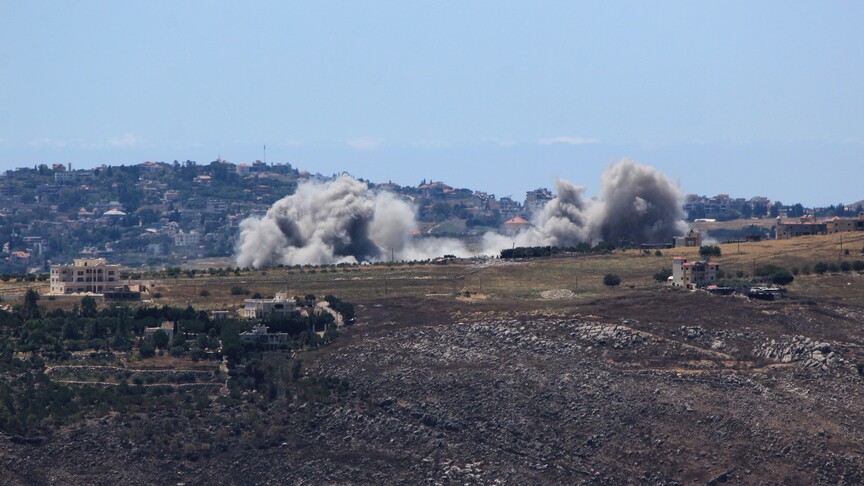
The Israeli army has launched fresh attacks in Lebanon, described by some reports as a new ceasefire violation, specifically targeting Hezbollah infrastructure in southern Lebanon and the Bekaa region.[4] These operations by the IDF focus on dismantling the group's logistical and operational networks in these key areas, which have served as bases for past attacks against Israel.[4][5] On Monday, strikes hit Hezbollah targets across the Bekaa Valley and southern regions, occurring against the backdrop of the U.S.-brokered ceasefire extended until mid-May.[5] Israel's military rationale centers on neutralizing threats posed by Hezbollah's persistent activities, including strikes on Israeli forces and northern towns.[5] The precision of these attacks aims to limit collateral damage while achieving strategic degradation of enemy assets, though the timing raises questions about adherence to truce terms.[4][5] In the Bekaa region, known for its Hezbollah strongholds, the IDF's actions disrupt supply lines and command structures, reflecting a proactive stance to prevent resurgence.[5] Southern Lebanon, similarly, sees repeated targeting due to its proximity to the border and history of launches against Israel.[4] These strikes follow a pattern where Israel responds to Hezbollah incursions, positioning its operations as necessary enforcements of the ceasefire rather than initiations of conflict.[5] The focus on infrastructure—such as storage sites, launch positions, and movement hubs—indicates a calculated effort to erode Hezbollah's long-term capabilities without broadening the engagement.[4][5]
Reported Casualties and Violations
Lebanon has reported that Israeli strikes killed 14 people despite the truce, attributing the deaths to actions carried out on Sunday.[3][5] These casualties occurred amid a flurry of mutual accusations, with both Israel and Hezbollah claiming the other as the primary violator of the ceasefire agreement.[5] Lebanon's account frames the strikes as a direct breach, highlighting the immediate human toll in regions already strained by prolonged conflict.[3] The IDF's operations, which resulted in these fatalities, targeted Hezbollah positions but have drawn criticism for proceeding under truce conditions.[5] Hezbollah, in turn, continues its attacks on Israeli forces and northern towns, contributing to the cycle of violations that both sides decry.[5] This reciprocal blaming complicates accountability, as each party documents the other's actions to justify its own.[5] The 14 deaths serve as a stark metric of the ceasefire's fragility, underscoring how localized engagements can lead to significant losses even during supposed halts.[3][5] Reports from Lebanon emphasize the civilian and militant impacts in southern areas and the Bekaa, where strikes have penetrated despite diplomatic assurances.[3] The ongoing exchanges reveal enforcement gaps, with neither side fully disengaging, perpetuating a state of low-intensity conflict.[5]
Current Tensions
Current tensions between Israel and Hezbollah manifest in a series of drone challenges and retaliatory strikes, with Hezbollah vowing responses to Israeli violations.[1] The group's use of suicide drones against Israeli forces exemplifies this dynamic, maintaining offensive pressure in southern Lebanon.[1] Hezbollah's claimed hits on an Israeli tank and bulldozer further illustrate the tit-for-tat nature of engagements, directly tied to accusations of ceasefire breaches.[2] Israel's fresh attacks on Hezbollah infrastructure in southern Lebanon and the Bekaa region counter these moves, escalating the risk of wider confrontation.[4] Both sides' militaries operate under the ceasefire's constraints but interpret violations broadly, leading to persistent exchanges.[1][2][4] This environment of mutual suspicion hampers de-escalation, as each action prompts a response, straining the U.S.-brokered truce.[4] Hezbollah's drone tactics challenge Israeli dominance in the airspace, while IDF strikes aim to reassert control over ground threats.[1][5] The Bekaa and southern fronts remain flashpoints, where infrastructure targeting and vehicle strikes symbolize unresolved grievances.[2][4] Overall, these tensions signal a ceasefire more honored in rhetoric than practice, with both parties poised for further action.[1][2][4]
What to watch next: Monitor for additional IDF strikes on Hezbollah infrastructure and potential Hezbollah drone responses, as both sides continue accusing each other of violations amid the extended ceasefire.[5]