
Strike in Lebanon: French Soldier Killed in UNIFIL Attack Following Ceasefire
A French soldier serving with the UN peacekeeping force UNIFIL was killed in an attack in southern Lebanon, shortly after a ceasefire between Israel and Lebanon.[3] This strike in Lebanon has heightened tensions in the region, coinciding with Israel's first military operations since the truce took effect, including airstrikes and artillery bombardments aimed at enforcing a buffer zone.[1] The incident underscores the fragile nature of the ceasefire, drawing immediate international attention and responses from key figures and organizations involved.[2]
Overview of the Incident
The attack that claimed the life of a French soldier occurred on Saturday in southern Lebanon, marking a violent breach just days after a 10-day ceasefire between Israel and Lebanon came into effect.[3] This ceasefire was intended to halt hostilities following prolonged conflict, yet the strike in Lebanon demonstrated the challenges in maintaining stability along the volatile border.[1] Israel's military actions on the same day represented the first airstrikes and artillery bombardments since the truce, explicitly aimed at enforcing a "Yellow Line" to isolate 55 Lebanese villages from potential threats.[1]
The timing of the incident is particularly significant, as it unfolded mere days into the ceasefire period, raising questions about adherence to the agreement by all parties.[3] UNIFIL, the United Nations Interim Force in Lebanon, has been a longstanding presence in the area since 1978, tasked with monitoring the Blue Line—the de facto border between Israel and Lebanon—and ensuring compliance with Security Council resolutions.[5] The French soldier's death in this context highlights the risks faced by peacekeepers amid ongoing regional instability, with the attack occurring concurrently with Israel's enforcement measures.[1] French President Emmanuel Macron quickly attributed responsibility to Hezbollah, while the group rejected any involvement, complicating the narrative around the event.[2] These developments collectively paint a picture of a ceasefire under immediate strain, where military actions and an unexplained attack have converged to test the truce's viability.[1][3]
Details of the Attack
The attack targeted a UN mission in southern Lebanon, resulting in the death of a French soldier serving with UNIFIL on Saturday, October 18.[4][5] Details emerging from UNIFIL indicate that the soldier was engaged in routine peacekeeping duties when the incident occurred, though the precise circumstances and perpetrators remain under investigation.[5] UNIFIL deputy spokesperson Tilak Pokharel provided insights to FRANCE 24, outlining what is currently known about the attack, including its location and the immediate aftermath.[5]
French President Emmanuel Macron condemned the "unacceptable attack" in direct communications with Lebanese President Joseph Aoun and Prime Minister Nawaf Salam, signaling France's strong diplomatic response.[4] Macron further blamed the Iran-backed Hezbollah for the incident, a charge the group firmly denied, stating they had "no connection" to the event.[2] This exchange of accusations has added layers to the investigation, as Hezbollah's denial leaves open questions about responsibility amid the complex web of actors in southern Lebanon.[2] The soldier's death represents a stark reminder of the dangers confronting international peacekeepers, particularly in areas prone to sporadic violence despite ceasefire agreements.[4][5] Initial reports confirm the attack's lethality, with no further casualties detailed at this stage, but UNIFIL's ongoing efforts to clarify the facts are expected to provide more context.[5]
Israel's Military Actions
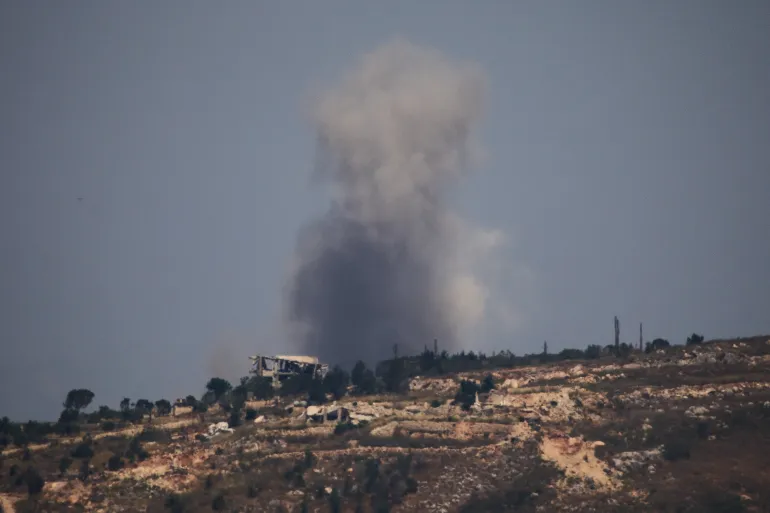
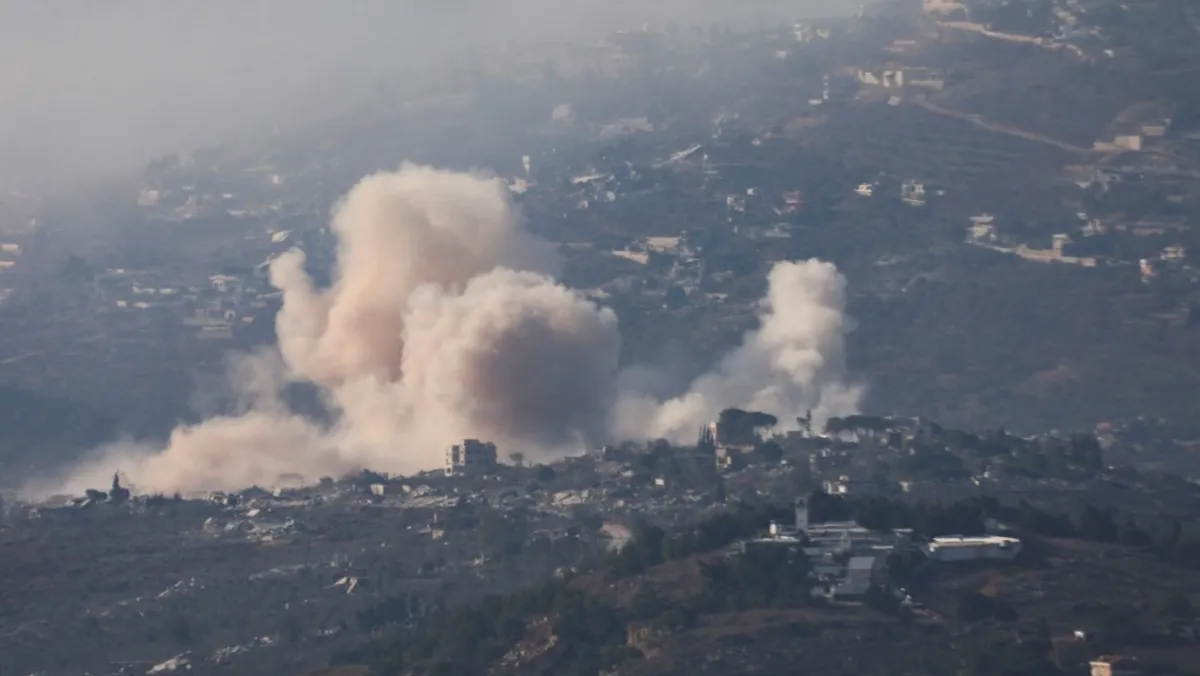
Israel's military launched a series of airstrikes and artillery bombardments on southern Lebanon on Saturday, constituting the first such operations since the 10-day ceasefire took effect.[1] The stated objective was to enforce a "Yellow Line," a demarcation intended to isolate 55 Lebanese villages, thereby creating a buffer against perceived threats from the area.[1] This move reflects Israel's strategic approach to securing its northern border, drawing on lessons from prior escalations in the region.[1]
The operations were described as targeted, focusing on positions that Israeli officials deemed necessary for maintaining the ceasefire's integrity.[1] By initiating these strikes in Lebanon immediately following the truce, Israel signaled its intent to proactively address any violations or risks, even as the peacekeeping framework involving UNIFIL remained in place.[1] The "Yellow Line" enforcement is positioned as a defensive measure, aimed at preventing incursions or buildups that could undermine the fragile peace.[1] This action occurred against the backdrop of the French soldier's death, though no direct linkage has been established in available reports.[1] Israel's decision to proceed with these bombardments underscores the asymmetry in post-ceasefire dynamics, where one party's enforcement efforts coincide with an unrelated attack on international forces.[1]
International Reactions
International responses to the strike in Lebanon have been swift and pointed, with French President Emmanuel Macron at the forefront.[2] Macron explicitly blamed Hezbollah for the attack that killed the French peacekeeper, framing it as a direct challenge to stability efforts.[2] In parallel diplomatic outreach, he condemned the incident as "unacceptable" during calls with Lebanese President Joseph Aoun and Prime Minister Nawaf Salam, urging accountability and restraint.[4]
Hezbollah's denial of involvement—"any connection" to the attack—has fueled a public back-and-forth, highlighting divisions in interpreting the event.[2] These statements from Macron represent France's vested interest, given its troop contributions to UNIFIL and historical ties to Lebanon.[4] The reactions also reflect broader concerns over the ceasefire's enforcement, as Israel's concurrent strikes add to the diplomatic calculus.[2][4] No immediate statements from Israeli or Lebanese leadership on the peacekeeper's death were detailed, but the collective international focus remains on de-escalation and fact-finding.[4]
UNIFIL's Involvement
UNIFIL, the United Nations peacekeeping force in Lebanon, plays a critical role in monitoring the Israel-Lebanon border and facilitating disengagement between conflicting parties.[5] The force has been deployed since 1978, with a mandate renewed periodically by the UN Security Council to oversee the cessation of hostilities and support Lebanese armed forces in the south.[5] In the wake of the attack that killed the French soldier on Saturday, October 18, UNIFIL has taken the lead in shedding light on the circumstances.[5]
Deputy spokesperson Tilak Pokharel appeared on FRANCE 24 to explain the known details, including the soldier's activities at the time and preliminary assessments of responsibility.[5] This transparency effort is part of UNIFIL's standard protocol for incidents involving its personnel, aiming to inform the international community while investigations proceed.[5] The peacekeeping mission's presence in southern Lebanon positions it uniquely to observe and report on violations, including potential links to nearby military actions.[5] France's significant contingent within UNIFIL amplifies the incident's impact on the force's operations, prompting a review of security measures amid post-ceasefire tensions.[5]
What to watch next: UNIFIL's ongoing investigation into the attack, as detailed by spokesperson Tilak Pokharel, will likely provide further clarity on responsibility, while responses to Israel's "Yellow Line" enforcement and Hezbollah's denial could influence the ceasefire's extension beyond its initial 10 days.[1][2][5]