
Strike in Lebanon: French Soldier Killed in Hezbollah Ambush
A French soldier was killed in a Hezbollah ambush in southern Lebanon, straining the 10-day Israel-Lebanon ceasefire agreement.[1] This strike in Lebanon has heightened tensions in the region, drawing international attention amid ongoing violence that includes attacks on peacekeepers and military personnel.
Recent Attacks and Incidents
The recent strike in Lebanon that resulted in the death of a French soldier underscores the precarious security situation in southern Lebanon, where ambushes and explosive devices continue to target forces involved in peacekeeping and military operations.[1] According to reports, the ambush was allegedly carried out by Hezbollah, employing what has been described as a "human shield" strategy, which involves positioning military actions in densely populated civilian areas to complicate responses from opposing forces.[1] This incident occurred against the backdrop of a fragile 10-day ceasefire between Israel and Lebanon, highlighting how such attacks directly challenge the agreement's stability.[1]
In the broader timeline of events, the past 24 hours have seen additional casualties among Israeli forces. Two Israeli soldiers were killed due to improvised explosive devices (IEDs) in southern Lebanon.[4] The Israeli army has voiced significant concern over the proliferation of these devices in the area, indicating a pattern of asymmetric warfare tactics that have proven deadly for ground troops.[4] These incidents form part of a series of attacks that have persisted even after the ceasefire was established, suggesting that enforcement mechanisms remain weak.
The ambush on the French soldier, part of UN peacekeeping efforts, adds a multinational dimension to the violence. Peacekeepers have long operated in southern Lebanon under UNIFIL mandates, monitoring ceasefire lines and preventing escalations. However, this strike in Lebanon demonstrates vulnerabilities in these positions, particularly when militant groups like Hezbollah utilize local populations as cover for operations.[1] The sequence of events—beginning with the French soldier's death followed closely by the IED attacks on Israeli troops—paints a picture of coordinated or opportunistic strikes aimed at undermining the ceasefire's early days.[1][4]
Details from the ambush reveal tactical elements, such as the use of bombs detonated in proximity to civilian areas, which not only caused the soldier's death but also drew French President Emmanuel Macron into the discourse, as his administration assesses implications for European troop commitments.[1] Meanwhile, the IED incidents against Israeli soldiers reflect a sustained threat from hidden explosives, with the army noting an unusual number in recent operations.[4] This combination of ambush and bomb tactics has created a volatile environment, where routine patrols and advances are met with lethal surprises.
International Response
{IMAGE_2}
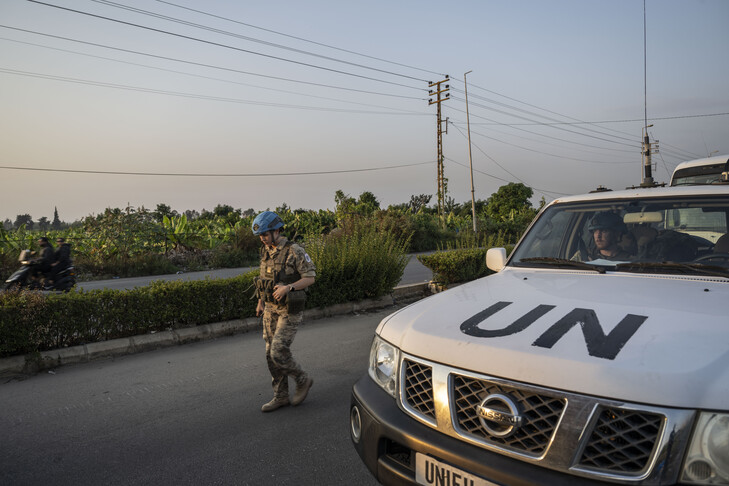
The European Union has issued a strong condemnation of the deadly attack on UN peacekeepers in Lebanon, specifically referencing the incident that killed the French soldier.[2] In a statement, an EU spokesperson emphasized the need for a "rapid, thorough, and independent" investigation to ensure accountability for those responsible.[2] This response aligns with broader international calls for de-escalation, positioning the EU as a key voice advocating for transparency in the wake of the strike in Lebanon.
The EU's position reflects concerns over the safety of multinational forces deployed under UN auspices. UNIFIL, which includes troops from various European nations, has been a fixture in southern Lebanon since 1978, tasked with maintaining peace along the Blue Line border. The bloc's demand for an independent probe underscores the gravity of targeting peacekeepers, who are meant to remain neutral observers.[2] By calling for rapidity in the investigation, the EU signals urgency in preventing further incidents that could erode support for the mission.
This condemnation comes at a time when the 10-day ceasefire is under strain, and the EU's involvement highlights diplomatic pressures on all parties. The spokesperson's remarks stress accountability, implying potential consequences such as sanctions or referrals to international bodies if perpetrators are identified.[2] France, as the affected nation, has seen its leadership, including Macron, drawn into heightened scrutiny of Hezbollah's actions.[1] The EU's unified stance aims to bolster peacekeeping efforts and reinforce the ceasefire's framework.
Hezbollah’s Human Shield Strategy
Reports indicate that Hezbollah's alleged use of a "human shield" strategy played a central role in the ambush that killed the French soldier.[1] This approach involves embedding military operations within civilian populations, complicating any retaliatory actions and potentially deterring strikes due to collateral risks.[1] In the context of southern Lebanon, where communities are densely packed, such tactics have been linked to the bomb detonation during the ambush.[1]
This strategy has drawn international commentary, including from French leadership, as it directly implicates the safety of UN forces.[1] The placement of ambushes and explosives in populated zones not only targets military personnel but also leverages civilian presence to shield militants.[1] Analysts note that this has been a recurring element in Hezbollah's operations, contributing to the strain on the ceasefire as it blurs lines between combatants and non-combatants.[1]
The implications for peacekeeping are profound, as UNIFIL troops navigate these environments daily. The strategy's effectiveness lies in its ability to provoke responses that risk civilian lives, thereby garnering sympathy or condemnation for adversaries.[1] With Macron now involved, discussions may intensify around adjusting troop deployments or enhancing protections against such tactics.
Civilian Impact and Behavior
{IMAGE_3}
Residents in southern Lebanon have demonstrated remarkable resolve by refusing to evacuate despite repeated Israeli strikes that have killed hundreds of civilians.[3] Prior to the ceasefire, these attacks targeted areas across the south, yet many locals chose to remain, citing attachments to their homes and communities.[3] This steadfastness persists even as the region grapples with the aftermath of violence.
The refusal to flee underscores the human cost of the conflict, with hundreds of civilian deaths reported from Israeli strikes before the truce took effect.[3] Sources describe these strikes as part of intensified operations, leaving devastation in their wake, yet residents' decisions highlight deep-rooted ties to the land amid ongoing threats.[3]
Complementing this, broader reports indicate that thousands of civilians have died in Israel's attacks on Lebanon, framed within a "widely condemned shadow war."[5] These casualties are seen as collateral damage in a conflict viewed by some as a precursor to territorial ambitions, including a potential land grab and permanent security presence.[5] The civilian toll has mounted significantly, with the ceasefire offering a temporary respite but not erasing the scale of loss.
Behaviorally, the choice not to evacuate reflects a mix of defiance, lack of alternatives, and Hezbollah's reported encouragement to stay as human shields.[1][3] Families have endured bombings, infrastructure destruction, and displacement pressures, yet many hold firm.[3] This dynamic complicates military operations and amplifies the humanitarian crisis.
Israeli Soldier Casualties
In a stark illustration of the dangers facing ground forces, two Israeli soldiers were killed within the last 24 hours by improvised explosive devices in southern Lebanon.[4] The Israeli army has highlighted growing concerns over the prevalence of these IEDs, which have become a primary threat in the terrain.[4]
These deaths occurred amid patrols and operations in the south, where hidden bombs exploit the landscape's features for maximum lethality.[4] The rapid succession of casualties in just 24 hours prompted official statements expressing alarm at the tactic's frequency.[4] This follows patterns seen in previous engagements, where IEDs have inflicted steady attrition on advancing troops.
The army's concern points to intelligence and operational challenges in detecting and neutralizing these devices.[4] With the ceasefire in place, such incidents suggest incomplete demilitarization or lingering militant activity.[4] The losses add to the pressure on Israeli command to adapt strategies against this persistent hazard.
Ceasefire Status and Context
The 10-day Israel-Lebanon ceasefire, intended to halt hostilities, is now visibly strained by the French soldier's death in the Hezbollah ambush.[1] This agreement, reached recently, aimed to pause a cycle of attacks, but events like the ambush and IED blasts indicate fragility.[1][5]
Israel's prior attacks on Lebanon, resulting in thousands of civilian deaths, are regarded as part of a "shadow war" that preceded the truce.[5] Critics view these as steps toward a new land grab and enduring security footprint.[5] The ceasefire's context includes this history, where strikes killed hundreds before the pause.[3][5]
Recent incidents, including the two Israeli soldier deaths, further test the agreement's viability.[4] While providing a brief halt, the truce faces challenges from non-state actors like Hezbollah.[1] The overall status remains tenuous, with potential for collapse if attacks continue.
What to watch next: Monitor the EU-called investigation into the peacekeeper attack for findings on accountability,[2] alongside developments in the 10-day ceasefire amid ongoing IED threats and ambush risks in southern Lebanon.[1][4][5]