Strike in Lebanon Causes Mild Earthquake in Northern Israel
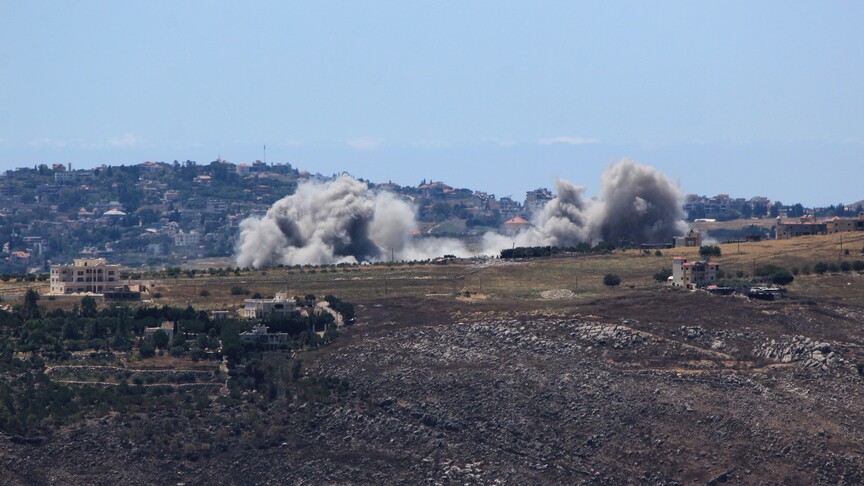
A large explosion in southern Lebanon, carried out by the Israeli army, caused a mild earthquake in northern Israel.[1] This strike in Lebanon highlights the scale of recent military actions amid broader operations targeting Hezbollah infrastructure, with Israeli strikes in Lebanon killing 2,534 people and wounding 7,863 since March, according to the Lebanese health ministry.[3] Residents in southern Lebanon continue to face significant physical and mental tolls from 46 days of attacks, marked by widespread destruction.[4] The Israeli Defense Forces (IDF) have also dismantled the largest Hezbollah tunnel network in the area, intensifying efforts against militant capabilities.[2]
Explosion and Its Effects
The explosion in southern Lebanon, executed by the Israeli army, generated seismic activity detectable in northern Israel.[1] Reports from Channel 12 indicate that a mild earthquake was recorded in northern Israel directly following the blast.[1] This event underscores the magnitude of the detonation, as the force of the explosion propagated across the border, registering on seismographs typically used to monitor natural tremors.[1]
Details from the incident reveal that the explosion's impact extended beyond the immediate target zone, affecting areas in northern Israel with vibrations strong enough to be classified as a mild earthquake.[1] Such occurrences are rare in the context of military operations but illustrate the power unleashed by the Israeli army's actions in southern Lebanon.[1] The precise location and munitions involved were not specified in initial reports, but the seismic effect points to a substantial ordnance deployment aimed at high-value targets.[1]
Eyewitness accounts and monitoring data captured by Channel 12 highlight how the blast's shockwave traversed the terrain separating southern Lebanon from northern Israel, demonstrating the geographical proximity and the interconnected nature of the border region.[1] This mild earthquake served as an immediate consequence, alerting residents and authorities in Israel to the intensity of the ongoing strike in Lebanon.[1] No injuries or structural damage from the seismic event itself were reported in northern Israel, focusing attention back on the originating explosion's strategic purpose.[1]
The ripple effects of this explosion align with patterns observed in previous large-scale detonations during conflicts in the region, where powerful blasts can mimic natural seismic activity.[1] Channel 12's coverage emphasized the direct link between the Israeli army's operation and the earthquake readings, providing real-time confirmation of the event's scale.[1] As investigations continue, this incident remains a key marker of the tactical dynamics at play along the Lebanon-Israel frontier.[1]
Military Operations in Southern Lebanon
The IDF has conducted operations resulting in the dismantling of the largest Hezbollah tunnel network discovered in southern Lebanon.[2] This achievement represents a significant blow to Hezbollah's underground infrastructure, which has long been a focus of Israeli military efforts to neutralize cross-border threats.[2]
Video footage shared by the Jerusalem Post captures the IDF's methodical process in exposing and destroying the extensive tunnel system.[2] These tunnels, described as the largest of their kind in the area, were likely designed for militant movement, storage, and potential incursions, though specific dimensions or contents were not detailed in reports.[2] The operation's success highlights the IDF's technical capabilities in detecting and neutralizing such subterranean networks amid heightened tensions.[2]
Southern Lebanon has been a hotspot for Hezbollah activities, and the tunnel network's scale indicates substantial investment by the group in fortified positions.[2] By dismantling this infrastructure, the IDF aimed to degrade Hezbollah's operational capacity, preventing future threats from emerging from these hidden passages.[2] The visual documentation provided by the IDF, as featured in the Jerusalem Post, shows engineering teams at work, underscoring the precision required for such demolitions.[2]
This development fits into a broader pattern of Israeli military actions targeting Hezbollah assets in southern Lebanon, where underground facilities have posed persistent challenges.[2] The complete dismantling of the network marks a milestone, potentially disrupting supply lines and command structures for the militant group.[2] Ongoing monitoring by the IDF suggests that further discoveries and operations may follow, as intelligence efforts continue to map remaining threats.[2]
Casualties from Ongoing Attacks
Israeli strikes on Lebanon have resulted in 2,534 deaths and 7,863 injuries since March 2, according to the latest tally from the Lebanese health ministry.[3] These figures, sourced directly from Lebanon's Ministry of Public Health, reflect the cumulative impact of airstrikes and related operations across the country.[3]
The death toll's rise to 2,534 indicates a sustained escalation in the intensity and frequency of strikes, with the wounded count of 7,863 highlighting the broad human cost borne by civilians and others in affected areas.[3] Lebanese health authorities have been tracking these numbers meticulously, providing updates that capture the toll from operations beginning in early March.[3] This data encompasses casualties from various strike locations, predominantly in southern Lebanon where military targets are concentrated.[3]
The ministry's reporting emphasizes the strain on Lebanon's medical infrastructure, as thousands require treatment for injuries sustained in these attacks.[3] Since the specified start date of March 2, the progression of these figures has mirrored the pace of military engagements, with each update revealing incremental increases.[3] The Lebanese health ministry's role as the primary source lends official weight to these statistics, used widely in regional assessments.[3]
Comparisons with prior tallies show a clear upward trajectory, driven by continued Israeli operations against Hezbollah positions.[3] These casualties underscore the human dimension of the conflict, with the wounded often facing long-term recovery challenges amid disrupted services.[3] As the Lebanese Ministry of Public Health continues its documentation, future reports will likely provide further granularity on demographics and locations.[3]
Human and Physical Impact on Residents
Forty-six days of continuous attacks by Israeli forces have inflicted a profound physical and mental toll on residents of southern Lebanon.[4] In areas like Sour, the landscape bears stark evidence of the destruction, with collapsed buildings reduced to rubble and deep craters scarring the ground from bomb impacts.[4]
Médecins Sans Frontières (MSF) reports describe scenes of abandoned cars punctured by shrapnel, symbolizing the chaos that prompted mass displacement.[4] While most residents fled during the escalation, a portion chose to remain, facing daily risks amid the ongoing violence.[4] This 46-day period, as detailed in MSF's account from April 27, 2026, has left communities grappling with both tangible destruction and psychological strain.[4]
The physical alterations to the environment—rubble-strewn streets, bomb craters meters deep, and shrapnel-damaged vehicles—have rendered parts of southern Lebanon nearly uninhabitable.[4] Residents who stayed behind endure the mental burden of constant threat, compounded by the loss of homes and livelihoods.[4] MSF's on-the-ground observations, voiced through field coordinator Leila Rafei, capture the heartbreak pervading the region, where "everyone is heartbroken."[4]
The dual toll—physical devastation and mental exhaustion—has deepened vulnerabilities for those unable or unwilling to evacuate.[4] Sour's transformation into a zone of craters and ruins exemplifies the broader impact across southern Lebanon, where infrastructure vital to daily life lies in ruins.[4] As attacks persist, the human cost continues to mount, with remaining populations navigating a landscape forever changed by the strikes.[4]
What to watch next: Further developments in IDF operations against Hezbollah tunnel networks could yield additional dismantlements,[2] while updates from the Lebanese health ministry may revise casualty figures amid ongoing strikes.[3] The humanitarian situation in southern Lebanon, including resident displacement and infrastructure recovery, remains critical after 46 days of attacks.[4]