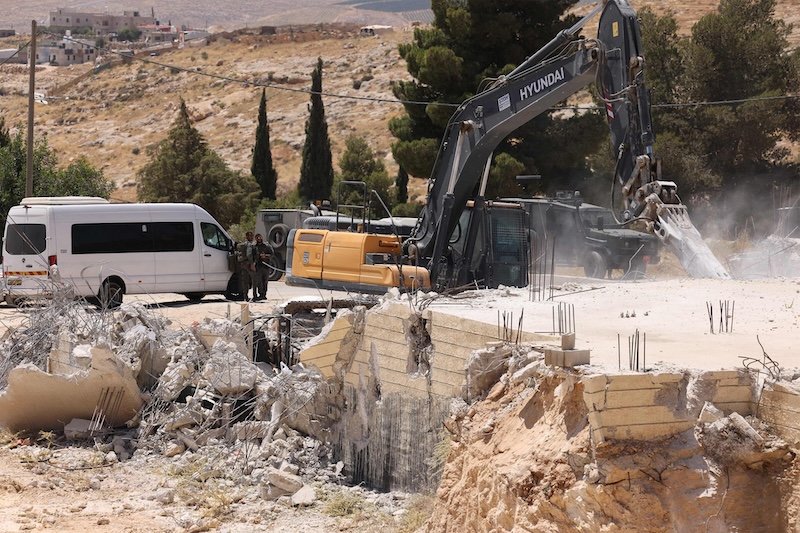
Strike in Lebanon: 20 killed in Israeli attacks over the last 24 hours.
In a significant escalation amid ongoing tensions, 20 people were killed in Israeli attacks in Lebanon over the last 24 hours, pushing the total death toll nearing 2,700.[2] Sirens sounded in northern Israel as the army intercepted aerial targets, following Hezbollah's announcement of 11 operations against Israeli forces.[1] Despite a ceasefire in effect, at least 7 people were killed in new Israeli attacks in southern Lebanon, with additional strikes claiming at least 8 more lives in the region.[3][4] Israel has also issued evacuation warnings for 11 villages in southern Lebanon, as military actions persist.[5]
Overview of Recent Military Actions
The latest military exchanges between Israel and Hezbollah have intensified, marked by immediate defensive responses on the Israeli side. Sirens echoed across northern Israel, prompting alerts as the Israeli army reported successful interceptions of aerial targets.[1] This development occurred in direct sequence to Hezbollah's claim of conducting 11 separate operations targeting Israeli forces positioned in southern Lebanon.[1] These operations underscore the persistent nature of cross-border engagements, where Hezbollah's activities provoke rapid Israeli countermeasures.
To contextualize this pattern, the sounding of sirens represents a standard protocol in Israel for potential inbound threats, often linked to rocket or drone incursions from Lebanon.[1] The army's interception efforts highlight the operational readiness along the northern frontier, where such incidents have become routine amid broader hostilities. Hezbollah's 11 operations, as stated, indicate a coordinated series of actions aimed at Israeli military positions, potentially involving artillery, rockets, or other munitions, though specifics on the nature of these operations remain tied to the group's own reporting.[1]
This overview of recent military actions provides essential context for the volatile security environment. The interplay between offensive initiatives from Hezbollah and defensive interceptions by Israel illustrates a cycle of retaliation that sustains heightened alert levels. Northern Israel's exposure to these threats necessitates continuous monitoring and aerial defense activations, contributing to the overall strain on regional stability.[1] As these events unfold in real time, they reflect the immediate tactical dynamics driving the conflict's momentum.
Furthermore, the timing of these sirens and interceptions immediately following Hezbollah's operations suggests a tit-for-tat escalation, where each side's actions prompt the other's response. This sequence not only heightens risks for civilians in proximity but also tests the efficacy of existing defense systems. The Israeli army's statement on interceptions confirms the tangible nature of the threats, reinforcing the operational intensity in the area.[1]

Israeli attacks in Lebanon kill 20 people in the last 24 hours. — Source: anadolu
Casualties and Injuries Reported
The human cost of the recent Israeli attacks in Lebanon has been starkly evident, with 20 individuals killed in the last 24 hours alone.[2] Lebanon's Health Ministry has reported that this latest toll contributes to a cumulative death count approaching 2,700, a figure that encapsulates the protracted impact of the conflict.[2] In addition to the fatalities, 46 people were injured in these recent strikes, elevating the total number of injuries to 8,229.[2]
These casualty figures, drawn directly from official health reporting, paint a picture of widespread devastation across affected areas.[2] The rapid accumulation of deaths and injuries within a single day underscores the intensity of the strikes, which have targeted populated regions despite mitigation efforts. The Health Ministry's data serves as a critical barometer for the conflict's toll, tracking both immediate losses and long-term medical burdens on Lebanon's infrastructure.
Analyzing the reported numbers, the jump to nearly 2,700 deaths signals a milestone in the conflict's lethality, with injuries compounding the crisis through overwhelmed healthcare facilities.[2] Each increment in these statistics represents lives lost and families disrupted, highlighting the urgent humanitarian dimensions. The 46 new injuries from the past day alone indicate the breadth of impact, likely including shrapnel wounds, blast injuries, and other trauma common in aerial bombardments.[2]
This section's focus on casualties emphasizes the disproportionate effects on civilian populations, as aggregated by health authorities. The progression from prior totals to these updated figures demonstrates the unrelenting pace of violence, where daily strikes erode community resilience.[2] Official tallies like these provide verifiable insights into the scale, enabling a grounded assessment of the conflict's human impact without speculation.
New Israeli Attacks Claiming Seven Lives
Among the specific strike incidents in southern Lebanon, new Israeli attacks resulted in at least seven deaths.[3] These strikes were carried out by the Israeli army, which has maintained a pattern of targeting southern Lebanese towns even as a ceasefire remains in effect since April 17.[3] The continuation of such operations points to selective enforcement or perceived violations prompting responses.
Detailing this incident, the attacks focused on areas in southern Lebanon, a hotspot for military engagements due to its proximity to the border and Hezbollah presence.[3] The death toll of at least seven reflects the precision and impact of the strikes, affecting individuals in the targeted locales. The ceasefire, established on April 17, was intended to halt hostilities, yet these actions indicate ongoing military objectives overriding temporary halts.[3]
The pattern here reveals a disconnect between diplomatic agreements and field-level realities. Israeli forces' persistence in striking towns suggests intelligence-driven operations against militant infrastructure, though the civilian casualties underscore collateral risks.[3] This event fits into a series of similar incidents, amplifying concerns over ceasefire durability.
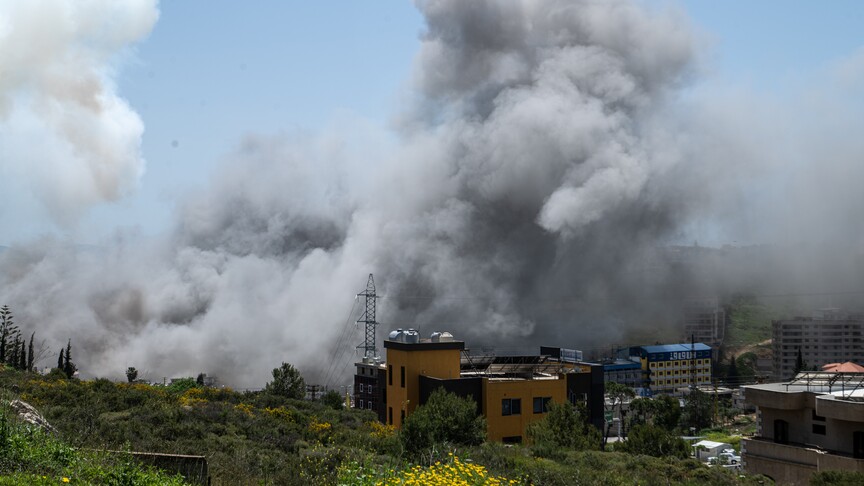
Israeli attacks in southern Lebanon kill at least seven people. — Source: anadolu
Further Strikes Killing Eight in Southern Lebanon
In parallel developments, additional Israeli attacks in southern Lebanon claimed at least eight lives.[4] Like the preceding strikes, these were executed by the Israeli army against towns in the south, disregarding the ceasefire that took effect on April 17.[4] This repetition of strikes within a short timeframe highlights a sustained campaign amid fragile truce conditions.
These attacks mirror the earlier ones in scope and location, targeting southern Lebanese towns that serve as operational bases or transit points.[4] The confirmed minimum of eight fatalities adds to the day's grim ledger, illustrating the cumulative effect of multiple barrages. The ceasefire's April 17 inception was meant to de-escalate, but ongoing strikes suggest threshold breaches or preemptive measures by Israel.[4]
Examining the outcomes, such incidents perpetuate a cycle where each strike elicits potential retaliation, straining the border region's security apparatus. The Israeli army's approach—striking despite the truce—indicates prioritization of military imperatives over immediate cessation.[4] This contributes to a broader narrative of contested compliance.
Evacuation Warnings and Ceasefire Violations
Israel has issued evacuation warnings for 11 villages in southern Lebanon, urging residents to leave amid continued military activities.[5] The Israeli military has persisted in issuing these warnings, conducting strikes, and even demolishing structures in the area, all despite the ceasefire in place.[3][4][5] This combination of alerts and actions creates a precarious environment for locals.
The warnings specifically target 11 south Lebanon villages, likely selected for their strategic positioning near conflict zones.[5] Coupled with ongoing strikes reported in sources, these measures aim to minimize civilian exposure during operations.[3][4][5] However, the demolition of villages adds a layer of permanent disruption, altering the landscape and habitability.[5]
Ceasefire violations are evident in the sustained strikes post-April 17, as Israeli forces continue operations.[3][4] Evacuation orders serve as precursors to intensified actions, signaling imminent risks. This dynamic challenges the ceasefire's integrity, with warnings functioning both as protective notices and harbingers of escalation.[5]
The security situation remains fluid, with evacuations displacing communities and strikes enforcing no-go zones. Israel's multifaceted approach—warnings, strikes, demolitions—reflects a comprehensive strategy to neutralize threats, even at the cost of truce adherence.[3][4][5]
Broader Context of Operations
Integrating Hezbollah's actions with Israeli responses provides a fuller picture of the exchanges. Hezbollah's 11 operations against Israeli forces in southern Lebanon directly preceded the sirens and interceptions in northern Israel.[1] This sequence frames Israeli strikes, including those killing 20 in the last 24 hours, as part of a reactive continuum.[1][2]
The ceasefire since April 17 has not deterred these operations, with Israel issuing evacuation warnings for 11 villages while conducting strikes and demolitions.[5] Hezbollah's initiatives target Israeli positions, prompting aerial defenses and counterstrikes.[1][5] This back-and-forth defines the conflict's rhythm, where each party's moves sustain the other's.
In this broader view, the total death toll nearing 2,700 and injuries at 8,229 encapsulate months of such dynamics.[2] Northern Israel's sirens and interceptions counter Hezbollah's operations, while southern Lebanon's strikes address perceived threats.[1][3][4] The persistence despite ceasefire underscores entrenched positions, with evacuations mitigating but not resolving risks.[5]
What to watch next
Monitor for further Hezbollah operations and Israeli interceptions, as well as compliance with the April 17 ceasefire amid ongoing strikes and evacuation warnings in southern Lebanon.[1][3][4][5]