
Strait of Hormuz Standoff and Oil Price Forecast: How Emerging Cyber Warfare is Reshaping Global Geopolitics
Oil Price Forecast: By the Numbers
The Strait of Hormuz handles 21 million barrels of oil daily, equivalent to one-fifth of global petroleum consumption, per U.S. Energy Information Administration data. A full blockade could spike prices by 20-50%, reminiscent of the 1973 OPEC embargo's quadrupling effect. Recent events show tanker traffic dipping 15% since March 2026 threats, with insurance premiums surging 300% for Hormuz passages. Oil prices have already breached $100 per barrel, up 5% in the past week alone, underscoring key factors in the current oil price forecast.
Cyber dimensions add quantifiable peril: Iran-linked hackers, per Microsoft Threat Intelligence, conducted 40% more probes on Gulf shipping firms in Q1 2026 versus 2025. U.S. Cyber Command reports intercepted 12 attempts to disrupt naval drone feeds in the region last month. Global trade impacts: A one-week disruption could cost $5-10 billion daily in lost commerce, affecting 80 million barrels of seaborne oil trade. Check the Global Risk Index for real-time updates on these threats.
Market ripples are stark: S&P 500 futures down 0.6-3% on risk-off algos, Bitcoin liquidated $500 million in 48 hours amid cascades, and USD index up 0.5% as safe-haven flows intensify. Europe's EUR weakened 1.2% weekly, echoing 2019 tensions, while safe-havens like CHF strengthened. These figures underscore why cyber-infused standoffs amplify economic shocks beyond traditional metrics, feeding into broader oil price forecast analyses.
What Happened
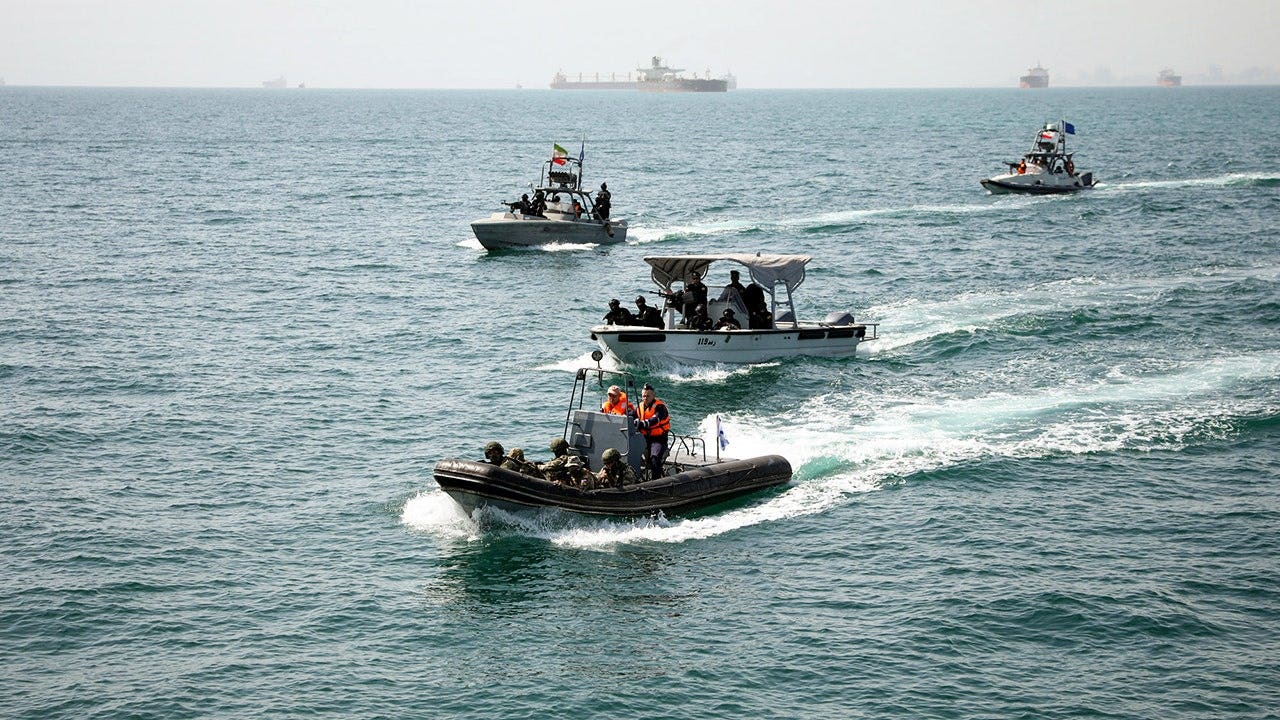
The crisis unfolded rapidly in March-April 2026, blending overt naval threats with subtle cyber undercurrents. On March 11, the U.S. threatened Iran over alleged mine-laying in the strait, citing intelligence of Iranian fast boats harassing tankers—tactics reminiscent of Venezuela drug interdictions, where U.S. forces tested "kill chains" for swarm boats. Iran vowed retaliatory action on March 12, warning of Hormuz closure.
Escalation peaked March 19 with U.S. Marine Corps plans for Hormuz patrols, followed by a U.S. oil supply boost on March 20 to flood markets and deter blockades. Iran de-escalated selectively on March 26, offering concessions to Spain for safe Omani-side passage, amid proposals for toll-free transit. Recent April developments intensified: April 3 saw tankers crossing amid tensions, a French ship exiting post-"war" scares, and an Iran-Oman monitoring plan. By April 5, U.S. strike threats loomed; April 11 marked critical US-Iran negotiations.
Underreported: Cyber intrusions. U.S. tactics from Venezuela—jamming drone signals and hacking boat GPS—mirror preparations here. Iran, with groups like APT33, probed U.S. naval comms 25% more aggressively, per FireEye reports. G7 (France FM), Germany (Chancellor Merz), South Korea (considering UK-France summit), and China (Wang Yi's calls for passage) responded diplomatically, but cyber skirmishes persist: shipping trackers glitched thrice last week, delaying 10% of transits. For related diplomatic angles, see Hormuz Tensions and Oil Price Forecast: The Untapped Potential of UN and Asian Peace Initiatives Amid Escalating Blockades.
Human impact: Filipino seafarers on tankers report jammed radios, stranding crews for hours; Omani fishermen face drone overflights disrupting livelihoods. This digital layer transforms a chokepoint into a hybrid battlefield, with ripple effects on oil price forecast stability.
Historical Comparison
This standoff echoes 2019 tanker seizures, when Iran mined approaches, spiking oil 4-5% post-Soleimani strike, with S&P dropping 3%. Yet cyber elements evolve patterns: 1980s Tanker War saw physical mines kill 400; today's digital mines—malware in navigation—threaten silently. March 11-26 timeline parallels 2019: U.S. threats (then carriers deployed), Iran vows, U.S. supply boosts (Strategic Reserve taps), concessions (2019 Japan exemptions).
US-Iran dynamics shift cyber-ward: Venezuela 2019 "kill tactics" prefigure Hormuz drone hacks. China's 2026 calls mirror 2019 neutrality, but Beijing's cyber prowess (e.g., 2021 SolarWinds) hints alliances. South Korea/Germany's involvement evokes 1990 Gulf coalitions, but with cyber pacts. Patterns: Rapid 5-day escalations (March 11-15) lead to 30% oil volatility; de-escalations (Iran-Spain) buy time but recur without treaties. Cyber risks amplify: 2022 Ukraine saw 12% ETH drops; Hormuz could double via shipping hacks, humanizing precedents where crews died from miscommunications. Explore further in Middle East Ceasefires and Oil Price Forecast: Igniting a Global Energy and Diplomatic Reckoning for Asia and Europe.
Catalyst AI Market Prediction
The World Now Catalyst AI forecasts risk-off across assets amid cyber-naval escalation:
- OIL: + (high confidence) — Direct blockade reduces supply, spiking >$100. Historical: 1973 embargo quadrupled; 2020 Soleimani +4-5%. Key risk: U.S. reserve release.
- USD: + (medium confidence) — Safe-haven surges. Historical: 2020 Soleimani +0.5% DXY. Key risk: Fed easing.
- CHF: + (medium confidence) — Euro proximity flows. Historical: 2019 Iran tensions. Key risk: SNB cap.
- BTC: - (medium confidence) — Liquidation cascades despite $75K surge. Historical: 2022 Ukraine -10% in 48h. Key risk: ETF inflows.
- ETH: - (medium confidence) — DeFi pressure. Historical: 2022 Ukraine -12%. Key risk: staking yields.
- SOL: - (medium confidence) — Altcoin amplification. Historical: 2022 Ukraine -15%. Key risk: BTC momentum.
- SPX: - (medium confidence) — Algo de-risking. Historical: 2019 seizures -3%; 2020 Soleimani -0.6%. Key risk: tech rally.
- TSM: - (medium confidence) — Trade fears hit semis. Historical: 2018 tensions. Key risk: AI demand.
- EUR: - (medium/low confidence) — USD strength, energy costs. Historical: 2019 -1.2%; 2018 withdrawal.
Predictions powered by The World Now Catalyst Engine. Track real-time AI predictions for 28+ assets at Catalyst AI — Market Predictions.
What's Next
Cyber warfare could tip escalation: If diplomacy fails (watch April 11 negotiations), Iran might unleash APT-style attacks on U.S. drones or shipping AIS systems, disrupting 20% oil flows and costing $10B/day. Scenarios: (1) Cyber hit sparks naval clash, oil to $150, global recession; (2) UK-France summit (South Korea joining) births cyber-naval pact, stabilizing routes. See insights on Pakistan's Army Chief: Steering Domestic Unity Through US-Iran Mediation Storm and Oil Price Forecast.
Triggers: Failed Oman monitoring (April 3 pact); U.S. Marine deployment. Long-term: AI-driven defenses—quantum-encrypted comms, blockchain trackers—accelerate, birthing a 2027 Maritime Cyber Treaty. Human angle: Investments protect 2 billion energy-dependent lives, but failures strand seafarers, hike fuel 30% for families.
Diplomatic wins like Iran's toll-free mulls or G7 mitigation could de-escalate, but cyber persistence demands vigilance. China’s role: Proxy hacks or mediation? Europe faces $200B energy hit; Asia scrambles routes. For broader context, review the Global Risk Index.
This hybrid threat redefines chokepoints, urging global cyber norms amid human fragility. The oil price forecast remains highly volatile as these tensions evolve.
This is a developing story and will be updated as more information becomes available.