
Small Cessna Aircraft Crash-Lands Near Odisha's Rourkela Airstrip Amid Technical Failure; Pilot Hospitalized, No Fatalities Reported
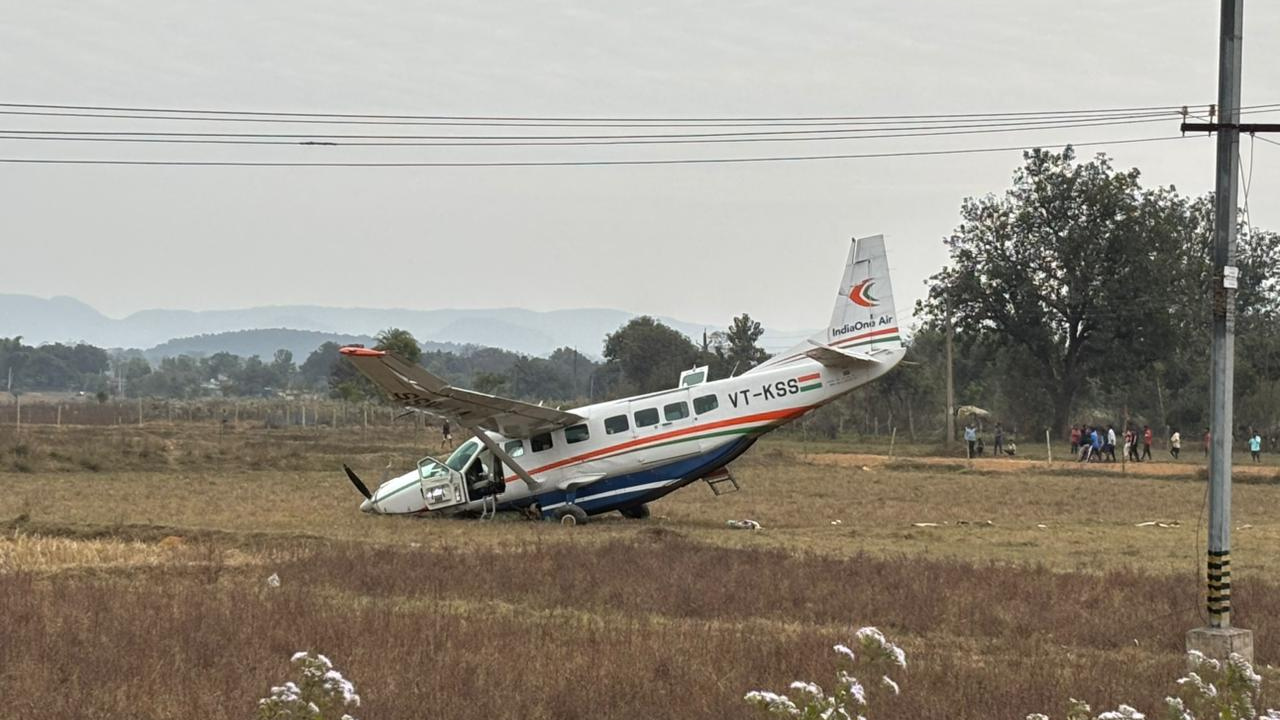
Rourkela, Odisha – A small Cessna aircraft carrying six people onboard made an emergency belly landing approximately nine kilometers from Rourkela airstrip on Saturday morning due to a mid-flight technical snag, leaving the pilot with serious injuries but all passengers unharmed.
The incident occurred in an open grassland area near the industrial city of Rourkela, preventing what could have been a more catastrophic outcome. The pilot's swift decision-making in identifying a safe landing spot was credited with averting further harm. Local authorities and emergency services responded promptly, airlifting the injured pilot to a nearby hospital for treatment.
Reports from the scene indicate the aircraft encountered the technical fault shortly after takeoff from Rourkela airstrip, prompting the emergency maneuver. While initial accounts described "no casualties," further details revealed the pilot sustained significant injuries requiring immediate medical attention. The five other occupants emerged without apparent injuries, highlighting the resilience of the aircraft and the proficiency of the flight crew under duress.
Details of the Incident
According to reports, the Cessna – a lightweight, single-engine plane commonly used for regional flights and training – was en route when the snag was detected. The pilot executed a controlled belly landing, skidding across the grassy terrain to bring the aircraft to a halt. Eyewitnesses and initial investigations pointed to a mechanical issue as the primary cause, though a full probe by aviation authorities is expected to provide definitive findings.
Rourkela Airport, a domestic airstrip serving the steel hub of Odisha, has seen increased air traffic in recent years due to the region's industrial growth. The facility primarily handles smaller aircraft, making incidents like this a focal point for safety reviews.
This event underscores ongoing concerns about small aircraft operations in India, where technical reliability and pilot training play critical roles. The Directorate General of Civil Aviation (DGCA), India's aviation regulator, routinely monitors such occurrences, often mandating inspections fleet-wide following similar mishaps.
Background on Aviation Safety in Odisha and India
Odisha, a eastern coastal state rich in minerals and industry, relies on regional airstrips like Rourkela for connectivity to major hubs such as Bhubaneswar and Visakhapatnam. Rourkela, home to the Rourkela Steel Plant – one of India's largest public-sector steel producers – supports a population of over 500,000 and has been expanding its aviation infrastructure to bolster economic activities.
India's general aviation sector, encompassing non-scheduled operators and small planes, has faced scrutiny in recent years. Data from the DGCA shows that between 2020 and 2025, small aircraft incidents accounted for a notable portion of aviation occurrences, often linked to maintenance issues, weather, or human factors. In 2024 alone, over 20 such events were recorded nationwide, with most resulting in minor injuries or aircraft damage rather than fatalities.
The Cessna 172 series, similar to the model involved here, is a staple in India's flight training academies and charter services due to its forgiving handling characteristics. However, the demands of operating in diverse terrains – from coastal plains to hilly interiors – necessitate rigorous upkeep. Previous incidents in Odisha, including a 2023 trainer plane mishap near Bhubaneswar, have led to enhanced safety protocols, such as mandatory pre-flight checks and simulator training.
No official statement from the aircraft operator or the DGCA was immediately available at the time of reporting, but investigations are standard procedure. The Airports Authority of India (AAI), which oversees Rourkela airstrip, confirmed the runway operations remained unaffected.
Broader Context of Recent Accidents in India
This crash comes amid a spate of aviation-related incidents across India, reflecting the challenges of rapid airspace expansion. The country's aviation market, the world's third-largest by passenger traffic, has prioritized safety enhancements post the 2020 Kozhikode crash, implementing stricter audits and technology upgrades like ADS-B tracking.
In parallel, road and expressway accidents remain a pressing issue. For instance, earlier this month on January 3, a collision on the Yamuna Expressway in Uttar Pradesh left two victims untraced, leading to the formation of a government probe panel. Such events highlight the multifaceted nature of accident prevention in a nation with over 1.4 billion people and dense transportation networks.
Outlook
The pilot's condition is under observation, with medical teams reporting stable vitals. Aviation experts anticipate a swift DGCA inquiry, potentially resulting in grounded similar aircraft pending inspections. As India pushes for "UDAN" regional connectivity – aiming to operationalize 100 underserved airports – incidents like this serve as reminders of the need for sustained investment in infrastructure and training.
Residents near Rourkela expressed relief at the lack of ground casualties, crediting the pilot's expertise. Full recovery of the aircraft and a preliminary report are expected within days, providing clarity on preventive measures.
(Word count: 682)